
EU budget deadlock explained for consumers and investors
📌 Topic & Subject
This article examines the recent deadlock among EU leaders over the 2028–2034 long-term budget and a separate Ukraine support loan. It explores how disagreements on spending limits, national contributions, and proposed taxes create uncertainty for consumers, businesses, and investors ahead of the upcoming December summit.
📌 Table of Contents
- 1. What happened at the EU summit?
- 2. Why did the budget talks fail?
- 3. What does this mean for you?
- 4. Which dates and decisions matter next?
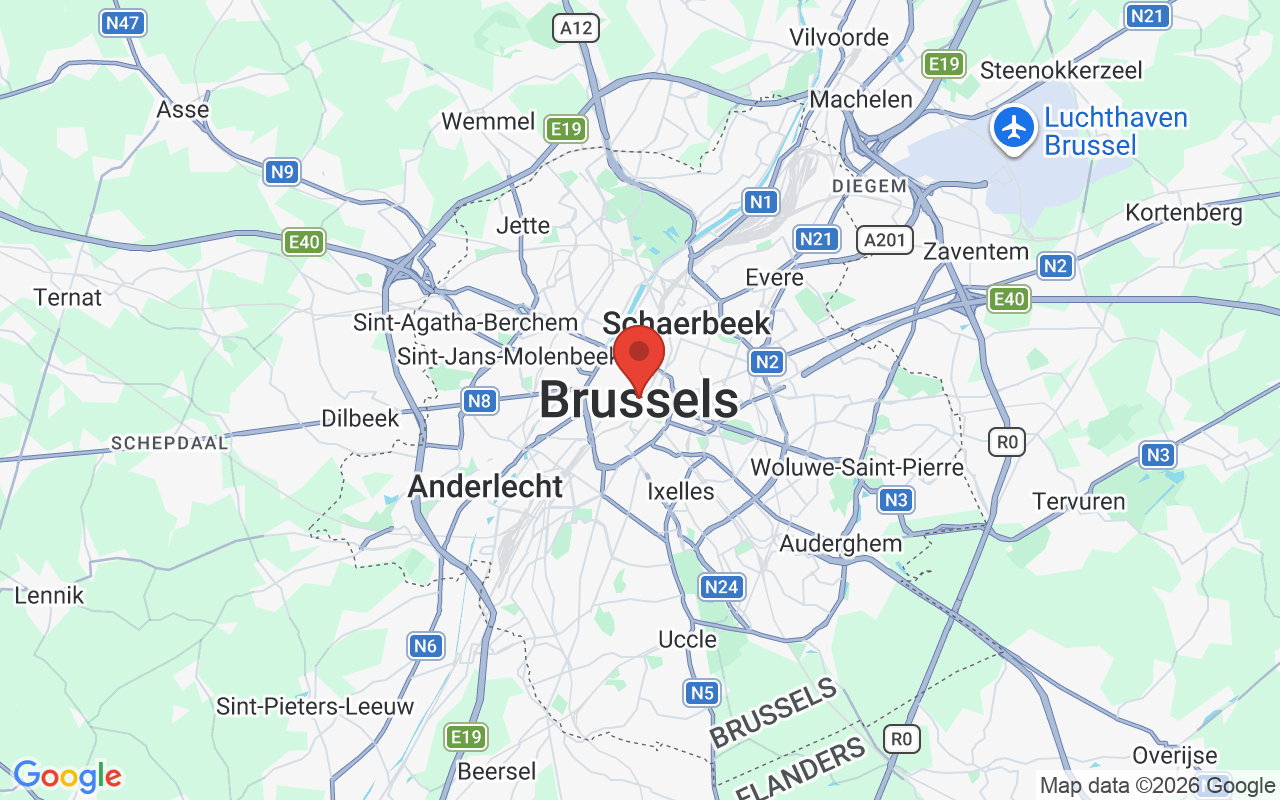
EU leaders failed to agree on their next long-term budget in Brussels on November 26, 2026, despite more than 12 hours of negotiations. The dispute over a package described in CNBC’s coverage as roughly $1.7 trillion also complicated talks on a separate Ukraine support loan.
 🔍
At a glance
No agreement on the next EU budget
Spending and funding remain disputed
December talks are the next milestone
What happened at the EU summit?
The negotiations ended without a budget agreement, and the planned second day of talks was canceled. European Council President António Costa confirmed the failure in a statement after the talks ended shortly after midnight, saying, “We didn’t reach an agreement.” According to CNBC’s November 27 coverage, the central dispute concerned the EU’s spending framework for 2028–2034.
That framework, known as the Multiannual Financial Framework, sets the boundaries for several years of EU spending. Leaders were also discussing a €45 billion loan to support Ukraine in 2027. The two issues carry different purposes, but negotiating them together increases the consequences of a political blockage.
Quick note
The long-term EU budget establishes spending ceilings and priorities across several years. It is different from an annual budget, which translates those limits into spending decisions for a particular year.
The headline figures need care. Published accounts give two euro totals for Costa’s proposed compromise: about €1.58 trillion and about €1.78 trillion. They describe the same proposal measured in different ways, in constant prices and in current prices, so they are not rival estimates and should not be added together.
Measure | Published figure | Source and reference date | Interpretation |
|---|---|---|---|
Commission’s initial proposal | Almost €2 trillion | European Commission proposal, July 2025; CNBC, November 27, 2026 | The starting proposal, not an agreed budget |
Costa compromise, current prices | Approximately €1.78 trillion | European Council, November 21, 2026 (€204 billion below the Commission proposal in current prices); Brussels Signal, November 27, 2026 | The same proposal expressed in current prices |
Costa compromise, constant prices | Approximately €1.58 trillion, or $1.73 trillion | Reuters, November 21, 2026 (€1.582 trillion); CNBC, November 27, 2026 | The same proposal in constant prices; do not add it to the figure above |
Ukraine support loan under discussion | €45 billion | European Commission proposal, reported by AP, November 27, 2026 | A proposed loan for 2027, not a completed disbursement |
EU budget relative to economic size | Approximately 1.0%–1.2% of combined gross national income | AP, November 27, 2026 | Shows the budget’s scale relative to member economies |
Proposed digital tax | 3% | Costa proposal, November 21, 2026; Euronews | A contested funding proposal, not an enacted tax |
The failure does not mean that a completed budget was withdrawn. It means leaders could not settle the spending and financing terms of the next framework. For businesses and households, the immediate consequence is therefore uncertainty about future commitments, rather than an announced across-the-board reduction in current benefits.
Why did the budget talks fail?
The negotiations failed because governments disagreed over spending, national contributions, and new EU revenue. The dispute is about who pays and who gains. Unanimity gives each member government substantial bargaining power, while European Parliament consent remains necessary for the framework’s adoption.
The dispute is about who pays and who gains.
The European Commission presented its initial proposal in July 2025. An Irish presidency compromise followed on October 10, 2026, before Costa advanced another compromise on November 21. Those successive drafts did not resolve the underlying conflict between established beneficiaries and governments seeking tighter spending limits.
Disputed issue | Position favoring restraint or protection | Competing position |
|---|---|---|
Total spending and borrowing | German Chancellor Friedrich Merz has pressed for a smaller total and said the EU must not take on more debt. | Supporters of greater EU capacity argue that security and competitiveness commitments require sufficient funding. |
Agriculture and regional development | Governments seeking a smaller total want spending restraint. | Greece and the Friends of Cohesion group oppose cuts to regional support; France and Italy resist unfavorable allocations. |
New EU revenue | Ireland opposes the proposed digital tax. | Additional shared revenue could reduce pressure for larger direct national contributions. |
Budget flexibility | More tightly allocated spending gives governments greater predictability. | Commission President Ursula von der Leyen criticized the October compromise for restricting the EU’s ability to respond to changing needs. |
On November 26, Merz argued that governments could not and should not take on more debt. Italian Prime Minister Giorgia Meloni rejected an arrangement under which Italy would contribute more and receive less. Greek Prime Minister Kyriakos Mitsotakis defended regional funding alongside the 17-country Friends of Cohesion group.
Ireland’s Taoiseach Micheál Martin opposed the digital-tax proposal at the summit. In October, European Parliament President Roberta Metsola warned against agreeing on ambitions while cutting the means to achieve them, and on November 26 she told leaders that Parliament “has never been a rubber stamp.” These positions expose separate obstacles: reducing the total does not automatically settle its distribution or its financing.
The contrast with the previous settlement is instructive. In July 2020, leaders reached agreement after more than 90 hours of negotiations spread across five days. That package combined a €1.074 trillion regular budget with the €750 billion NextGenerationEU recovery instrument, both figures belonging to the 2020 agreement.
Joint borrowing helped expand the available compromise in 2020. In the current negotiations, opposition to further common borrowing narrows that option. A longer meeting alone would not necessarily overcome this difference.
What does this mean for you?
The main risk for consumers and investors is delayed clarity about future spending, taxation, and public investment. The summit’s failure does not itself establish a new household bill or an enacted business tax. Its effects depend on the eventual agreement and the programs through which money reaches recipients.
For consumers, agriculture and regional-development funding are important transmission channels. Changes could affect farm support, local infrastructure, and regional investment. However, the November negotiations do not establish a specific change in grocery prices, household taxes, or individual entitlements.

Lower national contributions could ease pressure on member-state finances. Smaller EU allocations could also leave governments choosing between replacing lost funding and reducing planned activity. Whether either outcome reaches household budgets depends on domestic decisions, not simply the headline EU total.
For businesses, spending composition matters as much as size. When Costa presented his revised plan on November 21, he cited proposed increases of 120% for competitiveness and 232% for defense relative to the current budget, according to CNBC. Those are proposed category increases, not guaranteed revenue growth for companies operating in those sectors.
If your business depends on publicly funded projects, the relevant question is whether its particular program receives an allocation and can proceed on schedule. A political pledge still needs to become an approved program and, where applicable, a contract. That distinction matters when evaluating projected orders or expansion plans.
For investors, there are competing financial effects rather than one obvious market conclusion. Spending restraint could limit national funding demands, while weaker shared investment could reduce support for infrastructure, technology, or defense projects. The balance depends on the final allocation, financing method, and implementation timetable.
The proposed digital tax adds a separate uncertainty. It could raise EU revenue, but Ireland’s opposition makes adoption contested. Any effect on corporate costs, customer charges, or trade relations would depend on the final rules and responses to them.
The Ukraine loan presents another trade-off. Keeping it within a broader negotiation could help assemble a political package, but also exposes it to unrelated disputes. Separate bilateral support could offer another route, although it would differ from a unified EU financing arrangement.
Which dates and decisions matter next?
The next scheduled negotiating milestone is the European Council meeting on December 17–18, 2026. The budget and Ukraine financing package are due to return to the agenda. A meeting date creates another opportunity for agreement, not evidence that the competing positions have converged.
December 17–18, 2026: Watch for a revised negotiating text and specific changes to spending, national contributions, and revenue proposals.
December 31, 2026: French President Emmanuel Macron has identified year-end as the practical deadline for agreement. This is a political deadline, not the framework’s legal start date.
April 2027: France’s scheduled presidential election is a source of pressure identified by Macron in his November 26 remarks.
January 1, 2028: The next framework is intended to begin. Political agreement must be followed by the applicable legislative and approval procedures.
Macron’s warning connects the budget calendar to electoral incentives. He argued that negotiations extending toward France’s election would become harder to conclude. That is his political assessment, rather than proof that agreement after December would be impossible.
The most useful indicators are changes in positions, not another headline total. Movement on Germany’s spending objections, protected regional allocations, or Ireland’s tax opposition would address identifiable barriers. A clearer decision on whether Ukraine financing remains linked would also reduce uncertainty.
Another variable is the European Parliament’s response. An agreement among national leaders would be a major step, but would not complete the process. The final legal arrangements, including any separate revenue measures, determine which further approvals are necessary.
Your first step is to read the December summit conclusions for decisions affecting the funding or business exposure that matters to you. The November summit ended without agreement, and the next framework is intended to start in January 2028. Its final size, distribution, and financing remain unsettled.
Sources:European Council, President Costa’s MFF proposal (November 21, 2026); Reuters (November 21, 2026); Euronews (November 21, 2026); CNBC (November 27, 2026); AP (November 27, 2026); Brussels Signal (November 27, 2026); Irish Presidency of the Council (October 12, 2026); European Commission, President’s statement (October 16, 2026); European Parliament (November 26, 2026).
ℹ️ This article was written with the help of AI tools. · Original: AdEngine-X
China India trade risks for investors after USCC report
🇺🇸 English · 마샬팀장 · 11/24/2026

Costco Next Shuts Down Without Notice: 2026 Data Analysis, Business Impact, and Consumer Guide
🇺🇸 English · News Desk · 9/3/2026

Signet Jewelers (SIG) Stock Analysis: $1 Billion Credit Deal & Q2 Profit Turnaround Explained
🇺🇸 English · Finance Desk · 9/21/2026

South China Sea in 2026 ASEAN talks and trade risks
🇺🇸 English · 마샬팀장 · 11/19/2026
More from this author




🗞️ Source material
- EU leaders fail to break $1.7 trillion budget deadlock as political pressure mounts— Ref: CNBC (headline & link)
This article was independently written and edited by AdEngine-X based on the facts reported in the sources below. No original wording or photos were used.
📚 References
This list may include both live search sources the AI referenced while writing and public-data sources checked during fact verification. Please verify the original sources before citing or reusing.
Was this article helpful?
0 Comments
Loading comments...