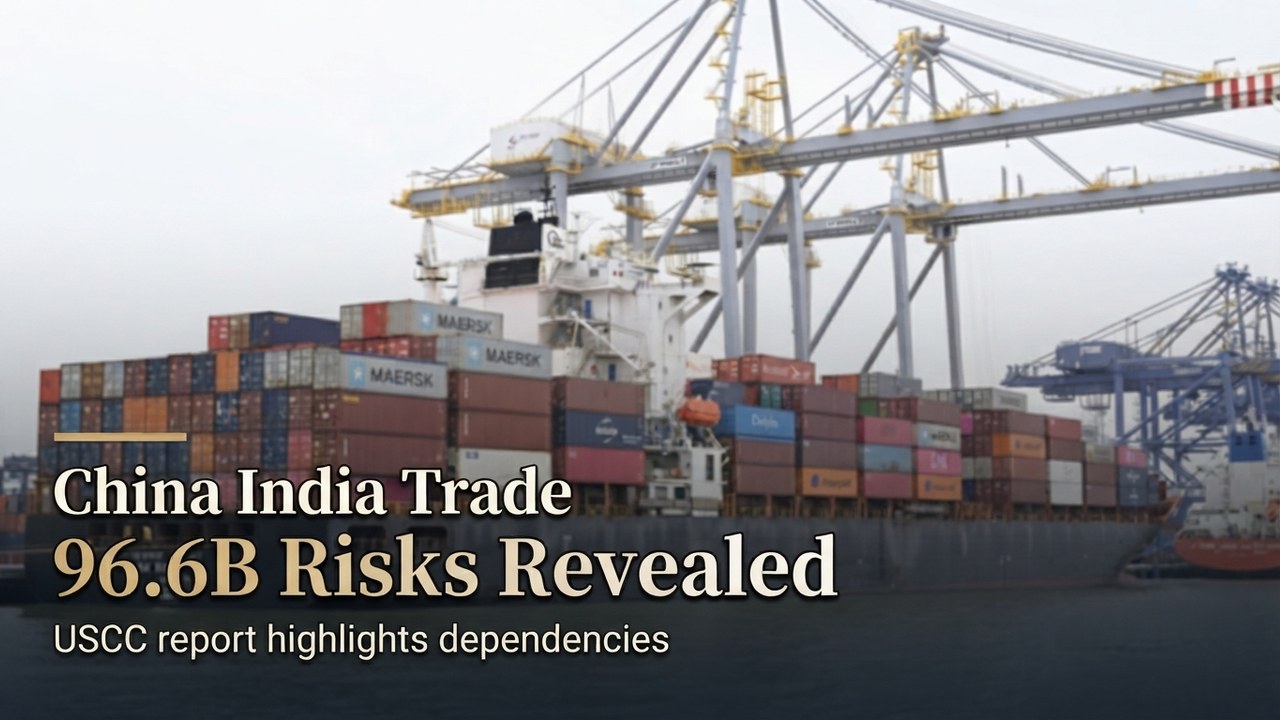
China India trade risks for investors after USCC report
📌 Topic & Subject
This article examines the investment and trade risks associated with China's efforts to constrain India's rise, as highlighted in a November 2026 U.S.-China Economic and Security Review Commission (USCC) report. It analyzes India's ongoing manufacturing and import dependence on China—featuring trade data for goods and electronics—alongside military pressures from the disputed border and Pakistan. Finally, it discusses the implications for investors and consumers balancing industrial growth with
📌 Table of Contents
- 1. The numbers behind the dependence
- 2. What the panel actually argues
- 3. How the pressure has changed
- 4. The competing strategic calculations
- 5. What consumers and investors face
- 6. Which outcomes the evidence supports
- 7. The next signals that matter
China is widening its efforts to constrain India’s rise, according to the U.S.-China Economic and Security Review Commission’s annual report, released November 18, 2026. The congressional advisory panel describes pressure extending beyond the disputed border into industrial supplies, technical expertise, and support for Pakistan.
CNBC International’s November coverage brought that assessment into focus. Its business significance rests on a tension: India wants greater manufacturing independence, yet expanding production still requires substantial Chinese inputs. The commission’s argument concerns how Beijing could exploit that dependence. It is an assessment of strategy, not proof that India’s growth has been stopped.
The numbers behind the dependence
The figures below distinguish imports from China from broader import categories; the latter cover all supplying countries.
Import measure | Value, US$ billion | Year-over-year change | Reference period | Source and publication date |
|---|---|---|---|---|
Goods imported from China | 96.61 | 30.6% | April–October 2026 | India Ministry of Commerce figures; Dolat Capital analysis, November 15, 2026 |
Imports excluding petroleum, gold, and precious stones | 354.94 | 20.7% | April–October 2026 | India Ministry of Commerce figures; Dolat Capital analysis, November 15, 2026 |
Electronic goods imports | 95.64 | 45.7% | April–October 2026 | India Ministry of Commerce figures; Dolat Capital analysis, November 15, 2026 |
Electrical and nonelectrical machinery imports | 40.52 | 16.5% | April–October 2026 | India Ministry of Commerce figures; Dolat Capital analysis, November 15, 2026 |
The largest difference is in growth rates: electronic goods imports rose 45.7%, compared with 16.5% for machinery. But these are different product categories, not measures of Chinese market share. The figures show strong demand for imported production inputs and goods; they do not establish how much came from China within each category.
The categories also overlap, so adding these rows would misstate total imports. More broadly, rising imports can accompany industrial expansion rather than industrial failure. India’s $96.6 billion in purchases from China demonstrates continuing commercial dependence, but it does not independently establish deliberate Chinese obstruction.

What the panel actually argues
The USCC advises Congress on the economic and security implications of U.S.-China relations. Its November 18 report examines India in a chapter titled China’s Other Front: India and the Future of U.S. Strategy in the Indo-Pacific. The chapter connects industrial competition with military pressure.
Commission Chairman Randall Schriver and the report characterize India as a potential long-term competitor to China across military, economic, and maritime affairs. Their assessment gives India unusual strategic importance outside America’s formal treaty alliances. It also reflects a U.S. policy perspective, rather than a neutral declaration of Chinese intent.
The panel identifies restrictions involving industrial materials, equipment, technicians, and battery technology as ways to impede alternative supply chains. It also describes equipment being held back and technical personnel being withdrawn. These are the commission’s findings and characterizations; the aggregate trade figures alone cannot verify each mechanism.
How the pressure has changed
The border remains part of it
The disputed Line of Actual Control stretches approximately 2,100 miles, the USCC’s 2026 report states. Earlier confrontations centered heavily on Himalayan positions, including Ladakh and Doklam. The current assessment does not suggest that this territorial rivalry has ended.
Instead, the claimed change is additive: industrial pressure accompanies military pressure. A border confrontation occupies defense planners directly. Restricted machinery or missing technical expertise can affect factory schedules without a comparable public confrontation. The instruments differ, even when the panel interprets their strategic purpose as similar.
Manufacturing creates its own vulnerability
A factory needs more than an assembly line. It also requires equipment, components, maintenance, and people who understand the production process. The USCC’s argument is that concentrated Chinese control over some inputs can complicate India’s effort to become an alternative manufacturing base.
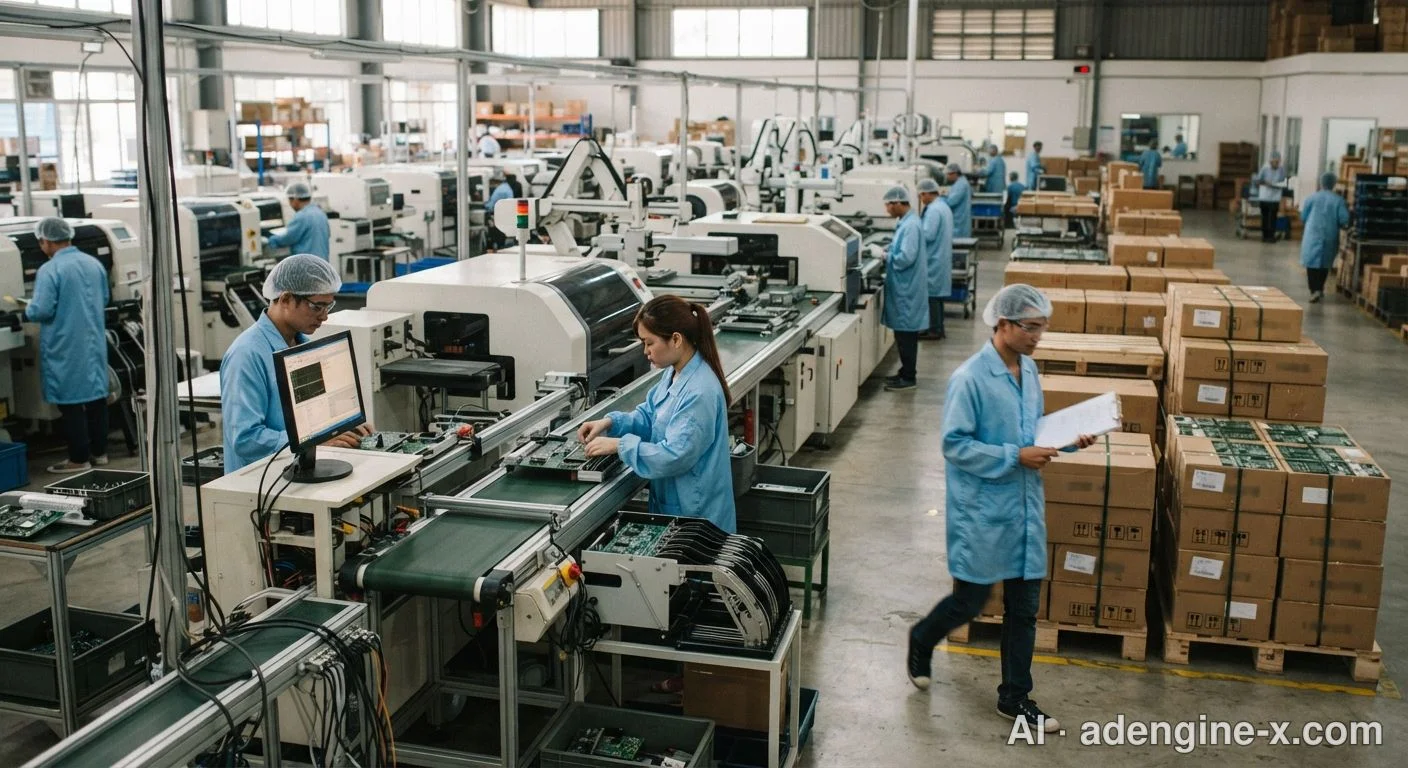
That explains an apparent contradiction in Indian policy. During 2025–2026, India partially eased some restrictions affecting Chinese investment and technician visas as manufacturers faced equipment and expertise shortages. Selective access can support domestic production, even while national-security concerns favor tighter controls.
Pakistan adds a second front
The report also examines China’s relationship with Pakistan. It says China supplied on-site technical support during the May 2025 India-Pakistan conflict associated with India’s Operation Sindoor. The commission interprets that assistance as a way to pressure India without direct Chinese participation in combat.

Former Indian diplomat Mahesh Sachdev offered a similar interpretation in a November 22, 2026, ANI interview. He argued that Chinese support for Pakistan helps keep Indian resources committed to the western front. That is an attributed strategic judgment, not a measurable account of every Indian defense decision.
The competing strategic calculations
The central disagreement concerns how to reduce vulnerability without sacrificing autonomy or industrial growth. The comparison separates the USCC’s policy perspective from India’s strategic constraints; it does not substitute either for an official Chinese response.
Issue | USCC perspective, November 2026 | India’s strategic constraint |
|---|---|---|
Security cooperation | Deeper U.S.-India cooperation would strengthen competition with China. | India values strategic autonomy and remains outside the U.S. treaty-alliance system. |
Industrial dependence | Chinese control over important inputs can obstruct alternative supply chains. | Manufacturing expansion still requires Chinese components, equipment, and expertise. |
Access to Chinese firms and technicians | Dependence can create channels for economic pressure. | Selective access can relieve production bottlenecks. |
Regional military pressure | China’s support for Pakistan compounds pressure along the disputed Chinese border. | India must allocate defense resources across competing security demands. |
These choices do not reduce neatly to alignment or resistance. India’s concerns about China arise from its own security interests. Closer cooperation with Washington can serve those interests without implying acceptance of every U.S. priority. Likewise, continued Chinese imports do not establish political accommodation.
For Beijing’s official position on the report, the relevant primary source is China’s Ministry of Foreign Affairs. Its statements should be evaluated separately from the USCC’s interpretation and from commentary by former diplomats.
What consumers and investors face
Consumer effects depend on transmission
For consumers, the potential connection is through prices, availability, and delivery times. Restrictions affecting equipment or components could raise production costs or delay output. Whether those costs reach you depends on inventories, alternative suppliers, competition, and manufacturers’ willingness to absorb lower margins.

Lower-priced Chinese inputs can also help Indian producers contain costs. That creates a difficult balance: reducing dependence may improve resilience while initially increasing production expenses. Neither the report nor the import figures establish a specific retail-price increase, so a blanket inflation forecast would go beyond the evidence.
Factory location is only one measure
For investors, an Indian factory address does not by itself establish independence from China. A business may assemble locally while relying on Chinese equipment, components, or technical services. Announced capacity and operational resilience are therefore different measures.
Company disclosures about supplier concentration, commissioning delays, inventories, and capital spending can clarify that distinction. A production delay linked to unavailable equipment would be more direct evidence of business exposure than a broad geopolitical headline. These factors support risk analysis, not a recommendation to buy or sell a particular security.
The counterweight is opportunity. Companies seeking production outside China may direct investment toward India, as the USCC’s strategic assessment anticipates. But investment commitments matter less than functioning plants, reliable inputs, and sustained output. Diversification succeeds through operating capability, not location alone.
Which outcomes the evidence supports
Continued interdependence is the clearest near-term reading. Imports from China rose 30.6% during April–October 2026 despite security tensions. India’s selective easing of restrictions also indicates a practical need for access. Those facts support continued interaction, not an immediate economic separation.
More diversified production remains possible. Stronger U.S.-India cooperation could broaden defense procurement and support alternative supply chains. The pace would depend on investment, technology access, and execution. The panel’s recommendation is not itself a funded program, enacted law, or completed factory.
Disruption is a risk, not a fixed outcome. The mechanisms described by the USCC could delay projects or increase costs. Their business impact would depend on duration, available substitutes, and the affected inputs. The evidence does not justify treating every Indian manufacturer as equally exposed.
The next signals that matter
As of November 24, 2026, the useful timeline begins with subsequent official releases rather than an assumed diplomatic breakthrough. Three recent reference points anchor comparisons: Dolat Capital’s November 15 trade analysis, the November 18 USCC report, and Sachdev’s November 22 ANI interview.
Trade releases: Compare the next Indian Ministry of Commerce figures with the April–October baseline. Separate imports from China from product-category totals covering all countries.
Industrial disclosures: Watch company reporting dates for evidence of equipment delays, technician access, plant commissioning, and actual production.
Export-control notices: Follow China’s Ministry of Commerce for the scope, effective dates, and licensing conditions of relevant restrictions.
Indian access rules: Track official changes affecting Chinese investment and technical personnel. Distinguish broad policy changes from individual approvals.
Diplomatic and legislative calendars: Use official U.S. congressional notices and Indian and U.S. government announcements for scheduled action on cooperation or defense talks.
The decisive distinction is between a strategic warning and evidence of a business effect. The USCC has described a credible channel of vulnerability, while trade data show that dependence persists alongside industrial ambition. Start with one relevant company’s supplier and production disclosures before translating the headline into a financial decision.
ℹ️ This article was written with the help of AI tools. · Original: AdEngine-X

South China Sea in 2026 ASEAN talks and trade risks
🇺🇸 English (영어) · 마샬팀장 · 11/19/2026

Why Elon Musk election spending impacts Tesla and SpaceX
🇺🇸 English (영어) · 마샬팀장 · 10/23/2026

US airlines first class exit explained in 6 changes
🇺🇸 English (영어) · 마샬팀장 · 11/23/2026

US Iran carrier risks explained for household investors
🇺🇸 English (영어) · Politics & Security Desk · 11/17/2026
More from this author




🗞️ Source material
- China has changed tactics but is still thwarting India's rise, a U.S. panel says— Ref: CNBC (headline & link)
This article was independently written and edited by AdEngine-X based on the facts reported in the sources below. No original wording or photos were used.
📚 References
This list may include both live search sources the AI referenced while writing and public-data sources checked during fact verification. Please verify the original sources before citing or reusing.
Was this article helpful?
0 Comments
Loading comments...