Signet Jewelers (SIG) Stock Analysis: $1 Billion Credit Deal & Q2 Profit Turnaround Explained
(Advertisers wanted)
(Advertisers wanted)
📌 Topic & Subject
This article analyzes the financial performance of Signet Jewelers (SIG), detailing their fiscal second-quarter earnings report, which highlighted a major net profit turnaround and a $1 billion consumer credit partnership with Bread Financial. It examines specific business drivers such as same-store sales growth, average unit retail increases, and luxury fine jewelry sales across brands like Kay Jewelers, Zales, Jared, and Blue Nile.
(Advertisers wanted)
(Advertisers wanted)
📌 Table of Contents
- 1. The Big Reveal: Why Signet Jewelers Just Broke Wall Street's Skepticism
- 2. Crunching the Sparkling Numbers: Fiscal Q2 Balance Sheet Breakdown
- 3. Key Metrics Comparison: Signet’s Turnaround at a Glance
- 4. The Bread Financial Deal: How Outsourcing Credit Became a Cash Cow
- 5. Consumer Reality Check: TikTok Caution, Credit Traps, and the Lab-Grown Shift
- 6. Strategic Investment Thesis & Unfiltered Risk Audit
- 7. The Final Verdict: What’s Next for Signet Heading Into the Holidays?
1. The Big Reveal: Why Signet Jewelers Just Broke Wall Street's Skepticism
Girl, pull up a chair, grab an iced latte, and get ready, because the corporate drama unfolding across the diamond industry right now is legitimately juicy enough for its own streaming docuseries. If you have ever walked past a Kay Jewelers, stared at a sparkly tennis bracelet in Zales, browsed Jared, or scrolled late at night through Blue Nile and James Allen, you are looking at Signet Jewelers (NYSE: SIG). They are the undisputed heavyweight champion of mall jewelry and bridal bling across North America and the UK. But for the past two to three years, Wall Street basically treated them like a fading mall relic waiting to wither away. Well, buckle up: Signet just dropped their Fiscal second-quarter earnings report, and they didn’t just survive—they completely flipped the script, swinging back into a massive net profit while dropping a bombshell $1 billion consumer credit partnership. Here is the bottom line right out of the gate: Signet didn’t pull off this jaw-dropping comeback simply by hawking extra diamond rings; they pulled it off through masterclass-level financial engineering, luxury price creep, and completely reimagining who shoulders the risk when cash-strapped romantics finance big-ticket love.
From Pandemic Hangover to an Absolute Earnings Shocker
To truly appreciate how wild this turnaround is, you have to remember the brutal collective hangover the entire jewelry sector was nursing. Back during the height of the pandemic in 2020 and 2021, everyone was trapped in their living rooms, collecting stimulus checks, getting engaged on Zoom, and impulsively buying sparkly pick-me-ups. But then came the dreaded post-pandemic aftermath from 2022 through 2024: dating had literally ground to a halt during lockdowns, creating what demographers and jewelry executives officially coined the 'engagement cliff.' Proposals tanked, inflation set in, raw gold prices shot through the roof, and Signet found itself shuttering underperforming mall stores and bleeding red ink. Everyone on Wall Street assumed the discretionary retail squeeze would crush them. Instead, Signet just marched in and proved that consumer desire for sparkle hasn't died—it just needed a frictionless, highly engineered financing vehicle to bring it back to life.
The $1 Billion Financial Engineering Gambit Explained
The centerpiece of this entire earnings explosion isn’t just foot traffic; it’s an extended, massively upgraded long-term consumer credit agreement with Bread Financial. This isn't your average co-branded store card rollout. We are talking about a deal locked in all the way through December 31, 2035, structured to generate well over $1 billion in total incremental revenue and operating income over its lifetime. It immediately injects $80 million in upfront cash right onto Signet’s balance sheet in the third quarter alone, with projections to deliver between $200 million and $250 million in pure incremental operating income over the next 36 months. And the sweetest part for Signet? They don't take on the toxic credit risk. We will dissect every layer of this financial alchemy, but let's first look at the cold, hard numbers that sent short sellers scrambling.

2. Crunching the Sparkling Numbers: Fiscal Q2 Balance Sheet Breakdown
Let’s talk spreadsheets, because the actual filings for this 13-week second quarter ended August 1 are giving pure, unadulterated luxury. Despite continuing to close lower-margin, underperforming physical storefronts—which caused total top-line revenue to dip by a razor-thin 0.5% to between $1.50 billion and $1.53 billion—Signet’s same-store sales told an entirely different story. Comp sales surged by 2.2% year-over-year, handily beating Wall Street’s consensus estimate of 1.9%. That means the stores they kept open are pulling in noticeably more cash per square foot than they did twelve months ago.
Comp Sales and Operating Income: Blowing Past the Street
Here is the exact moment where financial analysts collectively dropped their pens: Signet reported GAAP net operating income of $87.5 million. Compare that to the almost comedic $2.8 million they posted in the exact same quarter last year! On an adjusted basis, operating income landed at a cool $107.2 million—a 25% surge from $85.4 million a year ago—propelling their operating margins up by 140 basis points to a sleek 7.0%. When the dust settled on the bottom line, Signet delivered adjusted diluted earnings per share (EPS) of $2.19. Consensus estimates were huddled somewhere between $1.72 and $1.74. Beating expectations by over 27% in discretionary retail during an inflationary economic cycle is practically unheard of.
Big-Ticket Spending: AUR, Luxury Timepieces, and the Blue Nile Revival
How did they do it when regular shoppers are complaining about grocery prices? Simple: Average Unit Retail (AUR) jumped 6%. In plain English, Signet is selling fewer lower-priced items, but customers are spending more per transaction, particularly on luxury pieces priced over $2,000. High-end timepieces (think prestige watches like TAG Heuer and Omega) saw sales spike close to 10%, bridal comp sales turned safely positive, and digital crown jewel Blue Nile—which Signet scooped up back in 2022 for $360 million—saw sales skyrocket by 10%. Meanwhile, total gross margin expanded by 70 to 80 basis points to 39.4%, representing $602.4 million in gross profit.

The Secret Tariff Windfall Giving Margins an Artificial Glow
Now, let's spill a little behind-the-scenes tea that corporate press releases don't highlight in bold font: Signet’s gross margin beat wasn't entirely powered by retail wizardry. Tucked inside the regulatory filings is an unexpected windfall of between $13 million and $15 million in direct government tariff refunds! That money landed straight onto their bottom line, instantly polishing up their gross margins with a temporary, artificial shimmer. It’s totally legal and great for shareholders, but as your financially savvy bestie, I have to point out that one-off customs rebates aren't something you can count on every single quarter.
3. Key Metrics Comparison: Signet’s Turnaround at a Glance
To see how drastically the company shifted from survival mode into an aggressive capital-return machine, take a look at how this quarter stacked up against both last year's performance and Wall Street's expectations:
| Financial Metric | Fiscal Q2 (Prior Year) | Wall Street Consensus | Fiscal Q2 (Actual Reported) |
|---|---|---|---|
| Total Net Sales | ~$1.51 Billion | ~$1.49 Billion | $1.50B – $1.53B |
| Same-Store Sales (Comps) | Negative / Soft | +1.9% | +2.2% |
| GAAP Operating Income | $2.8 Million | N/A | $87.5 Million |
| Adjusted Operating Income | $85.4 Million | ~$92.0 Million | $107.2 Million (+25%) |
| Adjusted Diluted EPS | $1.61 | $1.72 – $1.74 | $2.19 (Beat by >27%) |
| Gross Margin Rate | 38.6% | 38.7% | 39.4% ($602.4M) |
| Cash & Equivalents | ~$275 Million | N/A | $525M – $527M |
4. The Bread Financial Deal: How Outsourcing Credit Became a Cash Cow
Now, let's peel back the curtain on the real crown jewel of this story: the restructured deal with Bread Financial. If you don't follow consumer credit, you might think, 'Who cares about a store credit card agreement?' Oh, sweet friend, you should care, because this is where the genius—and the cutthroat capitalism—lives.
Rewind to the Disaster: The Ghost of In-House Subprime Lending
To grasp why Wall Street analysts are practically crying tears of joy over this deal, you need a quick history lesson on Signet’s past blunders. A decade ago, Signet operated its own in-house credit department. When an everyday couple walked into Kay or Jared with questionable credit scores wanting a $7,000 diamond ring, Signet essentially acted as their subprime bank. They underwrote the debt themselves. For a while, it artificially pumped sales through the roof. But it was an absolute ticking financial time bomb. Predictably, buyers began defaulting in droves, bad-debt write-offs exploded, and Signet was dragged through a nightmare of regulatory probes, credit portfolio cleanups, and catastrophic reputational damage.
The Modern Playbook: Zero Loss-Sharing and $250 Million Pure Operating Juice
Fast forward to today, and Signet has perfected the ultimate retail hack: outsourcing all the misery while keeping the sweet financial upside. Under their newly minted agreement with fintech giant Bread Financial (formerly Alliance Data Systems), Bread assumes the dirty work. Bread underwrites the credit lines, assumes the default headaches, and services the accounts. As Signet’s Chief Operating and Financial Officer Joan Hilson proudly told analysts on the call, Signet carries "no loss-sharing obligation."
Signet leadership noted that the company achieved another quarter of comparable sales growth across all fine jewelry brands, supported by accelerated brand initiatives such as merchandise refreshes, digital and retail experience upgrades, and updated marketing strategies ahead of the holiday season.
On the lender side, Dennis McCarthy, Executive Vice President and Chief Revenue Officer at Bread Financial, backed up this partnership, stating officially that Bread's relationship with Signet is grounded in trust, collaboration, and delivering exceptional customer experiences across all touchpoints. In exchange for steering millions of starry-eyed shoppers into Bread’s credit ecosystem, Signet gets guaranteed profit-sharing, marketing support, and upfront cash. With an immediate $80 million cash boost arriving in Q3 and $200 million to $250 million of incremental operating income locked in over the next 36 months, this contract alone accounted for nearly two-thirds of Signet’s massive full-year guidance raise.
The Competitive Moat: Squeezing Out Mom-and-Pop Rivals
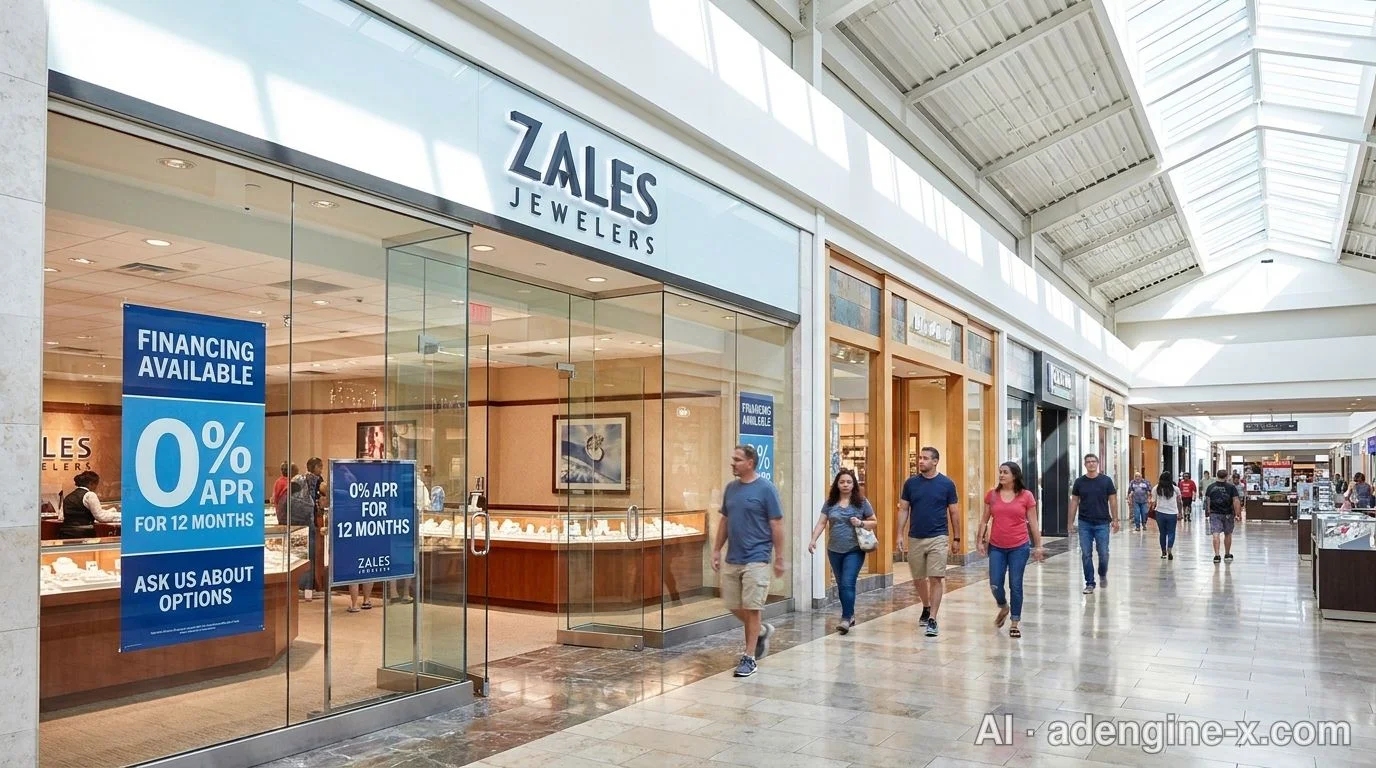
Think about what this means on the ground. Your local independent mom-and-pop jewelry shop on Main Street cannot offer instant digital 0% promotional APR financing backed by an institutional credit engine. Meanwhile, ultra-luxury European fashion houses like Cartier or Tiffany & Co. (owned by LVMH) cater primarily to the wealthiest 1% who rarely need monthly installment plans. Signet owns the massive, lucrative middle ground: middle-class and aspiring upper-middle-class consumers who want to look lavish, make grand romantic gestures, and break a $4,000 ring into manageable monthly payments. By letting Bread Financial shoulder the risk of customer default, Signet gets the high-margin retail sale today and an ongoing cut of credit profits tomorrow.
5. Consumer Reality Check: TikTok Caution, Credit Traps, and the Lab-Grown Shift
Alright, let’s step away from the glossy Wall Street conference rooms for a minute and talk about what happens when real people walk into these stores. Because if you scroll through Reddit boards like r/EngagementRings and r/PersonalFinance, or watch bridal horror stories on TikTok, the consumer sentiment around mall store credit cards is intensely divided.
The 35.99% Deferred Interest Nightmare Lurking in the Fine Print (As of August 2026)
On the surface, Signet’s promotional financing appears attractive for a budget-conscious couple. You walk into Zales or Jared, you find a stunning bridal set, and you get approved in seconds via your phone for 12, 18, or 24 months of 0% interest financing. If you pay off every single penny before that promotional period ends, congratulations—you just borrowed money for free. But here is the massive financial warning: store cards are notorious for deferred interest clauses. If you carry even a $50 balance past that promotional deadline, or miss a scheduled payment, many store credit agreements retroactively slap you with the full interest accumulated all the way back to day one. With store credit card APRs reportedly high, that romantic purchase can quickly spiral into toxic, compounding debt. As TikTok creators frequently joke: "The diamond might last forever, but so does your store card interest."
Inside the Store: Negotiation Playbooks and Sales Rep Pressure
If you or your friends are shopping at Kay, Jared, or Zales, here are several practical realities to keep in mind:
- Credit Pressure at Checkout: Former and current retail associates openly admit on employee forums that management aggressively tracks store credit applications. Do not be surprised if sales associates pitch you the private-label card multiple times during a single browsing session.
- Store Hours & Omnichannel Access: Signet operates approximately 2,500 stores across North America and the UK, mostly adhering to standard mall operating hours (10:00 AM to 8:00 or 9:00 PM Monday through Saturday, and 11:00 AM to 6:00 PM on Sundays). Online platforms like Blue Nile and James Allen provide round-the-clock digital consults.
- The 10% to 15% Negotiation Buffer: Never pay sticker price on fine jewelry without asking. Floor managers often have discretionary discount margins between 10% and 15%, especially if you bring up loose diamond prices from certified online competitors or bundle an engagement setting with wedding bands.
- Blue Nile's Financing Evolution: Starting this fall, Bread Financial’s financing options are officially rolling out across Blue Nile’s e-commerce platform. This is specifically engineered to reduce shopping cart abandonment on five-figure digital custom rings.
The Lab-Grown Diamond Price Collapse vs. Retail Markups
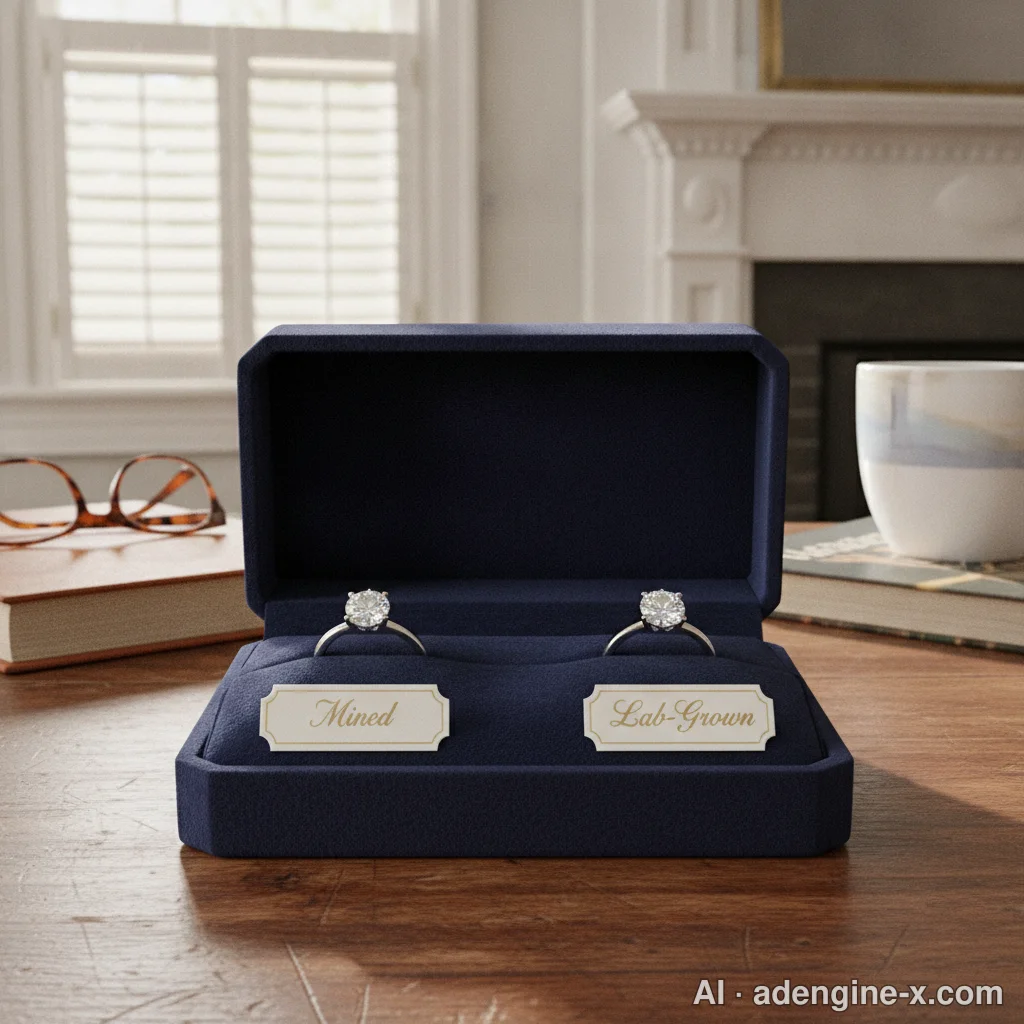
There is also an ongoing war in the display cases between mined and lab-grown diamonds. Over the last three years, wholesale prices for lab-grown diamonds have plummeted by more than 70%. But did Signet drop retail prices by 70%? Absolutely not! Signet maintained its margins by bundling lab-grown gems into intricate fashion settings, upgraded custom mountings, and branded bridal collections. By holding Average Unit Retail steady—and actually growing it by 6%—they managed to pocket the widening spread between dirt-cheap lab wholesale costs and resilient retail ticket prices.
6. Strategic Investment Thesis & Unfiltered Risk Audit
Now let’s look at Signet Jewelers through the lens of your investment portfolio. Following this Q2 triumph, Wall Street firms like Wells Fargo quickly bumped their price targets on SIG stock from $90 up to $100, applauding their margin resilience and aggressive shareholder-return framework. But as smart investors, we don't just stare at the upside—we need to rigorously examine both sides of the coin.
The Bull Case: Share Buybacks, Engagement Echos, and Upgraded Guidance
There is no denying that Signet's balance sheet looks like a fortress right now. Cash and cash equivalents climbed to between $525 million and $527 million—nearly $250 million higher than this time last year. Armed with that liquidity, management launched a brand-new $125 million Accelerated Share Repurchase (ASR) program and boosted their total share buyback authorization to a massive $700 million. By retiring shares while earnings are surging, Signet supercharges its EPS metrics.
Furthermore, Signet's proprietary relationship analytics track an intriguing metric: the average modern couple dates for approximately 3.25 years before tying the knot. Because widespread dating, public festivals, and socializing restarted in full swing throughout late 2021 and 2022, Signet calculates that late 2026 into 2027 marks the start of the post-pandemic 'engagement echo.' If their timeline holds, the long-awaited bridal boom is finally arriving at their cash registers.
The Bear Case: Macro Strains, Credit Crunches, and Discretionary Fatigue
However, you cannot ignore the macroeconomic landmines. Fine jewelry is the ultimate discretionary purchase. If broader economic conditions worsen, middle-income shoppers will cut back on diamond earrings long before they cut back on rent or groceries. Furthermore, Signet’s bread and butter is heavily dependent on Bread Financial’s willingness to extend credit. If rising credit card delinquency rates force lenders to tighten underwriting algorithms, fewer everyday shoppers will qualify for that convenient 0% promotional financing at checkout. Add in the volatility of gold spot prices and the fact that one-off tariff refunds won't rescue gross margins next year, and you have legitimate headwinds that could cap upside momentum.
7. The Final Verdict: What’s Next for Signet Heading Into the Holidays?
So, where does that leave us? Heading into the all-important fourth quarter and holiday rush, Signet’s executive team raised full-year fiscal guidance across the board with unmistakable swagger. They now project adjusted operating income between $535 million and $605 million (up roughly 10% at the midpoint), and raised adjusted diluted EPS to an impressive range of $10.45 to $12.15 per share—comfortably eclipsing their prior guidance of $9.20 to $11.00. Full-year comp sales are now pegged to finish flat to up 2.5%, reversing previous downbeat forecasts.
The Digital Revamp Countdown for Black Friday
Keep your eyes peeled over the next few weeks: Signet is putting the finishing touches on major e-commerce overhauls across Kay, Zales, and Jared ahead of Black Friday and Cyber Monday. By pairing slick, modernized websites and virtual ring-builders with Bread Financial's streamlined digital credit pre-qualification, Signet is betting it can capture holiday gift-givers before they ever set foot in a physical mall.
Bottom Line: Pure Financial Alchemy or Sustainable Retail Dominance?
At the end of the day, Signet Jewelers pulled off one of the cleanest corporate turnarounds retail has seen in years. They didn't just wait around hoping people would fall in love again; they restructured their balance sheet, pruned dead mall locations, monetized customer financing without taking on toxic default debt, and capitalized on the widening spread between lab-grown wholesale costs and retail markups. Whether you are an investor looking for cash-generative value stocks or a shopper eyeing a holiday proposal, one thing is certain: Signet has evolved from a dusty mall storefront into a finely tuned, highly financialized retail juggernaut. Just remember—if you're the one holding the credit card at the jewelry counter, pay that balance off before the zero-interest timer runs out!
ℹ️ This article was drafted with the help of an AI tool and reviewed/edited by a human before publishing. · Original: AdEngine-X
More from this author

Tesla Racial Bias Trial: 2026 Parent Guide on Cars & Stock
🇺🇸 English (영어) · 마샬팀장 · 9/21/2026

奥多摩森林セラピー完全分析|駅から5分の大渓谷とクラフトビールで自律神経を整える週末ごほうびルート【実測データ検証】
🇯🇵 日本語 (일본어) · 마샬팀장 · 2026/9/21

공무원 초과근무 1일 4시간 상한 폐지, 2026년 달라진 인정 기준과 수당 신청 가이드
🇰🇷 한국어 · 생활정보 데스크 · 2026. 9. 20.

Uncle Nearest Bankruptcy Drama: What the Second Chapter 7 Means for Whiskey Lovers in 2026
🇺🇸 English (영어) · News Desk · 9/20/2026
📚 References
This list may include both live search sources the AI referenced while writing and public-data sources checked during fact verification. Please verify the original sources before citing or reusing.
0 Comments
Loading comments...