Costco Next Shuts Down Without Notice: 2026 Data Analysis, Business Impact, and Consumer Guide
(Advertisers wanted)
(Advertisers wanted)
📌 Topic & Subject
This article analyzes the sudden, unannounced shutdown of Costco Next in August 2026, examining the business impacts and strategic factors behind the termination of this curated third-party online marketplace. It details the operational conflicts between Costco's traditional warehouse model and independent vendor dropshipping, while providing data on financial performance and consumer reactions.
(Advertisers wanted)
(Advertisers wanted)
📌 Table of Contents
- 1. Executive Summary: Costco Abruptly Terminates Costco Next Operations
- 2. Comparative Breakdown: Executive Statements vs. Marketplace Structural Conflict
- 3. Architectural Origins and Strategic Context of Costco Next (2016–2026)
- 4. Member and Vendor Community Fallout: Field Data and Digital Response
- 5. Comparative Assessment: Marketplace Strategies Across Modern Retail
- 6. Operational Precedents: Costco’s Pattern of Unscheduled Divestments
- 7. Tactical Consumer Guide: Warranty Management and Alternative Discount Capture
- 8. Enterprise Impact, Wall Street Valuation, and E-Commerce Consolidation
1. Executive Summary: Costco Abruptly Terminates Costco Next Operations
On August 30–31, 2026, leading into the United States Labor Day holiday weekend, Costco Wholesale Corporation (NASDAQ: COST) executed a sudden, unannounced cessation of its curated online third-party marketplace, Costco Next. Visitors attempting to navigate to CostcoNext.com found their browser sessions systematically intercepted and redirected to a minimalist customer service landing page on the core corporate portal. The landing interface displayed an austere declaration confirming the structural termination of the portal:
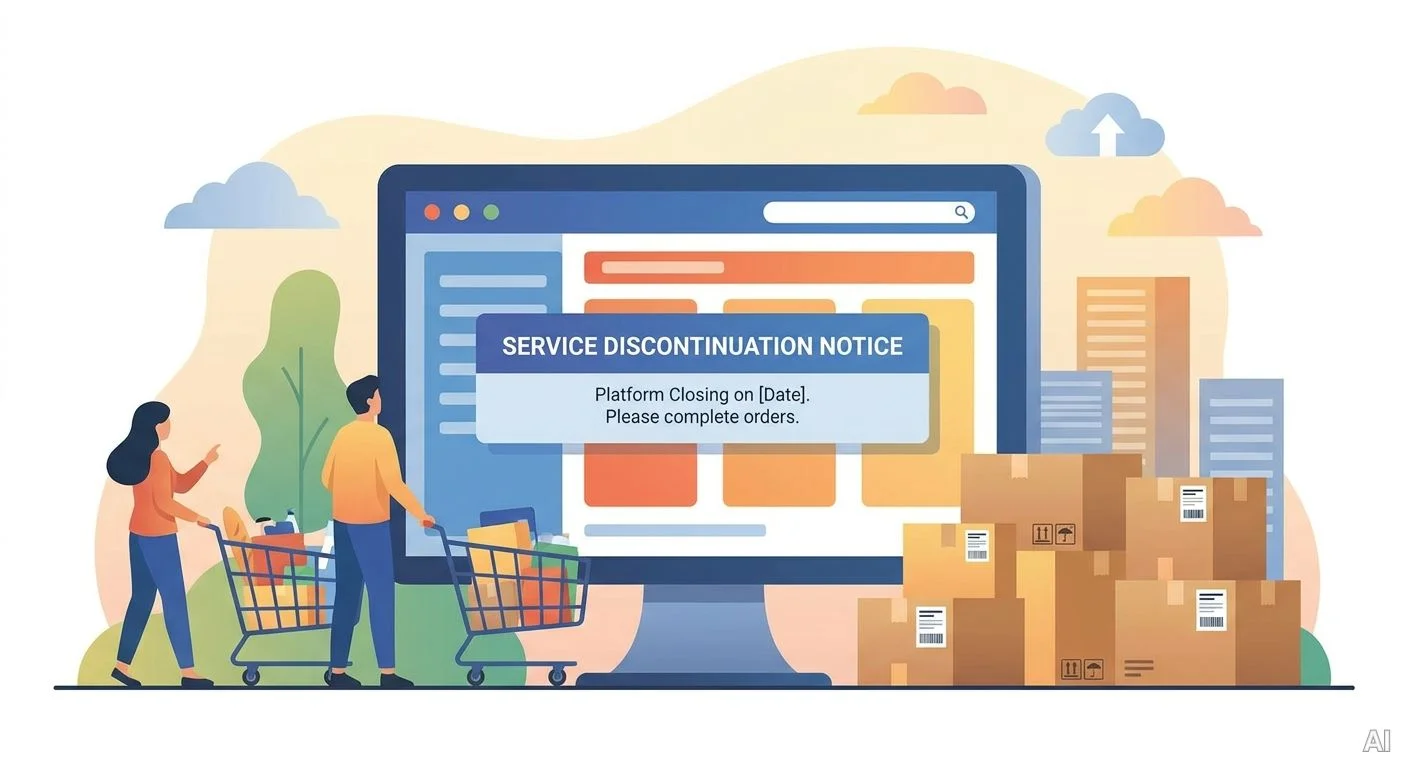
"Access to Costco Next store fronts is no longer available. Please refer to the list below for contact information for vendors with active return policies. For eligible returns and warranty inquiries, contact the vendor directly."
The abrupt discontinuation occurred without a transitional countdown, without grace-period notifications dispatched to consumers, and without prior operational warnings distributed to external brand partners. For a retail institution that reported fiscal year 2026 net sales of $297.3 billion (representing a 10.2% expansion year-over-year) and sustains a customer renewal rate of 92.2% across the United States and Canada, this deliberate blackout marks an uncommon strategic deviation. Rather than a routine maintenance interval, market indicators establish that Costco has officially retired its decade-long drop-ship experiment to realign operational control within its vertically integrated digital channels.
Key Metrics and Performance Benchmarks Summary
- Consolidated Group Net Sales (FY2026): approximately $297.3 billion, reflecting an annualized climb of about 10.2%.
- Fiscal Fourth Quarter Revenue: approximately $93.9 billion, posting an about 11.3% year-over-year increase.
- August 2026 Standalone Net Sales: approximately $23.7 billion, demonstrating about a 9.9% gain over the prior year.
- Digitally Enabled Comparable Sales Velocity: An annualized quarterly rate fluctuating between approximately 20.9% and 21.5%.
- Active Cardholders & Paid Memberships: Over 82.9 million paying household accounts, supporting a broader base of about 149 million total cardholders.
- Costco Next Vendor Roster at Sunset: Approximately 70 to 100 curated independent manufacturer storefronts.
- Historical Discount Profile: Member-exclusive savings scaling between approximately 20% and 50% below standard Manufacturer's Suggested Retail Price (MSRP).
Direct Strategic Anomalies and Market Implications
The marketplace's sudden dissolution follows positive executive remarks delivered during fiscal 2025 earnings presentations. In prior quarterly briefings, management highlighted that quarterly sales volumes on Costco Next matched full-year historical figures from fiscal 2022. The swiftness of the platform's elimination introduces operational friction for active consumers holding open orders and exposes participating third-party vendors to structural platform-dependency risks.
2. Comparative Breakdown: Executive Statements vs. Marketplace Structural Conflict
To accurately understand why an initiative generating double-digit expansion was liquidated overnight, it is necessary to contrast verified executive declarations against the empirical realities of Costco's core distribution doctrine. The following analytical matrix details key institutional positions, commercial friction points, and operational conflicts.
| Stakeholder / Executive Entity | Verified Institutional Statement | Operational Reality & Structural Conflict | Strategic Consequence |
|---|---|---|---|
| Gary Millerchip Chief Financial Officer, Costco | "Costco Next, our curated marketplace, also continues to show healthy year-over-year growth. In Q3 fiscal year 2025, our sales on Costco Next equaled our total sales for all of fiscal year 2022, and we are excited about the pipeline of new vendors and development for future rollout." | Top-line expansion concealed severe logistical dispersion. Dropship units bypassed Costco Logistics networks, complicating real-time inventory visibility and post-transaction tracing. | Executive recognition of commercial velocity proved insufficient to justify ongoing brand exposure to third-party shipping deficits. |
| Cheryl Smeby General Merchandise Manager, Costco | "Separate from what members will find in the warehouses or at Costco.com, Costco Next showcases products from some of Costco's suppliers that have been selected for the quality of their merchandise and their exceptional customer service. By shopping at Costco Next, you have access to a variety of products from these vendors, and you'll get a discount that is available only to Costco members." | Platform screening was unable to enforce unified end-to-end delivery standards across disparate carrier accounts, generating fragmented shipping timeframes across suppliers. | Vendor autonomy fragmented the uniform fulfillment expectations associated with Costco's primary brand promise. |
| Costco Official Site Notice Corporate Portal Statement | "Access to Costco Next store fronts is no longer available. Please refer to the list below for contact information for vendors with active return policies. For eligible returns and warranty inquiries, contact the vendor directly." | Physical warehouses categorically declined to process in-store returns for Costco Next vendor shipments, creating customer service bottlenecks at customer service counters. | Total transfer of customer dispute resolution and warranty enforcement onto independent vendor support pipelines. |
| Retail Industry Analysis Market Commentary | Analysis noted Costco strictly adheres to its 4,000-SKU limit, experimenting quietly with third-party channels for a decade before ultimately severing programs with uncontrollable quality risks. | Costco's purchasing discipline relies on massive bulk purchasing power over limited SKUs, a strategy fundamentally incompatible with hosting broad third-party product catalogs. | Reversion to pure internal retail mechanisms, closing the backdoor entry for non-stocked manufacturer catalogs. |
Core Theoretical Antagonisms Identified in Program Architecture
The comparative data uncovers a baseline corporate friction: Costco attempted to harvest high-margin digital commissions on non-inventoried discretionary inventory without constructing native reverse logistics to manage the resulting product returns. While CFO Gary Millerchip highlighted substantial percentage gains, the gross merchandise volume accounted for less than 1% of total enterprise sales. Ultimately, that modest revenue did not offset the mounting operational complaints fielded across Costco's regional warehouses.
3. Architectural Origins and Strategic Context of Costco Next (2016–2026)
To contextualize the platform's shutdown, its ten-year development must be assessed through the lens of Costco's historic reluctance toward traditional digital commerce. Founded upon an offline, membership-driven warehouse model, Costco launched its original consumer portal in 1998 but kept e-commerce initiatives on a tight operational leash to preserve physical warehouse foot traffic.
Inception as a Low-Risk Discretionary Buffer (2016–2017)
By 2016, merchandising leadership, notably spearheaded by figures including merchandising manager Nino Garcia, recognized a strict physical constraint: a physical Costco warehouse maintains an inventory envelope capped at roughly 4,000 Stock Keeping Units (SKUs). In direct contrast, a conventional supermarket manages 30,000 to 50,000 SKUs, while hypermarket competitors and online platforms maintain catalogs scaling into the tens of millions.

Launched officially in 2017, Costco Next functioned as a relatively capital-efficient bypass around these physical boundaries:
- Zero Inventory Liability: Costco held no physical stock on balance sheets, taking zero holding-cost risk on slow-moving inventory.
- Direct Dropship Routing: Participating vendors integrated member validation protocols on isolated landing pages, fulfilling and shipping items directly via their private carrier accounts.
- Aggregated Discount Structures: In exchange for dedicated exposure to Costco’s affluent demographic, suppliers contractually agreed to offer discounts ranging from 20% to 50% below standard retail pricing.
The Scale Dilemma: Premium Discretionary Goods vs. High-Turn Bulk
The categories recruited for Costco Next diverged sharply from standard warehouse goods. Rather than paper towels, bulk proteins, or pantry staples, the marketplace prioritized specialized lifestyle goods: premium commuter e-bikes from Priority Bicycles, professional cookware from Viking Culinary, residential surveillance packages from Lorex, and specialized prefabricated modular structures from Gorilla Shed.
This dynamic introduced operational complexity. A member purchasing a $2,200 belt-driven commuter bicycle expected the comprehensive customer guarantees long established by Costco’s standard return policy. However, the drop-ship contract structure shifted fulfillment, shipping logistics, and warranty resolution entirely onto the supplier. This created a fractured consumer experience at odds with Costco's core brand promise.
Leadership Shift: Strategic Consolidation Under Ron Vachris
The strategic environment changed following the leadership succession in early 2024, when longtime company veteran Ron Vachris assumed the role of Chief Executive Officer. Where earlier management treated Costco Next as a low-overhead, experimental channel, Vachris initiated a targeted capital deployment push ($6.5 billion in planned capital expenditures for fiscal 2026) aimed at consolidating fulfillment operations.
Under this centralized mandate, third-party distribution channels that bypassed Costco Logistics or introduced fractured return experiences faced thorough operational audits. Rather than supporting independent supplier dropshipping, executive priorities shifted toward direct control across inventory ownership, proprietary distribution facilities, and member checkout workflows.
4. Member and Vendor Community Fallout: Field Data and Digital Response
The unannounced timing of the closure across the Labor Day holiday weekend triggered friction across consumer communities and third-party vendor operations. A detailed examination of digital channels reveals contrasting reactions between Costco's core membership and its long-term brand partners.
Community Disruption Across Online Channels
Within dedicated subreddits including r/Costco (boasting millions of subscribers) and focused specialty hubs like r/PriorityBicycles, the abrupt sunsetting of the portal became a focal point on August 31, 2026. Discussion threads analyzed the sudden disappearance of longstanding brand discounts:
- The Visibility Divide: A significant portion of retail warehouse shoppers commented that they were entirely unaware the portal had existed. By deliberately avoiding aggressive marketing inside warehouses to protect foot traffic, Costco had effectively maintained Costco Next as a quiet, semi-private platform for niche savings enthusiasts.
- The Enthusiast Void: Conversely, specialized consumer segments voiced frustration over the loss of discounts on high-ticket goods—such as 25% off Priority Bicycle units or discounted cosmetic access through distributors like MOST Inc.
- The Return-Policy Shock: Consumers holding damaged or unfulfilled orders discovered that local warehouse managers could not issue direct in-store refunds. Shoppers accustomed to instantaneous counter resolutions encountered third-party return merchandise authorization (RMA) requirements, sparking friction across customer service channels.
Vendor Vulnerability and Structural Platform Risk
Independent manufacturer storefronts experienced severe operational disruption from the unannounced cutover. Reports from corporate tracking publications, including Fast Company and Rolling Out, revealed that multiple participating suppliers received no operational transition window or advance warning before CostcoNext.com began redirecting traffic to corporate support pages.
Representative brands faced sudden disruptions to their digital acquisition pipelines. Priority Bicycles, for instance, deployed customer service mitigation plans through early autumn 2026, offering temporary 20% to 30% discount codes to members who contacted their team directly with an active Costco membership identifier. This dynamic underscored the risks of platform dependency: sudden distribution closures can instantly sever an independent brand's access to consumer pipelines without meaningful operational recourse.
5. Comparative Assessment: Marketplace Strategies Across Modern Retail
To evaluate Costco’s operational decision, its discontinued marketplace model can be benchmarked against competing platforms operated by Amazon and Walmart. Each enterprise manages distinct approaches to third-party inventory, consumer returns, and delivery logistics.
| Platform & Program | Catalog Depth & Sourcing Model | Logistics & Fulfillment Method | Return Mechanics & Friction Points | Ecosystem Control Factor |
|---|---|---|---|---|
| Costco Next (Discontinued 2026) | Curated selective gating (70–100 premium suppliers; ~5,000–10,000 SKUs off-manifest). | 100% Vendor Dropship; uncoordinated ground freight lines without unified tracking integrations. | High Friction: In-warehouse refunds prohibited; consumer directed to third-party customer service and RMA pathways. | Low: Costco acted primarily as a gatekeeper without end-to-end checkout oversight. |
| Amazon 3P (FBA / FBM Model) | Open, decentralized marketplace containing hundreds of millions of SKUs; mixed brand provenance. | Standardized fulfillment networks (Fulfillment by Amazon) alongside merchant-fulfilled logistics options. | Low Friction: Standardized return labels, centralized customer accounts, and neighborhood drop-off hubs. | High: Total algorithmic governance of payments, search rank, fulfillment, and communications. |
| Walmart Marketplace Omnichannel Integration | Broad catalog architecture (tens of millions of SKUs) bridging enterprise retail and external vendors. | Walmart Fulfillment Services (WFS) integrated with independent vendor drop-ship routing. | Integrated: Online third-party marketplace purchases can be returned directly to 4,700 physical stores nationwide. | Medium-High: Physical footprint harmonizes post-order processing and customer support. |
Logistical Divergence and Brand Integrity Risks
This comparative overview highlights the structural limitations of the Costco Next architecture. While Amazon built custom logistics software backed by hundreds of specialized sorting centers, and Walmart integrated physical customer service desks with digital orders, Costco Next operated without technical integration into the primary warehouse point-of-sale (POS) system. This split approach exposed the warehouse operator to brand-eroding friction while contributing only marginally to corporate operating margins.
6. Operational Precedents: Costco’s Pattern of Unscheduled Divestments
While the sudden closure of Costco Next surprised industry observers, historical precedent shows that Costco routinely alters service lines without transitional publicity when an operation drifts from core efficiency standards.
The Closure of the Costco Photo Center (2021–2023)
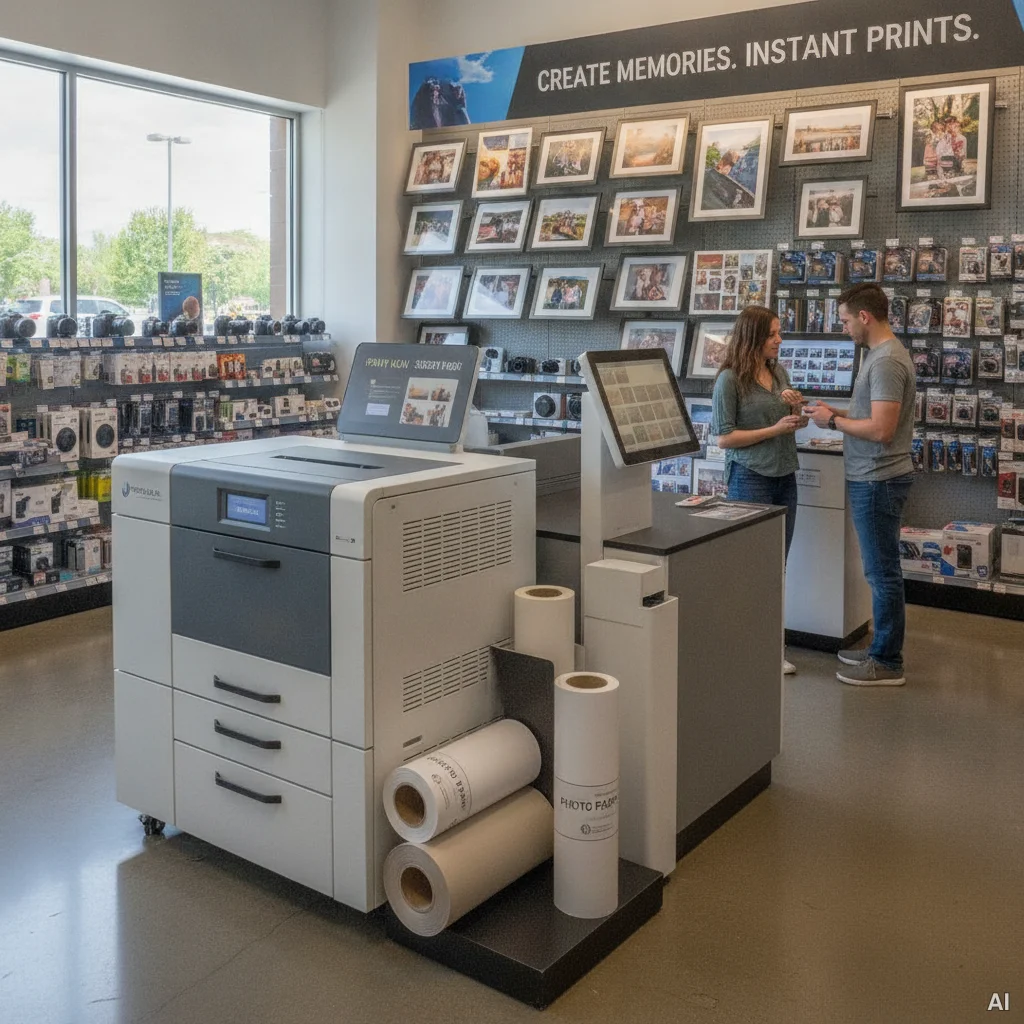
The shutdown of Costco Next closely mirrors the phase-out of the company's dedicated photo processing business. In early 2021, Costco systematically shut down on-site darkrooms and custom printing equipment inside its warehouses. In January 2023, the retailer closed the remaining digital portal (CostcoPhotoCenter.com) and redirected members to a third-party partnership with Shutterfly, which offered members a baseline 51% order discount.
The operational rationale was straightforward: as digital camera memory, smartphones, and cloud storage marginalized traditional film development, maintaining dedicated warehouse footprint, precision chemicals, and specialized labor became economically unviable. Management divested the physical footprint to free up floor space for higher-velocity consumable inventory.
Food Court Optimizations and Membership Integrity Shifts
Similar operating discipline appears across everyday warehouse operations:
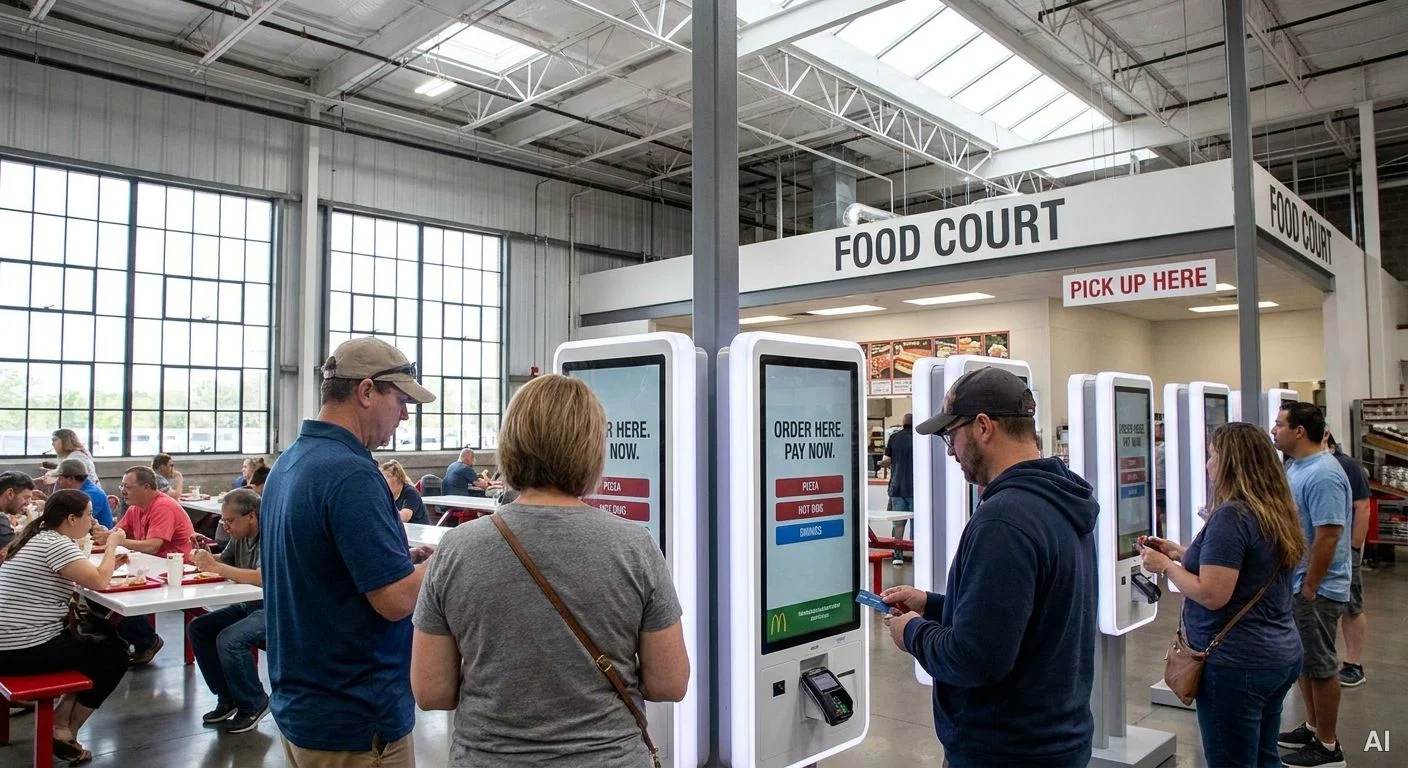
- Food Court SKU Simplification: During the pandemic, bulk onion dispensers, combo pizzas, and traditional hand-twisted churros were removed to accelerate register throughput and ease labor demands.
- Enforcement of Strict Membership Scanners: Beginning in late 2023 and continuing through 2026, Costco rolled out digital membership card scanners at warehouse entrances to curtail unauthorized card-sharing.
These past adjustments demonstrate an uncompromising corporate culture: whenever an auxiliary service generates operational drag, dilutes brand standards, or deviates from core volume velocity, it is eliminated or outsourced regardless of member nostalgia.
7. Tactical Consumer Guide: Warranty Management and Alternative Discount Capture
For consumers holding active orders, unfulfilled items, or warranty needs tied to Costco Next, standard retail customer support paths will not apply. Navigating post-closure claims requires adherence to specific administrative workflows.
Direct Return & Warranty Step-by-Step Resolution Workflow
- Do Not Transport Items to Local Warehouses: Physical warehouse service desks cannot pull transaction records, print return labels, or issue cash and card refunds for Costco Next orders. Bringing oversized items, such as appliances or gym equipment, directly to a warehouse counter will result in immediate rejection.
- Retrieve the Original Purchase Documentation: Access your email archives to pull the original electronic receipt, confirmation invoice, and credit or debit card statement entry. Confirm the exact supplier identity listed under the merchant-of-record field.
- Cross-Reference the Corporate Vendor Directory: Navigate to the current redirect page at
Costco.com/customer-serviceto locate the contact information, direct support portal, and dedicated email channel for the specific brand partner. - Request a Return Merchandise Authorization (RMA): Contact the vendor directly to request an RMA number. Inquire explicitly whether return shipping expenses will be covered by the supplier or billed to you as a restocking deduction.
- Leverage Secondary Credit Card Protections: If a vendor refuses to honor advertised warranties or declines an eligible return, file a dispute through the credit card issuer used for the transaction. Most tier-one credit accounts provide secondary purchase protection, extended warranties, or formal dispute avenues for merchant defaults within designated billing cycles.
Impacted Core Brand Roster & Alternative Discount Capture Strategy
The following representative vendors account for a sizable share of transactions conducted on the sunsetted platform. Several maintain alternative discount workflows for verified Costco members:
- Priority Bicycles: Commuter, gravel, and electric bicycles. Strategy: Members can contact the brand's customer service with a verified Costco card number to request matching 20% promotional checkout codes.
- Viking Culinary: Premium cookware sets, cutlery, and kitchen accessories. Strategy: Check whether products transition over to direct warehouse distribution or curated bulk offerings on
Costco.com. - Lorex Technology: Residential 4K surveillance systems and digital video recorders. Strategy: Standard security hardware packages frequently cycle through direct seasonal distribution promotions on the main
Costco.comportal. - Gorilla Shed & Yard Structures: Prefabricated outdoor storage and accessory buildings. Strategy: Contact manufacturer sales desks to inquire whether direct-to-consumer logistics channels support negotiated freight-inclusive pricing.
- Inspire Fitness: Home gym functional trainers and adjustable workout benches. Strategy: Monitor seasonal warehouse inventory windows, particularly during late Q4 and Q1 fitness merchandise refreshes.
8. Enterprise Impact, Wall Street Valuation, and E-Commerce Consolidation
Beyond customer service desks, the sunsetting of Costco Next reflects a broader strategic realignment regarding Costco’s capital expenditures and digital platform design.
Financial Scope and Capital Allocation
Within Costco's broader financial scale—surpassing $297 billion in total net revenues—Costco Next's gross transaction volume represented a fraction of 1% of total enterprise sales. Consequently, its immediate dissolution will not materially impair group top-line revenues or core quarterly earnings per share.
Financial institutions, including Mizuho Securities, maintained long-term price targets in the $1,100 to $1,125 range following the platform's closure, emphasizing that Costco's strategic value stems from physical warehouse renewal rates rather than experimental drop-ship commissions. The company's digital investments, projected at $6.5 billion in capital expenditures for fiscal 2026, are directed toward institutional infrastructure rather than outsourced seller networks:
- Scaling Costco Logistics: Expanding proprietary delivery operations to handle major appliances, televisions, and fitness equipment, thereby replacing fragmented common-carrier networks.
- Native Digital Ordering Integrations: Introducing expanded mobile app features, including digital deli ordering and automated pharmacy pick-up queues, designed to support physical warehouse visits.
- Strategic Enterprise Partnerships: Deepening fulfillment alliances with established last-mile networks like Instacart and Shipt to maintain scalable local delivery coverage.
Strategic Outlook and Merchandising Conclusions
Costco's sudden closure of Costco Next illustrates an enduring retail reality: loose marketplace networks often clash with the operating discipline required to run high-volume bulk warehouses. The company’s core business model requires tight control over inventory flow, vendor pricing power, and uniform customer service policies. An outsourced drop-ship model, despite driving initial growth spikes, ultimately compromised that standard.
By retiring Costco Next without a protracted wind-down, CEO Ron Vachris and his management team have reasserted Costco’s operational focus. The enterprise is doubling down on curated, high-turnover inventory handled directly by its own warehouses and proprietary logistics. While this sudden departure inconveniences selective discount shoppers and exposes platform-dependent suppliers to commercial disruption, it safeguards the retail brand's foundational formula: relentless operational efficiency backed by uncompromising quality control.
ℹ️ This article was drafted with the help of an AI tool and reviewed/edited by a human before publishing. · Original: AdEngine-X
📚 References
This list may include both live search sources the AI referenced while writing and public-data sources checked during fact verification. Please verify the original sources before citing or reusing.
0 Comments
Loading comments...