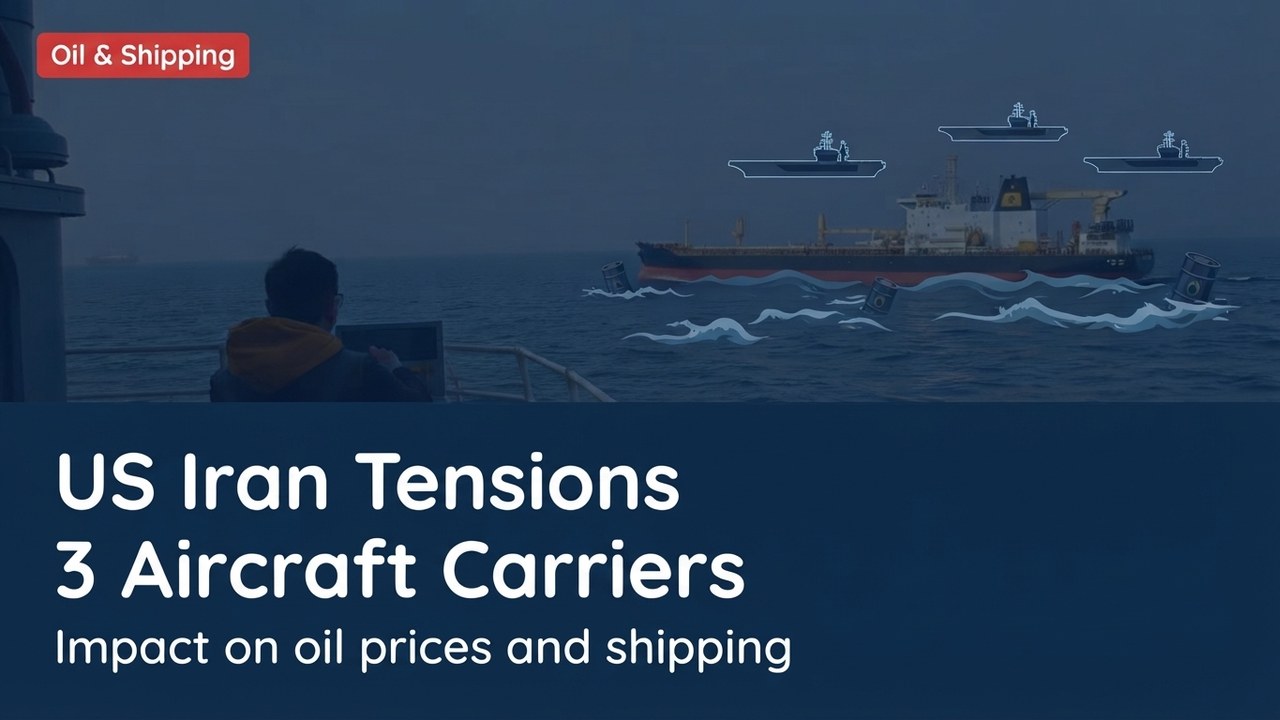
US Iran carrier risks explained for household investors
📌 Topic & Subject
This article explains the implications of the U.S. deployment of a third aircraft carrier to the Central Command region in November 2026 amid ongoing tensions with Iran. It analyzes how military developments, maritime restrictions, and sanctions impact oil prices, shipping operations, and household or business budgeting.
📌 Table of Contents
- 1. How the confrontation reached this point
- 2. What the third carrier changes
- 3. The figures behind the headlines
- 4. Where the official positions diverge
- 5. Why oil has resisted another surge
- 6. What consumers could feel first
- 7. What investors should separate
- 8. Which developments would change the outlook
- 9. The next dates and signals
The USS Theodore Roosevelt entered the U.S. Central Command area on November 15, 2026, bringing the regional deployment to three U.S. aircraft carrier strike groups.
How the confrontation reached this point
The United States and Israel began military operations and extensive sanctions against Iran in late February 2026. Subsequent diplomatic breakdowns and localized fighting shifted attention toward Iranian ports and maritime oil routes. Washington expanded pressure through operations identified as Project Freedom and Task Force Iron Gate.
The current carrier concentration follows another three-carrier deployment in April 2026. It is therefore an escalation in available military capacity, but not an unprecedented development within this conflict. A carrier strike group combines an aircraft carrier with accompanying warships, supporting air operations, defense, and maritime missions.
U.S. maritime restrictions resumed in July 2026. By November, CENTCOM claimed they had blocked more than $30 billion in Iranian oil exports and diverted roughly 150 vessels. Those figures describe Washington’s assessment of its campaign, rather than an independently established measure of Iran’s total economic losses.
President Donald Trump’s statements between November 10 and 14 suggested maritime and land pressure could achieve U.S. objectives without a formal agreement. He also indicated that further large-scale airstrikes could remain on hold if Iran avoided additional provocations. This leaves military reinforcement compatible with either sustained coercion or renewed attacks.
What the third carrier changes
By November 16, the Theodore Roosevelt had joined the USS George H.W. Bush and USS George Washington, according to CENTCOM and U.S. Navy information. The deployment increases the forces available to U.S. commanders. It does not, by itself, establish that Washington has ordered a new air campaign.
The additional carrier can support overlapping missions while other forces rotate or undergo maintenance. It also increases Washington’s options for enforcing maritime restrictions and responding to attacks. Military capacity and political intent remain separate questions.
Recent Iranian claims concerning tanker mine explosions and a drone attack on a U.S. base in Bahrain have intensified concern. These claims should not be treated as established damage assessments. For businesses, verified changes in shipping operations matter more than the number or intensity of competing announcements.
The figures behind the headlines
The figures below describe different reference periods and measurement types. Military deployments are snapshots, oil production measures daily flows, and futures prices reflect particular trading sessions. They should not be read as interchangeable measures of escalation.
| Indicator | Reported figure | Reference date | Source and interpretation |
|---|---|---|---|
| U.S. aircraft carriers deployed regionally | 3 | November 16, 2026 | CENTCOM / U.S. Navy; Roosevelt, Bush, and Washington |
| U.S. warships in regional waters | About 20 | November 16, 2026 | U.S. Navy / Associated Press; approximate fleet count |
| U.S. personnel in CENTCOM’s area | More than 50,000 | November 16, 2026 | Department of Defense / The Hill; broader regional footprint, not carrier personnel alone |
| Brent crude futures | $94.91–$95.54 per barrel | November 16, 2026 | ICE / Reuters / ICIS; range of reported closing figures, not an intraday trading range |
| WTI crude futures | $87.94–$88.31 per barrel | November 16, 2026 | NYMEX / CBS / ICIS; range of reported closing figures, not an intraday trading range |
| Global daily oil supply | 105.4 million barrels per day | October 2026 | International Energy Agency, November report |
| Saudi crude production | 10.56 million barrels per day | October 2026 | OPEC / Saudi official submission; crude production, not total global oil supply |
| Hormuz tanker traffic recovery | Approximately 82% of the prewar level | Mid-November 2026 | Kpler market analysis; traffic recovery does not establish normal insurance costs |
| Iranian economic growth forecast | 25% contraction over the following year | November 15, 2026 | Treasury Secretary Scott Bessent, Fox / CNBC; a U.S. official’s forecast, not an observed outcome |
Brent traded near $120 per barrel during the conflict’s initial February–March 2026 phase. November’s reported closes near $95 show that greater military concentration has not reproduced that initial price shock. This comparison concerns different periods, not a direct measurement of the carrier deployment’s price effect.
Where the official positions diverge
The dispute extends beyond naval deployments. Washington emphasizes economic pressure and deterrence, while Tehran links nuclear inspections to guarantees against renewed war. Those positions create separate obstacles to a durable reduction in tensions.
| Issue | U.S. position | Iranian position | Business significance |
|---|---|---|---|
| Military and maritime pressure | Trump indicated pressure could achieve U.S. objectives without a formal agreement; further major strikes could be withheld absent additional provocation. | The Revolutionary Guard navy described U.S.-led Hormuz transit arrangements as unlawful. | Disputed passage arrangements can sustain shipping uncertainty even without a broader air campaign. |
| Nuclear inspections and security | The administration continued its military and economic pressure campaign. | Deputy Foreign Minister Kazem Gharibabadi tied access to damaged nuclear facilities to permanent war-ending guarantees and acceptance of Iranian demands. | Inspection access is a concrete diplomatic indicator, distinct from changes in rhetoric. |
| Economic pressure | Bessent said the administration’s Operation Economic Outcast sanctions were producing results. | Iranian officials maintained their demands over security guarantees and maritime arrangements. | Sanctions and shipping restrictions can persist even if immediate fighting subsides. |
Statement dates: Trump, November 10–14, 2026, public remarks and Truth Social; Bessent, CNBC’s Squawk Box, November 13; Gharibabadi, broadcast November 16; Revolutionary Guard navy, November 16.
Bessent also urged the Federal Reserve on November 13 not to raise interest rates in response to the energy disruption. He characterized it as a temporary wartime supply shock. That is the Treasury secretary’s policy argument, not a Federal Reserve commitment or proof that inflation effects will fade quickly.
Why oil has resisted another surge
The International Energy Agency’s November report pointed to a global supply-surplus outlook. Saudi production had recovered to 10.56 million barrels daily in October, while alternative land pipelines helped offset maritime disruption. These supply conditions differ from the conflict’s initial shock.
Kpler’s mid-November estimate placed Hormuz tanker traffic at approximately 82% of its prewar level. That indicates substantial recovery, but not full normalization. It also does not establish whether individual routes, cargo types, or insurance arrangements have recovered equally.
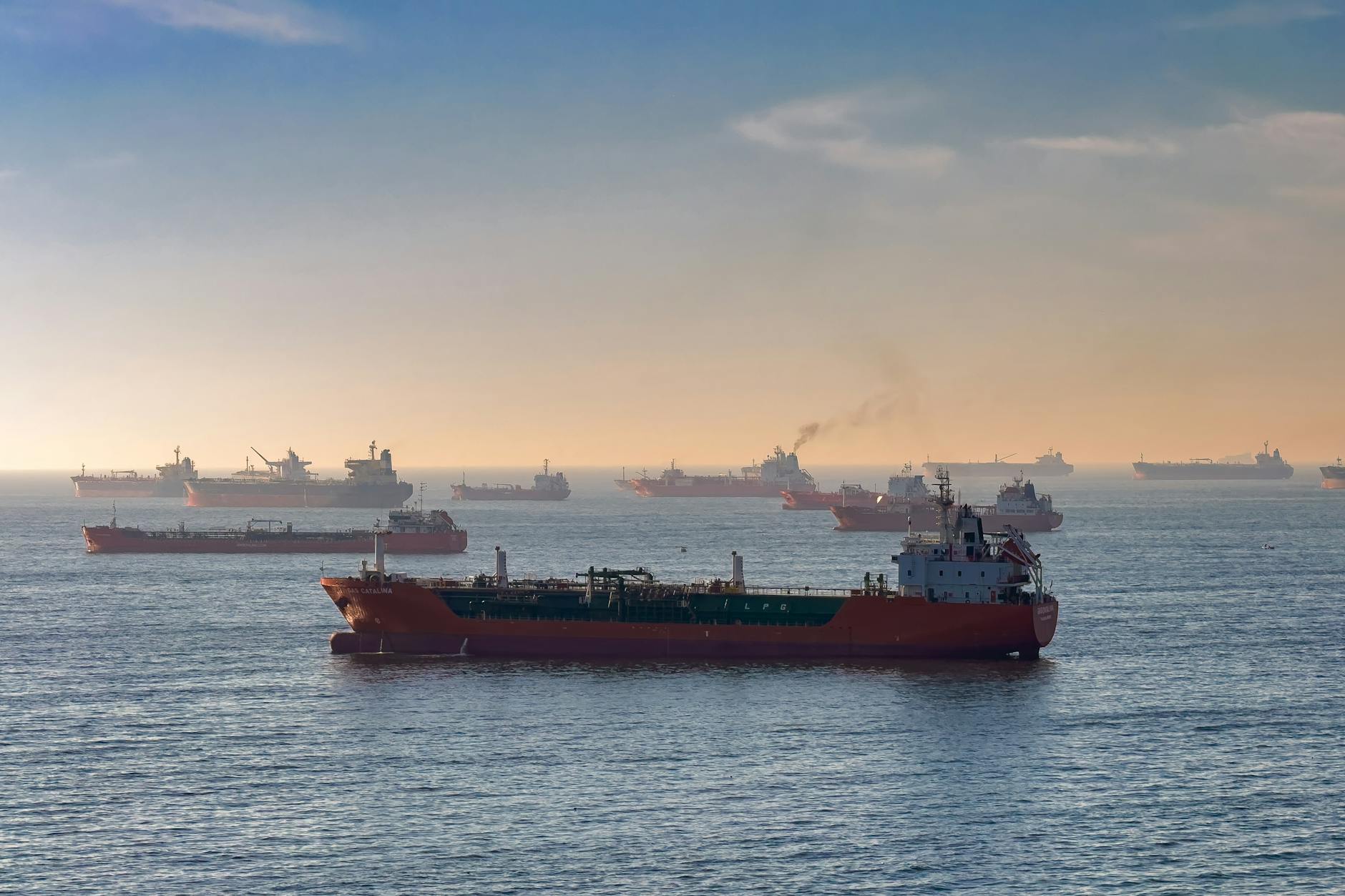
The central market distinction is between threatened disruption and actual barrels lost. Military news can raise the extra price buyers pay for uncertainty. Sustained production, functioning transport routes, and inventories can counter that pressure. Neither mechanism guarantees the next price move.
What consumers could feel first
Fuel costs depend on transmission
A sustained increase in crude prices would put upward pressure on gasoline and diesel costs. Retail prices also depend on refining, distribution, taxes, and local competition. Consumers should therefore avoid assuming that a daily oil-futures move will immediately produce an equivalent change at the pump.

The evidence supports a conditional assessment rather than a price forecast. Recovered production and shipping activity provide some protection against shortages. Verified damage to tankers, ports, or transport routes could weaken that protection.
Shipping risks can outlast price spikes
War-risk insurance is additional coverage for exposure to conflict. Elevated premiums can increase the cost of moving oil even when benchmark crude prices stabilize. The same distinction matters for businesses budgeting fuel deliveries: the commodity price and the delivered cost are not identical.
For household budgeting, repeated increases in actual fuel bills are more informative than a single military headline. For businesses, supplier quotations and transport surcharges provide a direct measure of cost exposure. Neither requires predicting whether Washington will authorize further strikes.
What investors should separate
Energy prices and company earnings
Higher crude prices can improve revenue conditions for some producers while increasing costs for fuel-intensive businesses. The earnings effect depends on production volumes, contracts, debt, and existing price protection. An oil-price increase does not translate uniformly into stronger energy-sector profits or weaker transport earnings.
Likewise, a military escalation headline does not establish a lasting oil shortage. Investors should distinguish a temporary rise in perceived risk from evidence of sustained supply losses. This is especially important when supply forecasts and military developments point in different directions.
Inflation risks and interest rates
A prolonged energy shock can raise inflation and complicate monetary policy. A brief disruption may have a different effect if broader price pressures continue easing. The distinction explains why inflation releases matter alongside tanker movements and official statements.
The Federal Reserve’s own communications and published decision govern U.S. monetary policy, not Treasury commentary or market expectations. Short-term oil positions also carry substantial price-reversal risk when headlines change. No specific security or product follows automatically from this deployment.
Which developments would change the outlook
Contained pressure: The deployment could support continued maritime enforcement without a broad air campaign. Trump’s November statements allow for that possibility. Stable tanker traffic, sustained production, and fewer verified attacks would strengthen this interpretation.
Renewed disruption: Confirmed attacks on shipping, port damage, or sustained transit restrictions would increase concern about physical supply. Falling tanker movements and rising delivered transport costs would make that concern more measurable. Iranian claims alone do not establish this scenario.
Diplomatic easing: Changes in inspection access, maritime arrangements, or security guarantees could reduce uncertainty. Gharibabadi’s November 16 position identifies specific obstacles that negotiations would need to address. Any announced mediation through Pakistan or Qatar should be judged by concrete commitments and implementation.
These are conditional paths, not probability estimates. The available figures do not establish a defensible numerical likelihood for renewed war. The strongest evidence will come from operational changes rather than force counts alone.
The next dates and signals
- November 18–19, 2026: The scheduled APEC leaders’ meeting in Shenzhen provides a diplomatic event to monitor. Watch official announcements for substantive discussion of Iran, shipping security, or sanctions rather than assuming a breakthrough.
- Late November 2026: The U.S. October core personal consumption expenditures inflation release will inform the broader inflation picture. Core inflation excludes food and energy, so it should be read alongside energy-sensitive measures.
- December 9, 2026: The scheduled Federal Open Market Committee decision is the next monetary-policy milestone. The decision and accompanying explanation matter more than political requests for a particular outcome.
- Daily operational signals: Follow CENTCOM and U.S. Navy deployment announcements, verified shipping incidents, tanker traffic, and war-risk insurance changes.
- Diplomatic announcements: Watch official statements on inspection access, mediation, and any bilateral meeting arrangements. A meeting announcement and an implemented agreement are different developments.
The third carrier increases Washington’s military options, but it does not establish that renewed large-scale attacks are imminent. For consumers and investors, the decisive issue is whether tensions interrupt physical energy flows long enough to affect costs and inflation. Start by comparing any escalation headline with verified Hormuz shipping conditions before changing a budget or investment assumption.
ℹ️ This article was written with the help of AI tools. · Original: AdEngine-X

AI spending fears 5 rules for household investors
🇺🇸 English (영어) · 마샬팀장 · 10/23/2026

Alaska Senate lawsuit mistakes investors must avoid
🇺🇸 English (영어) · 마샬팀장 · 10/24/2026

Why Elon Musk election spending impacts Tesla and SpaceX
🇺🇸 English (영어) · 마샬팀장 · 10/23/2026

Airline seat volume and yield focus operational differences
🇺🇸 English (영어) · 마샬팀장 · 10/25/2026
More from this author




🗞️ Source material
- Third U.S. carrier arrives, stoking concerns about renewed conflicts with Iran— Ref: CNBC (headline & link)
This article was independently written and edited by AdEngine-X based on the facts reported in the sources below. No original wording or photos were used.
📚 References
This list may include both live search sources the AI referenced while writing and public-data sources checked during fact verification. Please verify the original sources before citing or reusing.
Was this article helpful?
0 Comments
Loading comments...