China Q3 GDP 2026: 5 ways to protect family wealth
(Advertisers wanted)
(Advertisers wanted)
📌 Topic & Subject
This article analyzes China's third-quarter 2026 GDP growth report of 4.5% and examines the two-speed economic transition driven by high-tech manufacturing booms alongside domestic property market slumps. Based on these macroeconomic shifts, it provides five practical strategies to protect family wealth, including delaying electronic device purchases, rebalancing emerging market portfolios, and avoiding real estate and steel funds.
(Advertisers wanted)
(Advertisers wanted)
📌 Table of Contents
- 1. Analyze the third-quarter economic reality
- 2. Understand the two-speed economic transition
- 3. Review the stark data contrasts
- 4. Monitor market and public sentiment
- 5. Execute your family financial strategy
- 6. Uncover the hidden policy details
- 7. Compare current stimulus to past crises
- 8. Track upcoming economic policy shifts
- 9. Finalize your family financial review
Analyze the third-quarter economic reality
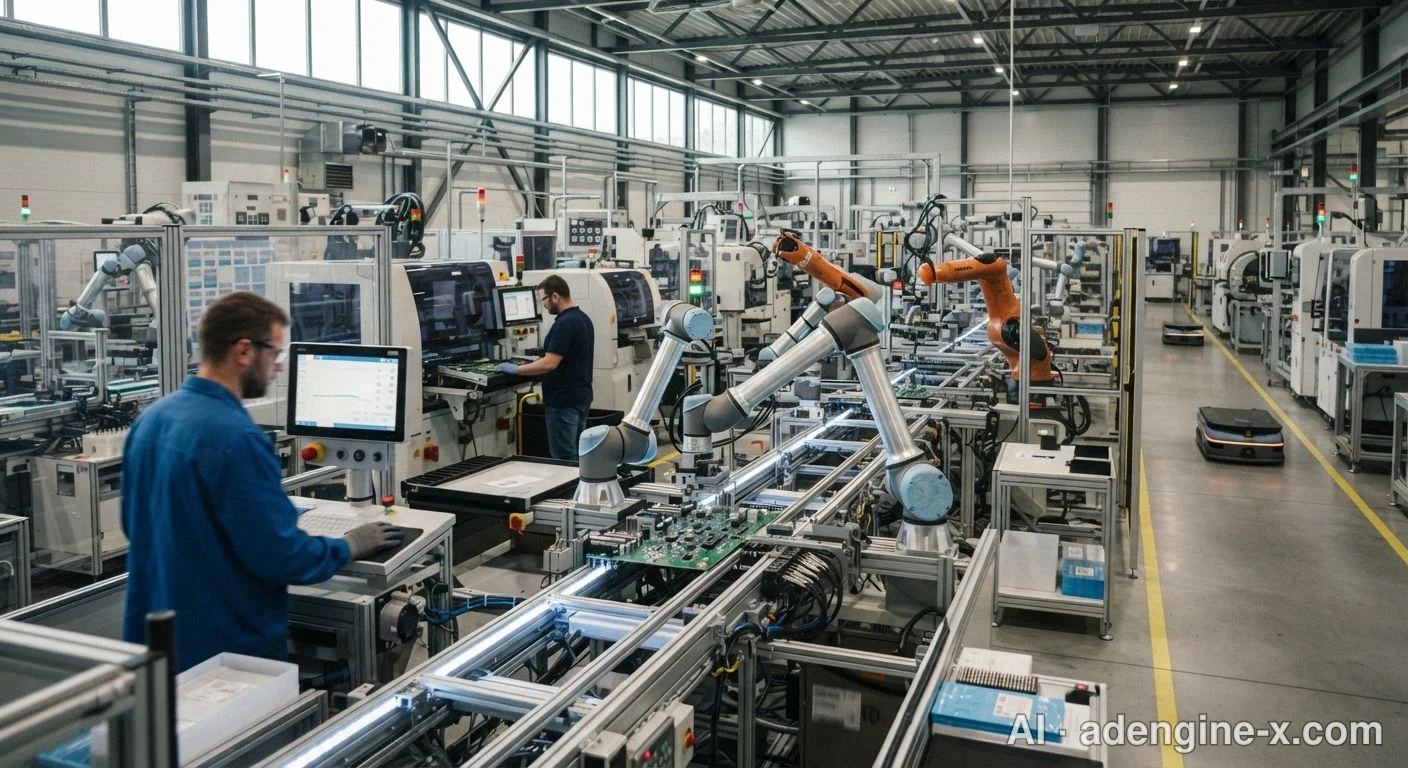
China's National Bureau of Statistics reported a 4.5% year-over-year third-quarter gross domestic product growth on October 19, 2026. This figure beats the 4.4% market consensus and marks a recovery from the previous quarter. Quarter-over-quarter growth reached approximately 1.2%, slightly exceeding the 1.1% estimate. The current economic expansion heavily relies on high-tech manufacturing, while domestic property markets remain in a slump.
Understand the two-speed economic transition
Over the past three decades, real estate and infrastructure investment drove Chinese economic expansion. The 2021 Evergrande crisis triggered a severe property market collapse. Beijing policymakers now force capital into high-tech manufacturing. They call this strategy “New Quality Productive Forces.”
This strategic shift creates a polarized two-speed economy. Export-driven technology factories operate at maximum capacity. Conversely, domestic services and construction face immense stagnation.
Chinese households are estimated to hold roughly 70% of their wealth in property. Falling home prices create a massive negative wealth effect. This dynamic completely freezes domestic consumer spending.
Review the stark data contrasts
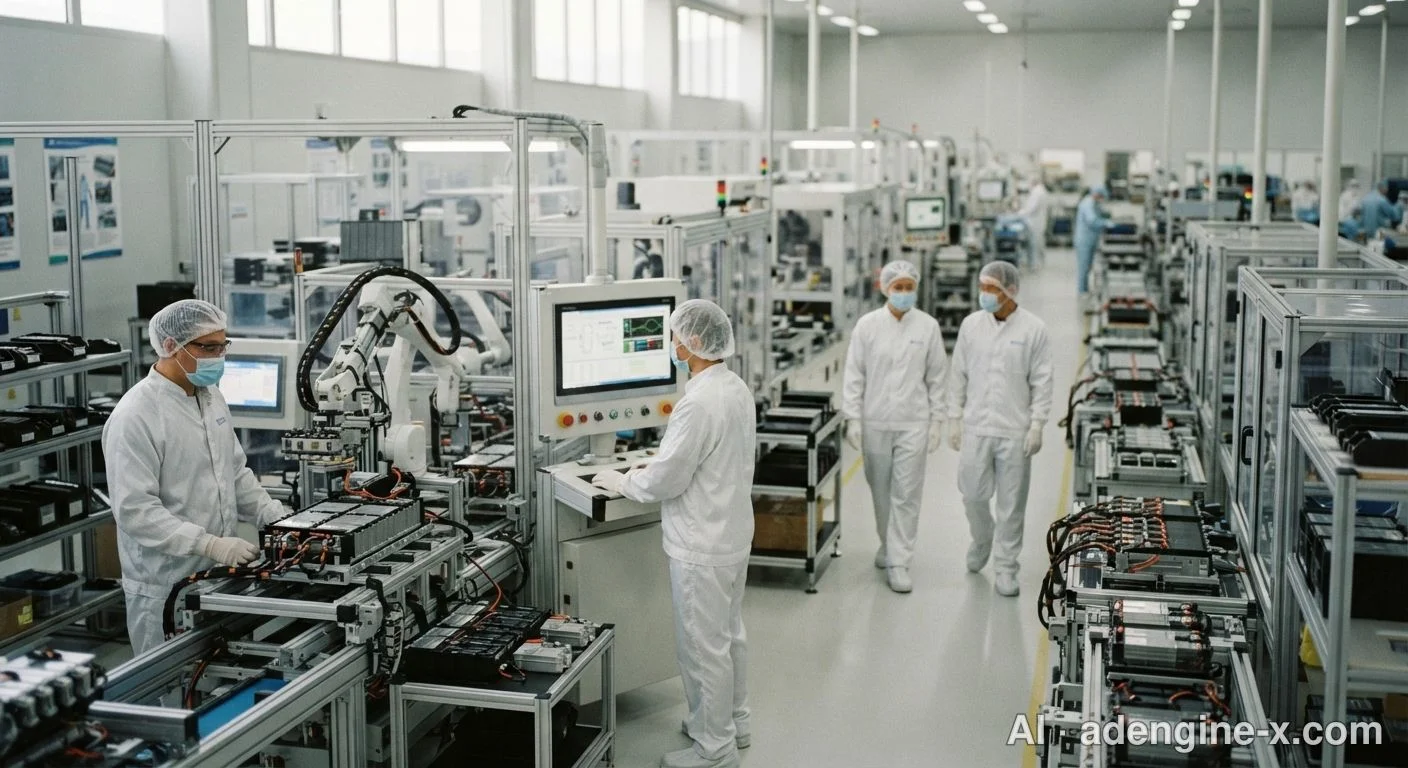
Industrial production rose approximately 5.5% in September compared to the previous year. High-tech manufacturing production surged 14.3% during the January–September period. Equipment manufacturing production increased by 10.2%. Specific sectors saw explosive growth during this period.
Production of 3D printing equipment reportedly jumped 62.5%. Lithium-ion batteries increased by 39.5%, and industrial robots rose 29.1%. Conversely, September retail sales grew only 1.1%, despite beating estimates.
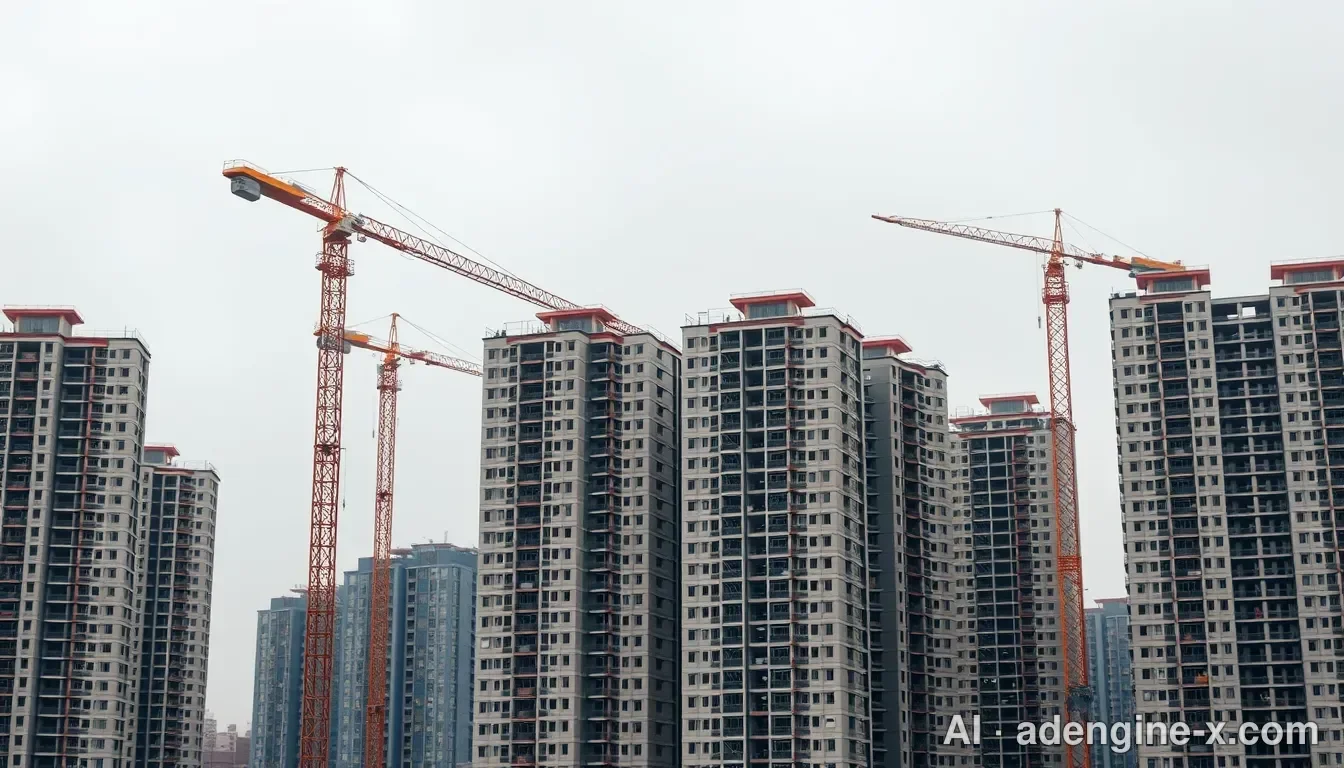
Fixed asset investment dropped 7.2% year-to-date. Property development investment plummeted 20.6%, and new commercial building sales fell 13.9%. Urban unemployment stood at 5.2% in September.
September exports reportedly hit $447.18 billion, rising 29.6% in yuan terms. This pushes the 2026 trade surplus pace beyond the previous record. The surplus is on track to beat the $1.2 trillion mark.

| Economic Sector | High-Tech Exports (Boom) | Domestic Property (Slump) |
|---|---|---|
| Growth Level | High-tech production +14.3%, Batteries +39.5% | Retail sales +1.1%, Property investment -20.6% |
| Primary Drivers | Global AI boom, overseas data center hardware | Housing decline, household debt, income uncertainty |
| Government Policy | Low-interest industrial credit, R&D tax benefits | Loan extensions, defensive unsold inventory purchases |
| Global Impact | Hardware price cuts, supply chain dependence | Decreased demand for global construction commodities |
Monitor market and public sentiment
High-tech innovation buffers the broader economic slowdown, according to the National Bureau of Statistics. However, officials acknowledged persistent external uncertainty and weak domestic demand. The International Monetary Fund reportedly cut China's 2026 growth forecast to 4.5%.
They warned growth could drop to 4.0% in 2027 without structural reforms. ING Group analysts noted the GDP surprise confirms a market bottom. They added it reduces the likelihood of massive fiscal stimulus.
Guotai Junan International highlighted that AI hardware exports mask the lack of domestic consumer recovery. On social media platforms, citizens complain about frozen wages. Urban parents practice a reverse consumption upgrade, shifting to discount brands like Uniqlo.
Luxury groups like LVMH and Kering lowered their third-quarter guidance due to reduced household spending. Conversely, global semiconductor distributors linked to Nvidia benefited from Chinese assembly demand. Reddit investors remain highly skeptical about the data. They note that GDP growth does not guarantee stock market returns.
Execute your family financial strategy
1. Delay household electronic device purchases
You should wait for major holiday promotions to buy laptops or tablets, which takes minimal effort and saves your family up to $200 per device. Chinese semiconductor and hardware exports are flooding the global market. This massive supply creates global deflationary pressure on educational IT devices. Parents planning to upgrade school equipment should avoid immediate retail purchases.

2. Rebalance your emerging market portfolios
You must shift investments away from broad Chinese consumer index funds, a one-hour task that protects your retirement portfolio from prolonged domestic consumption stagnation. Broad funds face severe headwinds from weak retail sales. Target exchange-traded funds focused on the global AI hardware supply chain instead. State-backed sectors like semiconductor packaging and robotics offer better growth potential.
3. Manage currency risks for education
You need to divide tuition currency exchanges into multiple smaller transactions, requiring monthly scheduling but preventing sudden $500 tuition spikes from unfavorable currency swings. The Chinese yuan appreciates slowly due to interest rate gaps with the United States. Families preparing for study abroad in Asia or the US should avoid lump-sum conversions. Maintain a steady, phased approach to currency management.
4. Avoid real estate and steel funds
You should remove construction-linked commodity funds from your family investment accounts, a fifteen-minute review that prevents thousands of dollars in potential losses. Property development investment in China fell 20.6% during the January–September period. Infrastructure investment also shrank by 4.2%. Basic construction materials like iron ore lack short-term rebound catalysts, making equity-linked securities highly risky.
5. Guide future student career paths
You must direct high school students toward global technology supply chain majors, taking a few weekends of research to ensure lucrative four-year degree outcomes. China's industrial sector has completely shifted away from real estate. Growth now centers on smart factories, 3D printing, and battery technology. Students aiming for STEM fields should focus on industrial software and advanced materials engineering.
Uncover the hidden policy details
The recent export surge hides a structural front-loading effect. Chinese manufacturers are dumping excess capacity abroad at ultra-low prices before new US and EU tariffs take effect. Furthermore, Beijing quietly approved a ¥550 billion (about $82.28 billion) unused local government debt quota, comprising ¥300 billion in general bonds and ¥250 billion in special bonds.
This hidden financial lifeline prevents local civil servant wage defaults and stalled infrastructure projects. Meanwhile, China bypasses US semiconductor export controls. They utilize tech supply chain hubs in Southeast Asia and the Middle East for custom module packaging.
Compare current stimulus to past crises
During the 2008 global financial crisis, China unleashed a ¥4 trillion package. That money flowed entirely into apartments, roads, and railways. This caused global commodity prices to skyrocket.
In 2026, Beijing strictly controls real estate development. Capital now migrates exclusively to future tech hardware like industrial robots and electric vehicles. This focused growth benefits technology-intensive sectors while starving traditional construction materials of necessary funding.
| Comparison Metric | 2008 Financial Crisis | 2026 Economic Transition |
|---|---|---|
| Primary Investment Focus | Real estate, roads, traditional infrastructure | AI hardware, robotics, green energy manufacturing |
| Global Commodity Impact | Massive surge in iron ore and copper prices | Deflationary pressure on tech hardware prices |
| Household Wealth Effect | Rapid property value appreciation boosted spending | Declining home prices suppress domestic consumption |
| Trade Policy Environment | Broad global cooperation and open markets | Intense tariff disputes with the US and EU |
Track upcoming economic policy shifts
The People's Bank of China will likely avoid aggressive Loan Prime Rate cuts. Governor Pan Gongsheng indicated a preference for selective liquidity provision. Authorities will monitor existing policies, such as the late-September first-home mortgage rate cut.
The year-to-date GDP sits at 4.6%. Beijing only needs 4.4% in the fourth quarter to meet its official target. This reduces the incentive for massive year-end stimulus packages. Record trade surpluses will inevitably escalate trade friction with Western nations.
Finalize your family financial review
Parents should consider adjusting household budgets based on these macroeconomic shifts, but individual circumstances and official announcements should be prioritized. The 4.5% GDP growth highlights a thriving tech export sector but exposes a fragile domestic consumer market. Review your investment portfolios immediately to reduce exposure to Chinese real estate. Monitor the monthly retail sales data and property price indexes closely.
Watch for any concrete cash support measures during the Central Economic Work Conference in December. Specific financial conditions depend on individual institutional assessments and official announcements. Adjust your long-term wealth strategy as these global economic indicators evolve.
Action checklist for household wealth preservation
- Target hardware innovators: Direct emerging tech allocations toward industrial robotics, battery producers, and advanced hardware rather than broad retail indexes.
- Eliminate real estate exposure: Divest from construction-linked equities, steel manufacturers, and property developers struggling with multi-year corrections.
- Stagger currency exchanges: Utilize disciplined dollar-cost averaging for international schooling funds to mitigate ongoing exchange rate fluctuations.
ℹ️ This article was drafted with the help of an AI tool and reviewed/edited by a human before publishing. · Original: AdEngine-X

Berkshire Energy Valuation: Why BHE Is Worth More Than Duke or Southern and 5 Practical Family Moves
🇺🇸 English (영어) · Finance Desk · 9/19/2026

Entegris (ENTG) Stock Deep Dive 2026: Why Wafer Starts and Memory CapEx Matter for Family Portfolios
🇺🇸 English (영어) · 마샬팀장 · 9/8/2026

TSMC High-NA Adoption and ASML: 2 Timelines Every Family Investor Must Know
🇺🇸 English (영어) · 마샬팀장 · 9/9/2026

$1.5M 401(k) RMD Tax Impact: Key Rates, 4 Strategic Alternatives, and Roth Conversion Mechanics
🇺🇸 English (영어) · 마샬팀장 · 9/9/2026
More from this author



🗞️ Source material
- China's third-quarter economic growth quickens to 4.5% as exports surge, beating estimates— Ref: CNBC (headline & link)
This article was independently written and edited by AdEngine-X based on the facts reported in the sources below. No original wording or photos were used.
📚 References
This list may include both live search sources the AI referenced while writing and public-data sources checked during fact verification. Please verify the original sources before citing or reusing.
0 Comments
Loading comments...