Berkshire Energy Valuation: Why BHE Is Worth More Than Duke or Southern and 5 Practical Family Moves
(Advertisers wanted)
(Advertisers wanted)
📌 Topic & Subject
This article examines the financial valuation and operational structure of Berkshire Hathaway Energy (BHE), comparing its multi-billion dollar earnings and market worth to major standalone utilities like Duke Energy and Southern Company. It explores BHE's historical growth from MidAmerican Energy to a global infrastructure giant through strategic acquisitions, detailing how its 100% ownership by Berkshire Hathaway and zero-dividend reinvestment strategy create tax-efficient compounding for long-
(Advertisers wanted)
(Advertisers wanted)
📌 Table of Contents
- 1. Pulling Up a Chair: Why Are We Talking About Power Plants and Family Budgets?
- 2. Background and Evolution: How MidAmerican Energy Became an $80 Billion Behemoth
- 3. Market Status & Latest Indicator Trends: The Hard Financial Numbers
- 4. Comparative Analysis: BHE vs. Traditional Stand-Alone Utilities
- 5. Investment Points & Market Opportunities: The Invisible Compounding Engine
- 6. Major Risks and Defense Strategies: Wildfires, Rate Battles, and Transition Bottlenecks
- 7. Family Financial Action Plan: 5 Practical Steps to Fortify Your Household
- 8. Frequently Asked Questions: What Family Investors Want to Know
- 9. Expert Takeaways and Outlook: Navigating the Next Energy Decade
1. Pulling Up a Chair: Why Are We Talking About Power Plants and Family Budgets?
Pull up a chair, take a warm sip of tea, and let's talk family balance sheets. If you are anything like me—a dad in his 40s watching household grocery receipts, monthly utility statements, and our children's 529 college savings accounts climb side-by-side—you have probably noticed how energy bills have quietly become a significant fixed line item. Between air conditioning running through humid July afternoons, the kids plugging in school tablets, and the winter heating cycle kicking into gear, the monthly power bill is rarely a pleasant surprise.
A few mornings ago, while reviewing financial reports before the house woke up, I dug into a notable business analysis originally highlighted on Yahoo Finance by market analyst James Brumley of The Motley Fool. The headline laid down a provocative claim: "Berkshire's Energy Holdings Are Worth More Than Most Stand-Alone Utilities. Here's the Math."
Most people view Warren Buffett's conglomerate, Berkshire Hathaway (Ticker: BRK.A / BRK.B), as a massive stock portfolio holding household names like Apple, American Express, and Coca-Cola. But beneath that headline-grabbing equity portfolio sits a powerhouse engine that directly touches daily life: Berkshire Hathaway Energy (BHE). When you sit down and run the rigorous valuation numbers, this unlisted subsidiary is worth more than almost every stand-alone, publicly traded electric utility giant on Wall Street. Today, let's step through the background, break down the balance sheet mathematics, compare it against legacy dividend champions, and build an actionable, step-by-step checklist to help protect your family budget and grow your multi-year savings.
Why Unlisted Infrastructure Matters to Everyday Household Finances
When our parents invested for retirement, utilities were considered the ultimate "widow-and-orphan" sleep-well-at-night investments. You bought Duke Energy, Southern Company, or Consolidated Edison, collected quarterly dividend checks, and paid your electric bill with the proceeds. However, our economic environment has shifted. Grid modernization, climate risks, and surging energy consumption from artificial intelligence (AI) data centers have forced power companies to pour billions into capital expenditures. How a utility finances that infrastructure determines whether your family receives steady investment compounding or gets hit with diluted shares, rising utility rate hikes, and surprise volatility.
What Prompted Wall Street's Sudden Realization?
For years, Berkshire Hathaway Energy operated quietly in the background of Berkshire's broader operations. But recent financial disclosures and ownership consolidation have brought its true scale to light. Analysts began calculating BHE's run-rate profitability as an independent entity and realized that if it traded on the New York Stock Exchange under its own ticker, it would instantly command a valuation near $72 billion to $80 billion, sitting neck-and-neck with the largest regulated power giants on the continent.
2. Background and Evolution: How MidAmerican Energy Became an $80 Billion Behemoth
To understand the sheer magnitude of BHE's cash-generating power, we need to trace how it was constructed piece by piece. It did not materialize overnight; it was built through methodical, long-term capital allocation over more than two decades.
The 1999 Seed: MidAmerican Energy and Warren Buffett's Long Play
The story began in late 1999. While the broader market was chasing speculative dot-com stocks, Warren Buffett took Berkshire Hathaway into an entirely unglamorous domain: regulated Iowa utility MidAmerican Energy, acquiring an initial controlling interest for approximately $2 billion. The logic was simple. Electricity is not a discretionary luxury; it is a non-negotiable household staple. While public market investors demanded fast, flashy returns, Buffett recognized that regulated utilities offered guaranteed returns on capital invested in essential regional grids.
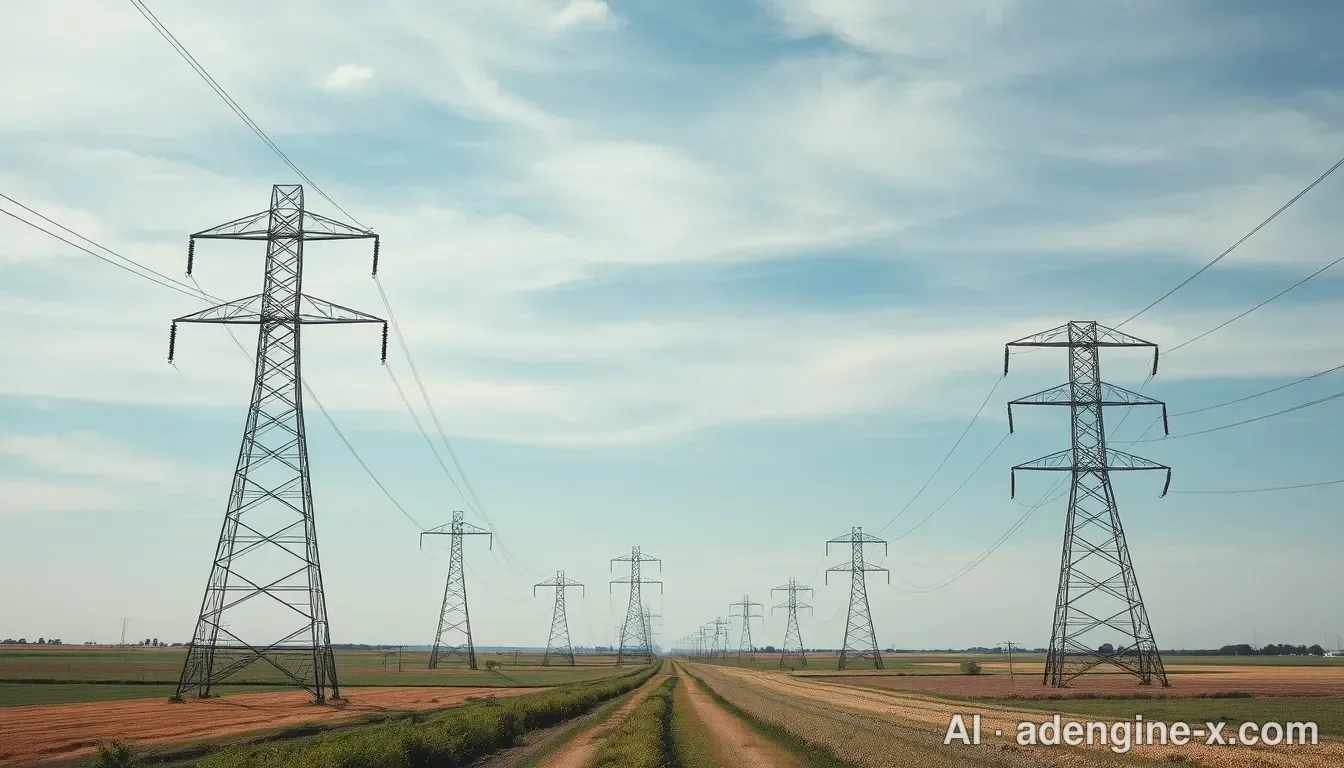
Western Expansion: PacifiCorp, NV Energy, and Northern Powergrid
Over the subsequent fifteen years, MidAmerican executed strategic regional bolt-on acquisitions:
- 2005 (PacifiCorp): Berkshire acquired PacifiCorp, extending its service territory across six Western states (Oregon, Washington, California, Utah, Idaho, and Wyoming).
- 2013 (NV Energy): BHE purchased Nevada's dominant electric utility for $5.6 billion, capturing booming residential and commercial demand across Las Vegas and Reno.
- 2014: The parent entity was officially rebranded as Berkshire Hathaway Energy (BHE).
- Global & Pipeline Infrastructure: Outside the contiguous United States, BHE acquired Northern Powergrid in the United Kingdom and AltaLink in Alberta, Canada. Simultaneously, it secured core continental interstate natural gas pipelines—including Northern Natural Gas and the Kern River Gas Transmission pipeline—along with an operating interest in the Cove Point liquefied natural gas (LNG) export facility in Maryland.
Today, BHE provides electricity and natural gas to over 13 million end-user customers worldwide, securing an indispensable position in modern domestic infrastructure.
The Final Step: Reaching 100% Full Ownership
For decades, BHE was run as a private partnership alongside the late Walter Scott Jr. (a longtime Berkshire board director) and current Berkshire Hathaway CEO Greg Abel. That shared structure has now completely transitioned to 100% internal control:
- In 2022, Berkshire acquired Greg Abel's personal 1% ownership stake (740,961 shares) for $870 million, establishing an implied baseline company valuation of approximately $89 billion.
- In the fall of 2024, Berkshire closed out the Scott family's remaining 8% stake through an exchange involving roughly $2.4 billion in cash alongside Berkshire Class B shares (approx. 1.6 million shares) and debt assumption, cementing complete 100% ownership under Berkshire Hathaway.
With outside minority interests fully bought out, Berkshire retains every single dollar of operating cash flow that BHE generates.
3. Market Status & Latest Indicator Trends: The Hard Financial Numbers
Let's unpack the math behind James Brumley's analytical piece. When evaluating utilities, family investors must look past generic media narratives and study the financial indicators: run-rate revenue, pretax income, operating margins, and net earnings.
BHE's Current Financial Run-Rate
According to Berkshire Hathaway's first-half corporate disclosures for 2026, BHE produced $11.2 billion in revenue during the first six months alone. Pretax earnings came in at $2.7 billion, and after-tax net profit crossed $2.0 billion. Annualizing this performance—even when accounting for winter/summer seasonal fluctuations—yields a predictable run-rate of approximately $22.4 billion to $23.0 billion in gross annual revenue and comfortably over $4.0 billion in after-tax net earnings.
Comparing the Titans: How BHE Matches Up with Public Peers
To put $4.0 billion in annual net earnings into perspective, let's examine the 2025 performance metrics of America's leading standalone publicly traded utilities:
- Duke Energy (Ticker: DUK): Generated $32.2 billion in annual revenue, $8.6 billion in operating profit, and $4.9 billion in net earnings.
- Southern Company (Ticker: SO): Logged $29.5 billion in revenue and $4.3 billion in net income.
- NextEra Energy (Ticker: NEE): Delivered $27.4 billion in revenue with adjusted net earnings of roughly $7.7 billion (boosted significantly by its unregulated NextEra Energy Resources clean-energy development wing).
- Constellation Energy (Ticker: CEG): Posted approximately $25.5 billion in top-line revenue as the nation's premier merchant nuclear operator.
Notice the alignment: BHE's $4.0 billion net earnings base sits directly on the heels of Southern Company ($4.3 billion) and within striking distance of Duke Energy ($4.9 billion). It operates at an institutional scale that outpaces regional peers like American Electric Power, Dominion Energy, and Consolidated Edison.
The Math: Deriving an $80 Billion Stand-Alone Enterprise Value

Regulated utilities on the S&P 500 historically trade at price-to-earnings (P/E) multiples between 17x and 20x, reflective of their predictable, government-sanctioned rates of return. If BHE were spun off tomorrow on the New York Stock Exchange, applying an industry-standard 18x to 20x multiple to its $4.0 billion annual earnings base results in an immediate equity market capitalization of $72 billion to $80 billion.
When combined with its internal debt profile, BHE constitutes an enterprise worth well north of $100 billion. Yet within Berkshire Hathaway's overall enterprise valuation of roughly $1.1 trillion—against annual operating earnings across insurance, rail, and manufacturing tracking toward $50 billion—BHE represents only about 8% to 10% of the parent company's consolidated earnings engine.
4. Comparative Analysis: BHE vs. Traditional Stand-Alone Utilities
Here is an essential structural breakdown comparing stand-alone utilities against Berkshire Hathaway Energy from the perspective of a household investor:
| Metric / Operational Strategy | Traditional Stand-Alone Utilities (DUK, SO, NEE) | Berkshire Hathaway Energy (BHE) |
|---|---|---|
| Dividend Payout Policy | Pays out 60% to 80% of net profits in quarterly cash dividends to public shareholders. | Zero cash dividend paid out. 100% of net profits retained internally. |
| Capital Expenditure Funding | Heavily reliant on external corporate debt bond issuances and dilutive secondary equity offerings. | Self-funded through annual retained earnings ($4B+) and Berkshire's internal capital pool. |
| Liquidity Backstop & Balance Sheet | Constrained by independent debt covenants and credit rating downgrades during economic stress. | Supported by Berkshire Hathaway's cash and short-term Treasury reserves exceeding $360 billion. |
| Contingent Liability Resilience (e.g., Wildfires) | Catastrophic wildfire liabilities can trigger bankruptcy or dividend cuts (e.g., PG&E history). | PacifiCorp wildfire litigation absorbed by Berkshire's diverse corporate revenue streams. |
| Tax Drag for Long-Term Savers | Annual dividend tax drag (15% to 23.8% taxable accounts) reduces long-term compounding speed. | No annual dividend tax drag; value accumulates directly into intrinsic share price appreciation. |
5. Investment Points & Market Opportunities: The Invisible Compounding Engine
Now that we have established the financial framework, what does this mean for our family investment plans? Why should an investor building college or retirement funds care that Berkshire holds an unlisted utility giant?
The Retained Earnings Compounding Advantage
When you own shares in an individual utility like Southern Company or Duke Energy, the company sends you a check every three months. For retirees needing cash for monthly groceries, that cash flow is helpful. But for working parents investing over a 10-to-20-year horizon, those dividend payouts create an annual tax drag in taxable brokerage accounts.
Berkshire Hathaway Energy pays zero dividends to the parent company. Instead, Greg Abel and the management team take the entire $4.0 billion in net earnings and immediately plow it back into grid reinforcement, interstate transmission lines, wind farms in Iowa, geothermal developments in California, and solar installations in Nevada. That reinvestment compounds internally without triggering capital gains taxes or dividend taxes along the way. Your investment grows through book value expansion rather than eroded distributions.
AI Data Centers and the Structural Demand Shock
Every major technology platform—Microsoft, Alphabet, Amazon, Meta—is building hyperscale data centers across the American heartland to power artificial intelligence workloads. These facilities require gigawatts of constant, reliable, around-the-clock baseload power. Tech giants are not price-sensitive in the traditional sense; their primary constraint is speed-to-grid connection.
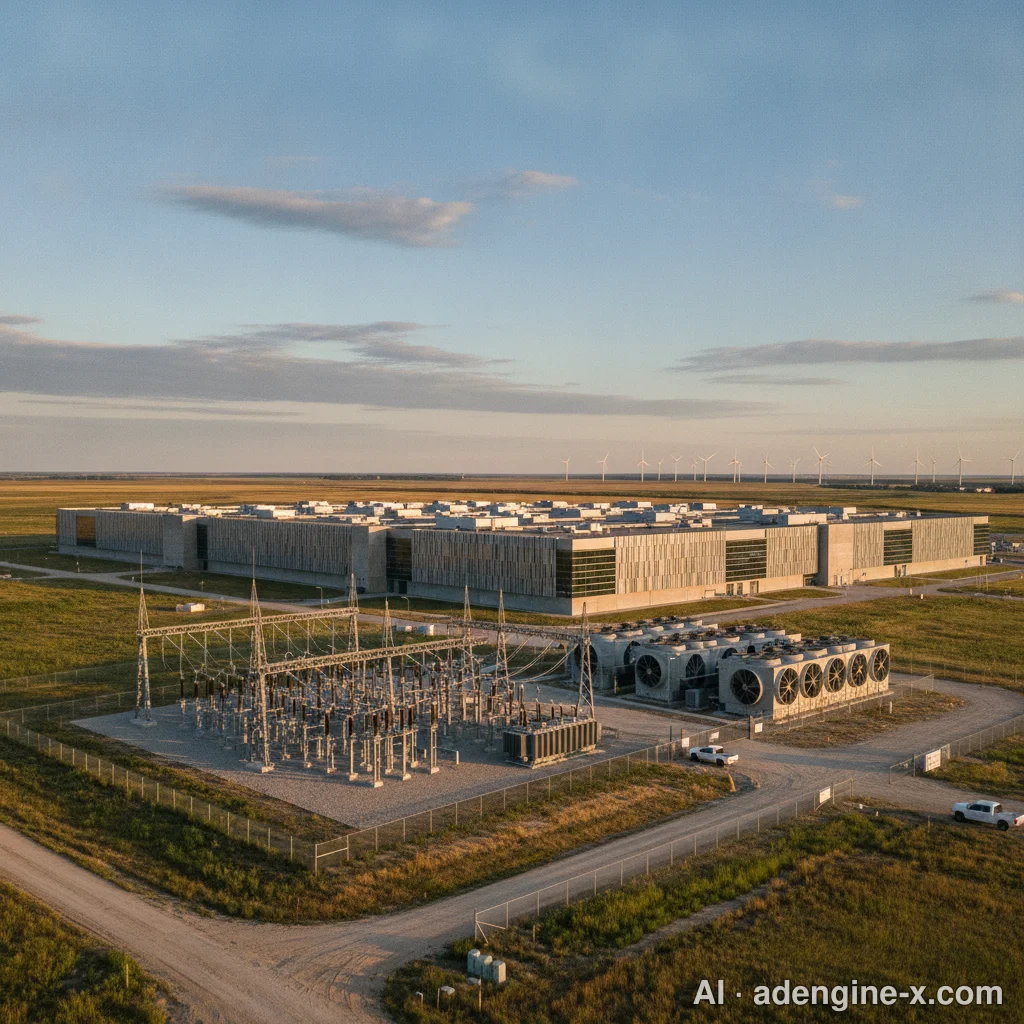
As CEO Greg Abel noted during recent annual shareholder meetings and CNBC appearances, supplying electricity to AI data centers represents a significant long-term opportunity for Berkshire Hathaway Energy. Because BHE controls generation, natural gas distribution, and high-voltage transmission lines across crucial Midwestern and Western territories, it is uniquely positioned to strike bilateral long-term industrial supply contracts that will generate steady utility earnings for decades.
6. Major Risks and Defense Strategies: Wildfires, Rate Battles, and Transition Bottlenecks
A sensible parent never looks only at the upside; safeguarding the family downside comes first. Even with Warren Buffett's backing, the utility sector faces structural headwinds that require careful monitoring.
The Erosion of the "Regulatory Compact"
In his annual letter to Berkshire shareholders, Warren Buffett delivered a stark assessment of the modern utility industry. For nearly a century, electric utilities functioned under an unwritten "regulatory compact": in exchange for heavy upfront capital commitments to build expensive plants and wires, public utility commissions guaranteed private utilities a reasonable rate of return on invested equity (typically 9% to 10%).
Buffett warned that this compact is fraying. Driven by intense consumer anger over inflation and high utility bills, regulatory commissions have grown reluctant to approve full rate hikes. Utilities are being squeezed between high capital expenditure requirements and political resistance to higher consumer electric bills.
Catastrophic Wildfire Litigation: The PacifiCorp Precedent
The most pressing legal and financial risk confronting BHE centers on its PacifiCorp subsidiary. Massive wildfires in Oregon and Northern California have resulted in multi-billion-dollar court judgments and pending claims, with plaintiffs arguing utility equipment sparked dry timber during severe windstorms. While independent utilities face genuine insolvency when hit with multi-billion-dollar liabilities (as Pacific Gas and Electric faced in California), BHE possesses the financial stamina of Berkshire Hathaway's cash fortress. Still, litigation settlements consume capital that would otherwise drive book value growth.

Grid Bottlenecks and Environmental Scrutiny
BHE faces a complex balancing act with environmental stakeholders. While MidAmerican is a top wind generator in the Midwest, BHE still relies on coal-fired generation for roughly 23% of its power mix—higher than the national utility average of approximately 20%—alongside its massive interstate fossil gas network. Transitioning these assets to clean energy while securing regulatory permits for new long-distance transmission lines remains a protracted, multi-year process fraught with local permitting delays.
7. Family Financial Action Plan: 5 Practical Steps to Fortify Your Household
Let's shift from broad macroeconomic analysis to concrete actions you can implement for your family's budget and investment portfolio this weekend.
Action 1: Calculate Your Household Energy-Inflation Exposure
Review your bank statements over the past 24 months. Total your electricity, natural gas, home heating oil, and municipal utility payments. If your total household energy costs have climbed more than 15% since 2023, your family budget is directly absorbing the cost of regional grid infrastructure upgrades.
Action 2: Decide Between Income Cash Flow vs. Long-Term Compound Growth
Align your utility equity exposure with your life stage:
- For Immediate Monthly Income: If you are retired or need quarterly distributions to cover tuition or living expenses, high-yield stand-alone utilities like Duke Energy (DUK) or NextEra Energy (NEE) offering 3.5% to 4.5% dividend yields remain practical tools.
- For 10-to-20 Year Wealth Accumulation: If you are building wealth for children's future education or retirement, holding Berkshire Hathaway (BRK.B) allows you to capture BHE's $4 billion utility earnings engine alongside GEICO and BNSF Railway without annual dividend taxation dragging down your compound returns.
Action 3: Establish a Systematic BRK.B Accumulation Route
While Berkshire Class A shares (BRK.A) trade at single-share prices out of reach for individual households, Class B shares (BRK.B) trade around $500 per share and are accessible via fractional-share investing across standard brokerage accounts. Automating a fixed monthly or quarterly contribution provides direct ownership in BHE's infrastructure network alongside Berkshire's broader asset base.
Action 4: Audit Your Homeowners Insurance for Wildfire and Weather Perils
Just as utilities face surging liability risks from severe weather, homeowners face soaring property insurance premiums. Check your home insurance policy for storm and wildfire deductible adjustments. Upgrading home weather resilience—such as clearing dry perimeter brush, installing surge protectors, or adding attic insulation—directly offsets rising utility rates and shields against coverage gaps.

Action 5: Monitor Regulatory Rate Filings in Your Home State
If you live in a region served by PacifiCorp (Pacific Power/Rocky Mountain Power), NV Energy, or MidAmerican, monitor rate cases filed with your state utility commission. Knowing when rate hikes take effect allows you to adjust seasonal thermostat schedules, install smart energy monitors, and manage household energy usage before higher bills arrive in the mail.
8. Frequently Asked Questions: What Family Investors Want to Know
Here are answers to the practical questions that often come up when discussing Berkshire's energy operations and family portfolio allocations.
Can I Buy Shares of Berkshire Hathaway Energy Directly?
No. BHE is not an independently listed public stock. Following the buyouts of Greg Abel's minority interest in 2022 and the Scott family's remaining stake in 2024, BHE is a 100% wholly owned subsidiary of Berkshire Hathaway. The only way to own an equity interest in BHE is to purchase shares of Berkshire Hathaway Inc. (BRK.A or BRK.B).
How Can I Read BHE's Financial Reports if It Is Not Publicly Traded?
Even though BHE does not host quarterly public earnings calls, it files regular audited financial statements (Form 10-Q and Form 10-K) with the U.S. Securities and Exchange Commission (SEC). Because BHE issues publicly traded corporate debt bonds to finance infrastructure projects, SEC regulations require it to publish transparent financial disclosures accessible to all investors via the SEC EDGAR system.
Why Did Warren Buffett Hand Succession to Greg Abel?
Greg Abel spent decades leading and building MidAmerican Energy and Berkshire Hathaway Energy before being appointed Vice Chairman of Non-Insurance Operations and ultimately designated as Buffett's chief executive successor. Abel demonstrated an ability to deploy billions of dollars into complex, highly regulated, capital-intensive infrastructure while maintaining strict operational discipline. That operational leadership is central to Berkshire's long-term operational blueprint.
Will AI Data Centers Dramatically Increase My Household Electric Bills?
They can create upward rate pressure if local utility commissions allow capital expenditure costs for new substations and transmission lines to be rolled into general rate bases. However, utilities like BHE are increasingly structuring dedicated, large-power industrial rate schedules where data center operators pay dedicated tariffs to cover their own capacity expansion. Tracking local public utility rate hearings helps reveal whether your utility protects residential customers from industrial expansion expenses.
9. Expert Takeaways and Outlook: Navigating the Next Energy Decade
The core takeaway from the Yahoo Finance and Motley Fool analysis is straightforward: Berkshire Hathaway holds an infrastructure powerhouse hidden in plain sight. An asset generating $4 billion in annual net profit, running across 13 million customer connections, and supported by interstate pipelines commands an independent value between $72 billion and $80 billion—rivaling the largest dedicated utility corporations in the United States.
For careful parents and multi-generational planners, this math reinforces a foundational investment lesson. While market headlines constantly chase short-term trends, generational wealth is quietly fortified by essential real assets—the transmission lines, natural gas valves, and substations that keep everyday community life running. Whether you hedge household energy inflation by investing in broad infrastructure, streamline your family power usage, or build a long-term position in Berkshire Hathaway, taking proactive steps today keeps your household financial foundation secure for the years ahead.
ℹ️ This article was drafted with the help of an AI tool and reviewed/edited by a human before publishing. · Original: AdEngine-X
📚 References
This list may include both live search sources the AI referenced while writing and public-data sources checked during fact verification. Please verify the original sources before citing or reusing.
0 Comments
Loading comments...