
Bank Indonesia rate hike and currency defense compared
(Advertisers wanted)
(Advertisers wanted)
📌 Topic & Subject
This article examines the financial crisis in Indonesia triggered by MSCI's decision to reclassify the country from an Emerging Market to a Standalone Market due to structural weaknesses and market manipulation. It details the resulting plunge in the Jakarta Composite Index, the depreciation of the Indonesian rupiah, and the policy challenges facing Bank Indonesia ahead of its upcoming interest rate review. Additionally, the text outlines the broader impacts on household living costs, corporate
(Advertisers wanted)
(Advertisers wanted)
📌 Table of Contents
- 1. Decades of index integration unraveling
- 2. Market selloff and monetary policy crossroads
- 3. Core metrics and market indicators comparison
- 4. Direct impact on consumers and households
- 5. Investment opportunities and portfolio defense
- 6. Regulatory risks and policy options
- 7. Action steps for market participants
- 8. Monitoring milestones for Indonesia's benchmark defense
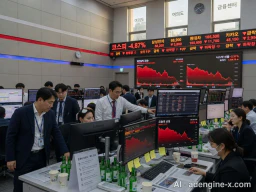
On Friday morning, currency trader Hendra Setiawan sat at his desk in Jakarta watching quotes flicker red across two computer monitors. The sharp smell of clove cigarettes drifted through the trading room while foreign sell orders flooded the terminal. At Friday's market open, the Jakarta Composite Index plunged over 8%, triggering an automatic thirty-minute circuit breaker before losses deepened to roughly 11.6%. It marked the start of an acute liquidity squeeze that threatens Indonesia’s broader financial stability.
Decades of index integration unraveling
Morgan Stanley Capital International, known globally as MSCI, added Indonesian equities to its Emerging Markets benchmark in 1989. That status permitted international pension funds, sovereign wealth managers, and mutual funds to hold local shares systematically. Global capital treated the Southeast Asian nation as a permanent anchor in developing market allocations. Reliable passive inflows supported regional equity issuance for more than three decades.
Structural weaknesses festered quietly behind rising equity valuations. Concentrated corporate shareholdings created thin public trading floats across several large listed conglomerates. Controlling families routinely held between 90% and 95% of total shares. That left minimal stock available for public investors. Shell companies and affiliated parties executed coordinated transactions to support daily share valuations. Foreign fund managers faced high bid-ask spreads during market exits.
MSCI issued preliminary warnings to Indonesian market authorities in January and June 2026. The index compiler demanded rigorous free-float calculations and visible regulatory penalties for coordinated market manipulation. Indonesian authorities announced procedural reviews but removed no prominent offenders from core indices. MSCI concluded that formal consultation had stalled. The index administrator initiated procedures to bypass Frontier Market status and reclassify Indonesia directly as a Standalone Market.
Market selloff and monetary policy crossroads
The index compiler’s announcement reportedly caused immediate selling across Indonesian equities and sovereign debt instruments. The benchmark IDX Composite dropped to its lowest level in six years. Two trading sessions eliminated more than $65 billion in total equity valuation. Foreign investors had already liquidated $4.7 billion in local equities during 2026. The threat of total exclusion prompted immediate defensive liquidation.
Currency markets absorbed heavy selling pressure as equity proceeds were converted into foreign capital. The Indonesian rupiah fell to 18,030–18,070 per US dollar. That level represents the currency’s weakest quote since late July 2026 and touches historical lows. The rupiah has lost approximately 7% to 8% of its value year to date. That depreciation complicates monetary calculations for Bank Indonesia ahead of its October 21 rate review.

The central bank has kept its benchmark policy rate at 5.75% since June 2026. Headline inflation reached 3.28% in September, approaching the central bank’s target ceiling of 3.5%. According to Helmi Arman, chief economist at Citi, a 50-basis-point rate hike to 6.25% is necessary to prevent equity capital flight from contaminating sovereign bond yields and foreign exchange reserves. Capital Economics deputy chief emerging markets economist Jason Tuvey stated that leaving rates unchanged would deepen currency weakness and suggest compromised regulatory independence.

Core metrics and market indicators comparison
Evaluating this financial shock requires comparing base macro conditions with potential downgrade metrics. The figures below detail established benchmark data alongside institutional projections.
| Indicator Category | Current Baseline Metric | Downgrade Impact Projection |
|---|---|---|
| MSCI Market Classification | Emerging Market (since 1989) | Standalone Market (Index Exclusion) |
| Passive Equity Fund Outflows | $4.7 billion net foreign sales YTD | $4.0B (UBS) to $5.6B (Goldman Sachs) |
| Active Fund Exodus Potential | Gradual underweight positioning | Estimated $15.0 billion additional exit |
| Currency Exchange Rate (USD/IDR) | 16,700–17,200 baseline range | 18,030–18,070 near-record low |
| Central Bank Policy Rate | 5.75% (7-Day Reverse Repo) | 6.00% to 6.25% projected hike range |
| Trading Volume Absorption | Standard daily turnover liquidity | Passive sales equal 18 days of average volume |
Direct impact on consumers and households
Currency depreciation is expected to filter rapidly into household grocery budgets. Indonesia relies on imported agricultural staples, including wheat and soybeans, alongside refined fuel products. A weaker rupiah raises customs clearance costs for commercial food manufacturers. Retail consumer prices are likely to adjust upward within sixty to ninety days.

Higher central bank policy rates are expected to raise domestic retail borrowing costs. Commercial banks typically pass policy adjustments directly onto variable mortgage facilities, known locally as Kredit Pemilikan Rumah (KPR). Automotive financing contracts face similar upward adjustments of 50 to 100 basis points. Household loan servicing budgets will contract as credit conditions tighten.
Small domestic businesses face difficult decisions regarding inventory replenishment. Wholesalers holding dollar-denominated supply contracts must absorb margin losses or pass price increases to customers. Wage gains rarely keep pace with sudden currency depreciations. Consumer purchasing power faces measurable headwinds through early 2027.
Investment opportunities and portfolio defense
International index products like the iShares MSCI Indonesia ETF (ticker EIDO) require structural caution. Passive index tracking mandates force these exchange-traded funds to liquidate underlying holdings if classification changes occur. Retail investors may want to consider avoiding leveraged purchases of broad index trackers. Early technical bounces offer exit liquidity rather than long-term security.
Exporters in palm oil, mining, and basic materials offer defensive characteristics. Companies that log revenue in US dollars while paying domestic rupiah expenses experience natural margin protection. Value investors should verify actual corporate governance records before committing fresh capital. Strict balance sheet screening remains vital.

Fixed-income investors must evaluate currency depreciation against domestic yields. Offshore non-deliverable forward contracts allow international bondholders to eliminate currency risk on local FR-series sovereign bonds. Domestic investors should consider parking excess liquidity in Bank Indonesia Rupiah Securities (SRBI). Short-dated monetary instruments preserve principal while providing competitive yield.
Regulatory risks and policy options
IDX Chief Executive Officer Jeffrey Hendrik noted that the exchange held urgent talks with MSCI headquarters. Hendrik stated that most global fund clients continue to view Indonesian market liquidity as adequate for Emerging Market status. Coordinating Minister for Economic Affairs Airlangga Hartarto questioned the timing of MSCI’s announcement. Hartarto noted that a regional meeting in Bangkok days earlier contained no warning of an outright Standalone downgrade.
The Financial Services Authority, known as OJK, imposed fines totaling roughly $116.4 million to $117 million across three corporate entities for price manipulation. Regulatory critics, including domestic economic research group CELIOS, argue that fines alone cannot substitute for transparent ownership disclosures. Genuine market reform requires delisting companies with artificial trading volumes from core benchmarks.
Permata Bank chief economist Josua Pardede advocates for focused spot foreign exchange intervention and secondary bond market stabilization rather than aggressive rate hikes. Raising borrowing rates during an economic expansion risks choking domestic growth under President Prabowo Subianto. Credit rating agencies Moody’s and Fitch previously flagged concerns regarding expanding government expenditures. Weakening fiscal balances constrain the central bank’s room for maneuver.
Action steps for market participants
Individual investors should review variable-rate debt obligations and seek fixed-rate mortgage terms where feasible. Offshore asset holders should maintain currency hedges on all local-currency sovereign debt holdings. Institutional allocations must reflect the probability of mandatory passive liquidation ahead of final index reviews.
Specific loan adjustments and banking conditions are subject to formal lender approvals and official central bank circulars.
Monitoring milestones for Indonesia's benchmark defense
- Policy rate decision: Track whether Bank Indonesia defends the currency via a 25 to 50 basis point hike from 5.75% or relies strictly on reserves and SRBI issuances.
- Rupiah exchange corridors: Monitor central bank spot interventions as USD/IDR tests the 18,030 to 18,070 range.
- Benchmark compliance steps: Watch OJK and IDX governance reforms addressing concentrated ownership and artificial volume before MSCI issues its final reclassification verdict.
ℹ️ This article was drafted with the help of an AI tool and reviewed/edited by a human before publishing. · Original: AdEngine-X

Mortgage Rates Today (September 8, 2026): What the Post-Holiday Dip Means for Homebuyers and Investors
🇺🇸 English (영어) · 마샬팀장 · 9/8/2026

USD/JPY 2026 Forecast: Testing the Critical 152 Support and Complete Technical Analysis Across 4 Major Currency Pairs
🇺🇸 English (영어) · 마샬팀장 · 9/9/2026

Uncle Nearest Bankruptcy Drama: What the Second Chapter 7 Means for Whiskey Lovers in 2026
🇺🇸 English (영어) · News Desk · 9/20/2026

Apple Price Hikes 2026: Why Memory Costs Are Surging
🇺🇸 English (영어) · 마샬팀장 · 9/22/2026
More from this author



🗞️ Source material
- Bank Indonesia faces mounting pressure to hike after MSCI threat fuels market rout— Ref: CNBC (headline & link)
This article was independently written and edited by AdEngine-X based on the facts reported in the sources below. No original wording or photos were used.
📚 References
This list may include both live search sources the AI referenced while writing and public-data sources checked during fact verification. Please verify the original sources before citing or reusing.
0 Comments
Loading comments...