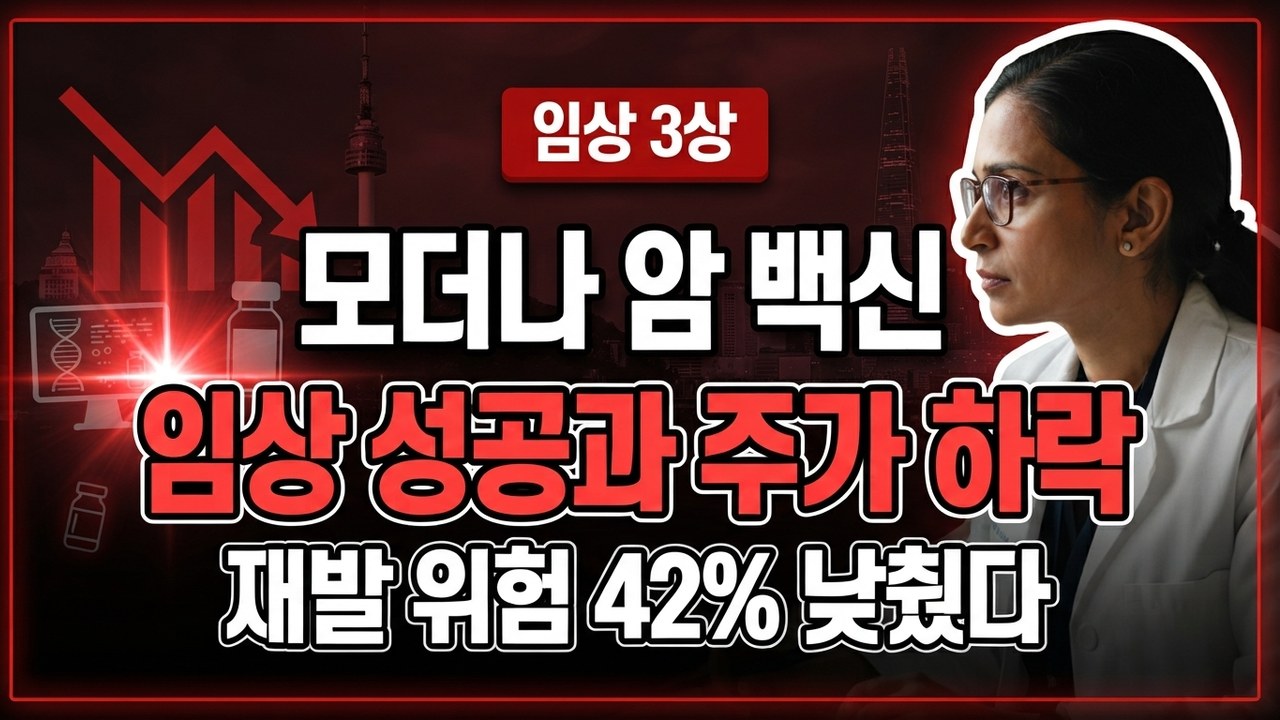
Moderna cancer vaccine trial outcome market price comparison
📌 Topic & Subject
This article examines the clinical trial outcomes and market reactions of Moderna and Merck's INTerpath-001 trial, which evaluated a personalized mRNA cancer vaccine combined with Keytruda for treating high-risk melanoma. It details the biological mechanisms of the custom mRNA treatment, compares its efficacy metrics against standard monotherapy, and provides a practical checklist for patients and families regarding logistics, side effects, and financial planning.
📌 Table of Contents
- 1. Clinical milestones and equity valuation diverge
- 2. Biological mechanisms behind personalized mRNA oncology
- 3. Wall Street selling pressure against clinical enthusiasm
- 4. Patient family readiness and logistics checklist
- 5. Household financial planning for custom therapies
- 6. Actionable steps for newly diagnosed families
- 7. Essential takeaways for families weighing mRNA oncology
On a brisk Thursday morning at the Inova Schar Cancer Institute in Fairfax, Virginia, Dr. Sekwon Jang examined the latest Phase 3 trial readouts across two high-resolution monitors. The numbers confirmed a steep drop in cancer recurrence for patients seeking preventative postoperative options. That quiet clinic moment showed why oncology teams cheered while trading desks sold off biotech shares.

Moderna and Merck published data from their INTerpath-001 trial showing that personalized mRNA treatment cuts melanoma recurrence significantly. Yet Moderna shares dropped approximately 18-24% that afternoon. The divergence highlights a major gap between medical milestones and short-term capital expectations.
Clinical milestones and equity valuation diverge
The table below compares the clinical efficacy metrics of the combined mRNA regimen against the current standard monotherapy evaluated across 1,137 trial participants.
| Clinical Parameter | Intismeran Plus Keytruda | Keytruda Monotherapy | Measured Impact |
|---|---|---|---|
| 2-Year Recurrence-Free Survival | 82.2% | 70.0% | +12.2 percentage points |
| Recurrence or Death Hazard Ratio | 0.58 | 1.00 | 42% risk reduction |
| Distant Metastasis Risk | Markedly lowered | Standard baseline | 38% risk reduction |
| Post-6-Month Recurrence Protection | High adaptive immunity | Standard immune check | 58% risk reduction |
| Manufacturing Turnaround | 64 days (median) | Off-the-shelf supply | Commercial target: 42 days |
The single largest difference lies in the approximately 42% reduction in recurrence or death when adding the mRNA vaccine to standard immunotherapy. That benefit widened to 58% after six months as patient T-cells expanded. This durability gives recovering patients substantial protection against secondary tumors.
Wall Street focused on the median 64-day production window instead. Analysts questioned whether high production costs and custom sequencing can generate rapid profits. For families managing treatment schedules, however, clinical efficacy remains the primary concern.
Biological mechanisms behind personalized mRNA oncology
Intismeran autogene is not an infectious disease immunization. Physicians administer it as a therapeutic vaccine to patients who have already completed surgical resection for high-risk Stage IIB through Stage IV cutaneous melanoma. It trains existing immune defenses to eliminate microscopic remnants.
Each patient provides tumor tissue and healthy blood samples after surgery. High-throughput sequencing identifies unique genetic mutations within malignant cells. Computational algorithms select up to 34 neoantigens most likely to trigger a focused immune response.

Moderna synthesizes these sequences into custom mRNA encapsulated in lipid nanoparticles. Once injected into muscle tissue, the mRNA instructs local cells to express those exact neoantigen proteins. The patient's immune system is stimulated to produce specialized killer T-cells.

Keytruda performs a complementary task by blocking the PD-1 pathway that tumor cells exploit to hide. While Keytruda releases the immune brake, the mRNA vaccine presses the accelerator. This dual mechanism prevents lingering cancer cells from re-establishing tumors.
Wall Street selling pressure against clinical enthusiasm
Medical investigators considered the INTerpath-001 trial as a significant step in therapeutic validation. Dr. Janice Mehnert from NYU Langone Health observed that this trial marks the first time adding an agent to standard immunotherapy produced such an improvement. Australian specialist Georgina Long described it as a shift toward genuine individualized oncology.
Public markets responded with heavy selling volume. Moderna stock dropped nearly a quarter of its value, while Merck declined 1.1%. The sharp sell-off stunned non-professional observers. Short-term funds traded heavily on the news.

It was noted that the stock drop reflected inflated pre-announcement expectations rather than clinical failure. It was highlighted that the production pipeline for every individual dose is labor-intensive. In contrast, UBS analysts reaffirmed confidence in upcoming trials across kidney and bladder cancers.
It was stated that manufacturing automation aims to reduce production cycles to approximately six weeks. Davis emphasized that commercialization strategies will focus on preventing manufacturing overhead from blocking patient access. Both companies share development expenses and future revenues on a 50-50 basis.
Patient family readiness and logistics checklist
Families navigating a melanoma diagnosis need clear clinical milestones. The following checklist outlines qualification steps and clinical expectations for this therapeutic regimen.
- Pathology verification: Confirm formal staging of primary cutaneous melanoma at Stage IIB, IIC, III, or IV.
- Surgical status: Ensure complete surgical resection with clear margins and negative regional lymph nodes where indicated.
- Tissue banking: Request immediate biological preservation of resected tumor tissue and peripheral blood for genomic sequencing.
- Systemic therapy history: Verify that the patient has received no prior neoadjuvant therapy that might disqualify participation in ongoing expanded access protocols.
- Dosing schedule: Prepare for up to nine intramuscular mRNA injections combined with intravenous Keytruda infusions administered every six weeks for approximately one full year.
Managing day-to-day side effects requires structured preparation. Injection site discomfort, mild fatigue, and transient low-grade fever occur in most recipients. These minor reactions typically subside within 48 hours without systemic intervention.

Caregivers must also track immune-related adverse events associated with Keytruda. These include colitis, pneumonitis, hepatitis, and thyroid inflammation. Report persistent diarrhea, shortness of breath, or sudden lethargy to the oncology nursing team immediately.
Household financial planning for custom therapies
Standard Keytruda infusions carry an annual wholesale acquisition cost between $180,000 and $200,000 in the United States. Adding a fully custom-manufactured mRNA vaccine will increase aggregate treatment figures significantly. Families should evaluate coverage avenues before commercial rollout, considering individual terms and official announcements.
Specific reimbursement criteria depend on upcoming commercial payer formularies and institutional reviews. While regulatory agencies review filings, families should explore expanded access programs directly through participating comprehensive cancer centers. Pharmaceutical co-pay foundations often provide financial assistance to reduce patient out-of-pocket exposure.
Private insurance pre-authorization will require verified pathology reports and detailed genomic profiling. Keep complete digital and printed copies of all surgical notes, sequencing analyses, and medical oncology recommendations. Organized records prevent delays during formal appeals.

Actionable steps for newly diagnosed families
Contact your surgical oncologist immediately after surgery to confirm that tumor samples were properly frozen for prospective genomic sequencing rather than discarded. Ask your medical oncologist whether your diagnosis qualifies for the INTerpath clinical pipeline or related expanded access initiatives.
Bottom line: Clinical trial data suggests that personalized mRNA therapy could substantially reduce melanoma recurrence, and medical reality may matter more than market swings.
Essential takeaways for families weighing mRNA oncology
Market volatility reflects manufacturing bottlenecks and investor sentiment rather than clinical failure. For households confronting high-risk melanoma, established trial milestones provide practical guideposts:
- Verified clinical protection: Adding Intismeran autogene to Keytruda reduces recurrence or death risk by 42% and distant metastasis risk by 38%.
- Durable disease control: Combination therapy achieves an 82.2% two-year recurrence-free survival rate, significantly outperforming Keytruda monotherapy at 70.0%.
- Immediate tissue banking: Confirm with surgical teams that resected tumor tissue is frozen immediately to maintain eligibility for custom genomic sequencing.
ℹ️ This article was drafted with the help of an AI tool and reviewed/edited by a human before publishing. · Original: AdEngine-X

Berkshire Energy Valuation: Why BHE Is Worth More Than Duke or Southern and 5 Practical Family Moves
🇺🇸 English (영어) · Finance Desk · 9/20/2026

Lee Kang-in: Complete Guide to PSG's Midfield Magician, Career Stats, Matchday Tips & Transfer Analysis (2026)
🇺🇸 English (영어) · 마샬팀장 · 8/20/2026

AI spending fears 5 rules for household investors
🇺🇸 English (영어) · 마샬팀장 · 10/23/2026

BYD CATL Xiaomi US Visit 2026: 8 Key Impacts on Family Car Budgets, Smart Tech, and Investments
🇺🇸 English (영어) · News Desk · 9/19/2026
More from this author




🗞️ Source material
- Doctors call Moderna, Merck cancer vaccine data a major advancement — despite Wall Street reaction— Ref: CNBC (headline & link)
This article was independently written and edited by AdEngine-X based on the facts reported in the sources below. No original wording or photos were used.
📚 References
This list may include both live search sources the AI referenced while writing and public-data sources checked during fact verification. Please verify the original sources before citing or reusing.
0 Comments
Loading comments...