
AI spending fears 5 rules for household investors
📌 Topic & Subject
This article explores the market impact of massive corporate infrastructure spending on artificial intelligence and provides five practical risk-management strategies for household investors. It references specific global companies, market indices, and financial figures such as Meta Platforms, Lam Research, Nvidia, and the Nasdaq Composite to illustrate how tech sector pullbacks affect individual family portfolios.
📌 Table of Contents
- 1. Comparing market impact across global assets
- 2. The roots of corporate infrastructure fatigue
- 3. Voices from Wall Street desks and boardrooms
- 4. Macro pressures and international market ripples
- 5. Five practical portfolio checks for household managers
- 6. Structural financing risks and long-term outlook
- 7. Action plan: Safeguarding family wealth against tech volatility
At 6:30 a.m. in Singapore on late October, markets reporter Lim Hui Jie watched equity futures flash red across trading screens. Heavy selling triggered after technology conglomerates signaled higher infrastructure expenditures despite quarterly revenue gains. That morning selloff set the tone for global family portfolios entering the final quarter.

Technology giants poured billions of dollars into artificial intelligence hardware while consumer conversion rates remained modest. The Nasdaq Composite dropped 2.8 percent in a single session, while the S&P 500 slipped 1.4 percent. The pullback quickly rippled across Asian exchanges.
Comparing market impact across global assets
The following performance overview compares how major global equities and sovereign benchmarks reacted as technology spending guidance rattled institutional investors.
| Asset Name | Sector Category | Session Return (%) | Core Driver |
|---|---|---|---|
| Meta Platforms | Big Tech Software | -7.9% | Capital expenditure guidance near $145 billion |
| Lam Research | Semiconductor Equipment | -11.6% | Next quarter profit margin guidance miss |
| CoreWeave | Cloud Infrastructure | -3.8% | Follow-up drop after prior 15.5% plunge |
| GE Vernova | Grid Power Equipment | -3.2% | Profit-taking after two-day power rally |
| SK Hynix | Memory Hardware | -11.1% | Asian tech selloff and chip inventory worries |
| Samsung Electronics | Semiconductor Foundry | -9.5% | Foreign institutional outflow in Seoul |
| US 10-Year Treasury | Sovereign Debt | -0.23% | Yield moved from 5.32% toward 5.09% |
The single largest divergence occurred between capital equipment providers and broad defensive shares. While specialized hardware makers like Lam Research fell over 11 percent, non-technology sectors across consumer staples and regional banking held steady. That sharp divide showed that the correction was not a systemic credit crisis, but rather a direct repricing of aggressive technology forecasts.
The roots of corporate infrastructure fatigue
The current market unease mirrors historical capital cycles where infrastructure outlays outpaced commercial adoption. During late October, Meta Platforms reported strong revenue, yet shares dropped approximately 7.9 percent after leadership outlined annual capital expenditures approaching $145 billion to train next-generation models. Investors grew anxious over cash commitments.
Semiconductor manufacturing suppliers faced similar pressure. Lam Research plunged approximately 11.6 percent after its quarterly guidance midpoint trailed consensus forecasts, erasing part of its 52.4 percent year-to-date advance. When high valuations encounter rising depreciation expenses, institutional buyers step back quickly. Capital preservation becomes their primary directive.

Cloud infrastructure providers felt the shock as well. CoreWeave slid approximately 3.8 percent, following an earlier 15.5 percent dive, while power supplier GE Vernova shed approximately 3.2 percent after a previous 6.2 percent slide. Power constraints and high transformer replacement costs added friction to buildout schedules.
Voices from Wall Street desks and boardrooms
Market observers voiced caution regarding corporate capital discipline. Ed Yardeni of Yardeni Research noted on financial television that the artificial intelligence trade had entered a volatile consolidation phase where debt markets penalize unconstrained spending. High borrowing costs make open-ended corporate budgets unsustainable.
According to market host Jim Cramer, bullish investors want companies to build capabilities, yet they flinch whenever corporate cash reserves diminish without immediate software revenue. Investors worry that operating margins will compress before enterprise customers sign recurring subscription contracts.
Rising Treasury yields reduce the equity cushion that growth stocks enjoyed for several quarters.
Even semiconductor leaders acknowledged structural changes. Jensen Huang, chief executive of Nvidia, urged European leaders in Berlin to construct sovereign computing capacity rather than solely consuming external platforms. Yet Wall Street focused on immediate financial returns. Nvidia dropped approximately 1.6 percent, Broadcom fell approximately 1.6 percent, and AMD slipped approximately 3.1 percent.
Macro pressures and international market ripples
The equity pullback occurred alongside shifting commodity and interest rate pressures. Brent crude hovered near approximately $113 per barrel, testing highs not seen since May. High energy costs elevate operating expenses for data centers requiring continuous power generation.

At the same time, the 10-year United States Treasury yield settled near 5.09 percent after touching 5.32 percent. Elevated borrowing benchmarks raise hurdle rates for private financing. Venture valuations adjusted accordingly, with OpenAI revising its internal target valuation down from approximately $1.4 trillion to $1.25 trillion amid private market recalibration.
Asian stock markets recorded deep single-day losses. The South Korean KOSPI dropped 7.6 percent to close at 5,554.22, driven down by memory makers. In Tokyo, the Nikkei 225 declined 4.9 percent to finish at 64,425.95 as SoftBank Group fell 9.3 percent.

Five practical portfolio checks for household managers
When technology swings shake index funds, family stewards must focus on household balance sheets. College savings plans and retirement balances require systematic risk management rather than emotional reactions. Specific conditions depend on individual fund rules, plan prospectuses, and institutional tax guidelines.

- Verify index concentration: Review total allocation to the largest seven technology holdings within broad market index funds. If concentration exceeds 30 percent, consider rebalancing.
- Introduce equal-weight funds: Allocate a modest portion of monthly retirement deposits to equal-weight index portfolios to cushion single-sector selloffs.
- De-risk near-term education savings: If college tuition payments begin within three to five years, shift equity portions into short-term Treasury notes or high-yield savings accounts.
- Audit household recurring software: Examine credit card statements for premium software subscriptions carrying added service fees. Cancel unused automated memberships immediately.
- Maintain emergency liquidity reserves: Keep six months of non-discretionary living expenses in insured cash instruments yielding stable interest before purchasing equity dips.
These five steps preserve household capital during extended tech pullbacks. Steady execution prevents forced asset sales during unexpected market drops.
Structural financing risks and long-term outlook
Financial analysts also monitor circular investment agreements across the sector. Major cloud providers commit substantial funding to emerging software ventures, which subsequently direct capital back to rent data servers. A notable example includes Amazon and its $38 billion commercial framework with OpenAI.
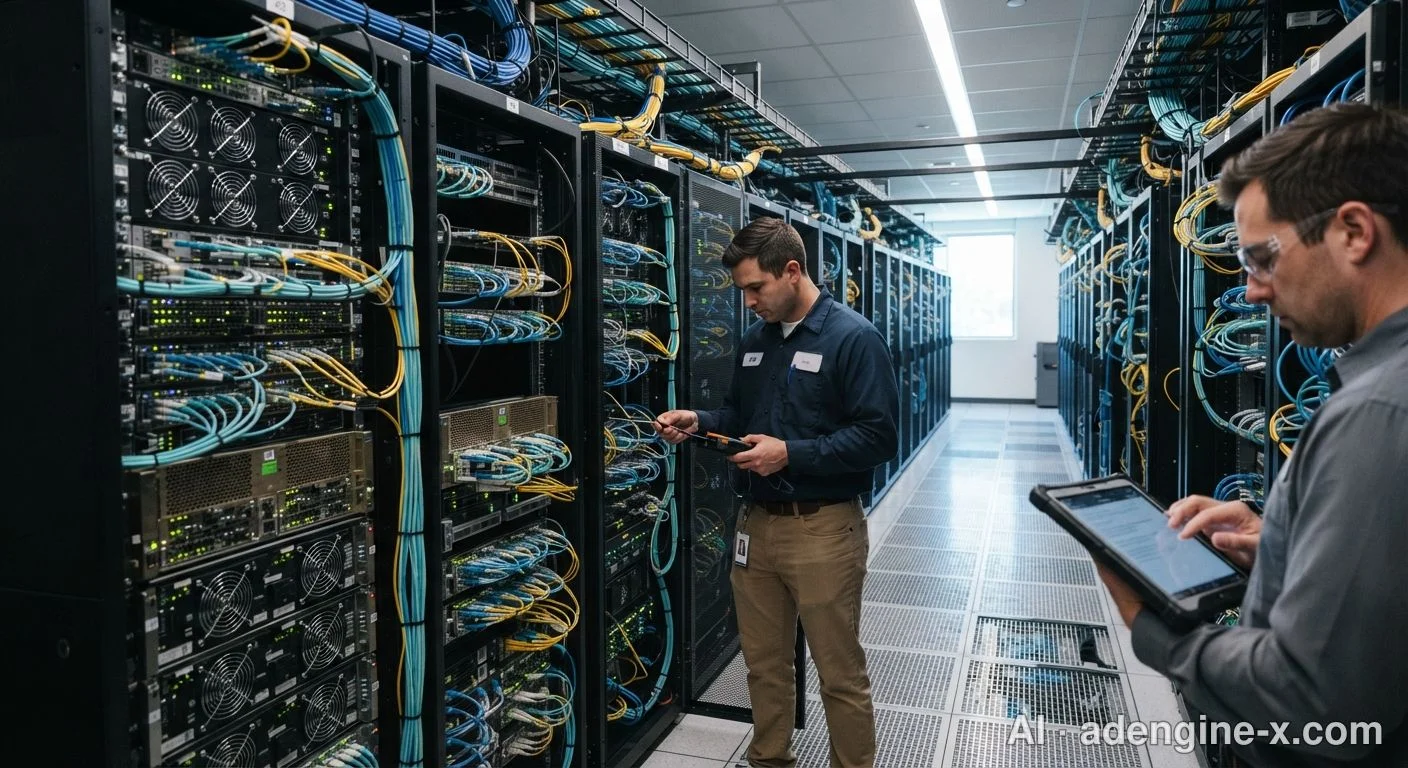
When third-party enterprise demand lags, these enclosed capital loops become vulnerable to corporate belt-tightening. If end-user software upgrades fail to show clear productivity improvements, spending contracts face scrutiny. Institutional capital will migrate toward cash-generative businesses with disciplined capital allocations.
For household heads planning decade-long goals, infrastructure pauses provide valuable clarity. Long-term technological expansion remains real, but valuation discipline always reasserts itself. Managing portfolio exposures systematically ensures your family stays protected across market cycles.
Bottom line: Balance broad technology growth funds with cash reserves and equal-weight assets to insulate family savings from quarterly spending shocks.
Action plan: Safeguarding family wealth against tech volatility
Market cycles driven by heavy capital spending eventually normalize. Safeguard your household balance sheet by taking immediate practical steps:
- Schedule a quarterly portfolio review to prune oversized mega-cap tech concentrations.
- Direct new monthly contributions toward equal-weight funds and short-term cash instruments.
Consistent risk discipline protects college funds and living budgets from corporate spending shocks.
ℹ️ This article was drafted with the help of an AI tool and reviewed/edited by a human before publishing. · Original: AdEngine-X

Entegris (ENTG) Stock Deep Dive 2026: Why Wafer Starts and Memory CapEx Matter for Family Portfolios
🇺🇸 English (영어) · 마샬팀장 · 9/9/2026

Tracking the S&P 500 Record: What Parents Should Do Now
🇺🇸 English (영어) · 마샬팀장 · 10/7/2026

Mortgage Rates Today (September 8, 2026): What the Post-Holiday Dip Means for Homebuyers and Investors
🇺🇸 English (영어) · 마샬팀장 · 9/8/2026

George Clooney: 7 Strategic Metrics, Box Office Benchmarks, and Complete Career Spec Analysis
🇺🇸 English (영어) · Lifestyle Desk · 9/3/2026
More from this author

Airline seat volume and yield focus operational differences
🇺🇸 English (영어) · 마샬팀장 · 10/25/2026

Moderna cancer vaccine trial outcome market price comparison
🇺🇸 English (영어) · 마샬팀장 · 10/25/2026

湯河原ロカボで生活習慣を見直す実践基準3つ
🇯🇵 日本語 (일본어) · 마샬팀장 · 2026/10/25

LF300 면역 락토페린과 일반 제품 차이점 및 올바른 섭취 기준
🇰🇷 한국어 · 마샬팀장 · 2026. 10. 25.
🗞️ Source material
- CNBC Daily Open: AI spending fears haunt markets before Halloween— Ref: CNBC (headline & link)
This article was independently written and edited by AdEngine-X based on the facts reported in the sources below. No original wording or photos were used.
📚 References
This list may include both live search sources the AI referenced while writing and public-data sources checked during fact verification. Please verify the original sources before citing or reusing.
0 Comments
Loading comments...