George Clooney: 7 Strategic Metrics, Box Office Benchmarks, and Complete Career Spec Analysis
(Advertisers wanted)
(Advertisers wanted)
📌 Topic & Subject
This text provides a comprehensive career and financial analysis of actor, director, and entrepreneur George Clooney. It examines his strategic metrics, including global box office grosses, his billion-dollar Casamigos Tequila exit, real estate holdings, production companies like Smokehouse Pictures, and key filmography highlights such as Ocean's Eleven, Gravity, and Good Night, and Good Luck.
(Advertisers wanted)
(Advertisers wanted)
📌 Table of Contents
- 1. Executive Summary & Core Significance: The Architecture of the 21st-Century A-List Benchmark
- 2. Key Specifications & Career Metrics Summary Table
- 3. Comparative Matrix: Benchmarking Clooney Against Tier-1 Contemporary Peers
- 4. Phase 1 Execution: Deep-Dive Analysis of the Essential Filmography Quintet
- 5. Phase 2 Advanced Tactics: Brand Commercialization, Capital Allocation, and Humanitarian Governance
- 6. Political Influence and Power Brokering: The 2024 Campaign Intervention
- 7. Critical Pitfalls, Tactical Failures, and Analytical Vulnerabilities
- 8. Obscure Case Files: 4 Hidden Historical Artifacts and Anomalies
- 9. Future Horizon & Strategic Forecast: Broadway, Streaming Platforms, and Political Realities
- 10. Frequently Asked Questions (FAQ): Technical & Historical Breakdown
1. Executive Summary & Core Significance: The Architecture of the 21st-Century A-List Benchmark
George Timothy Clooney (born May 6, 1961, in Lexington, Kentucky) represents a singularly complex case study in modern entertainment industry economics. While the public registers him primarily as an Oscar-winning actor and cultural archetype of classical masculinity, a technical breakdown of his four-decade career reveals a far more sophisticated apparatus: an agile intellectual property generator, a venture capitalist with a record-setting nine-figure liquid exit, an Oscar-winning producer, and an unelected institutional power broker operating at the highest echelons of international geopolitics. He does not merely operate within the studio ecosystem; he effectively rebuilt his career to leverage, hedge against, and ultimately bypass traditional studio dependency.
1.1 From Lexington Media Heritage to B-Movie Survival
Born into an elite Midwestern media lineage—the son of seasoned broadcast journalist Nick Clooney and the nephew of legendary jazz vocalist Rosemary Clooney—Clooney possessed inherited literacy in camera grammar and media performance. However, his initial trajectory reflected none of this pedigree. The decade spanning 1984 to 1993 was characterized by systematic industrial grindwork: surviving approximately 15 unpicked television pilots and low-budget genre titles, epitomized by his appearance in Return of the Killer Tomatoes! (1988). Rather than a narrative of overnight discovery, the early Clooney record demonstrates high resilience and granular tactical adaptation within network casting systems.
1.2 The ER Inflection Point and Industrial Transition
The inflection point materialized in 1994 with the launch of Michael Crichton and John Wells's medical juggernaut ER on NBC. Casting Clooney as pediatric emergency specialist Dr. Doug Ross deployed his signature micro-calibrated acting mechanics: the downward chin-tilt, the asymmetric gaze, and rapid conversational pacing. Capturing an audience exceeding 30 million weekly domestic viewers, ER provided Clooney with massive cultural leverage. Crucially, while peers often fell victim to the "small-screen trap," Clooney executed an aggressive cross-medium transition, engineering high-risk pivots into Robert Rodriguez's cult action thriller From Dusk Till Dawn (1996) and Steven Soderbergh's critically revered neo-noir Out of Sight (1998).
2. Key Specifications & Career Metrics Summary Table
To evaluate George Clooney objectively against industry standards, his cumulative performance must be broken down across critical quantitative metrics, including global gross margins, capital equity transactions, and Academy recognition metrics.
| Operational Category | Key Quantitative Metric / Asset Spec | Benchmark Context & Industry Precedent | Analytical Significance |
|---|---|---|---|
| Global Box Office Gross | $3.68 billion Cumulative | Peak: Gravity ($723.2M); Franchise: Ocean's Eleven trilogy ($1.12B total) | Elite commercial viability without long-term commitment to multi-picture superhero IP. |
| Venture Capital M&A Exit | $1.0 Billion (Casamigos) | $700M cash upfront + $300M earn-out bonus to Diageo (2017) | Generated $239M pre-tax income in 2018; Forbes #1 Highest-Paid Entertainer worldwide. |
| Academy Awards Record | Nominations in 6 Distinct Categories | Picture, Director, Lead Actor, Supporting Actor, Adapted Screenplay, Original Screenplay | Among an elite group nominated across six distinct categories; demonstrates holistic mastery across writing, directing, and producing. |
| Endorsement Monetization | $40 million (Nespresso) | Global brand ambassador continuous since 2006 | Reinvested commercial capital directly into geopolitical surveillance (Sudan Satellite Sentinel). |
| Real Estate Holdings | Valuation >$150 Million | Villa Oleandra ($100M+ est.), Sonning Eye (£10M+), Provence Winery ($8.3M) | Strategic European territorial base ensuring non-Hollywood geopolitical access. |
2.1 Box Office Performance and Global Gross Thresholds
An audit of Clooney's theatrical balance sheet reveals a combined global gross surpassing $3.68 billion. The performance curve demonstrates distinct structural bifurcation. His top-grossing picture, Alfonso Cuarón's technical marvel Gravity (2013), secured approximately $723.2 million globally, wherein Clooney's supporting role as veteran astronaut Matt Kowalski served as the film's structural narrative anchor. The signature pillar of his commercial equity remains Steven Soderbergh's Ocean's heist franchise: Ocean's Eleven (2001) captured $450.7 million; Ocean's Twelve (2004) secured $362.7 million; and Ocean's Thirteen (2007) finished with $311.3 million. Even in late-career mid-budget adult demographics, his pairing with Julia Roberts in the romantic comedy Ticket to Paradise (2022) returned an impressive $168.7 million on a restrained production budget.

2.2 Asset Portfolio: The $1 Billion Casamigos Exit and Real Estate Holdings
Clooney's personal capitalization fundamentally decoupled from theatrical compensation through the 2017 liquidation of Casamigos Tequila. Co-founded in 2013 alongside hospitality mogul Rande Gerber and real estate developer Mike Meldman with approximately $600,000 in equity each, the venture was sold to British beverage titan Diageo for $700 million upfront in cash, accompanied by a $300 million earn-out milestone provision. This transaction yielded Clooney an unprecedented $239 million pre-tax return for the 2018 fiscal year, ranking him #1 on Forbes' Celebrity 100 without releasing a single film that calendar year.

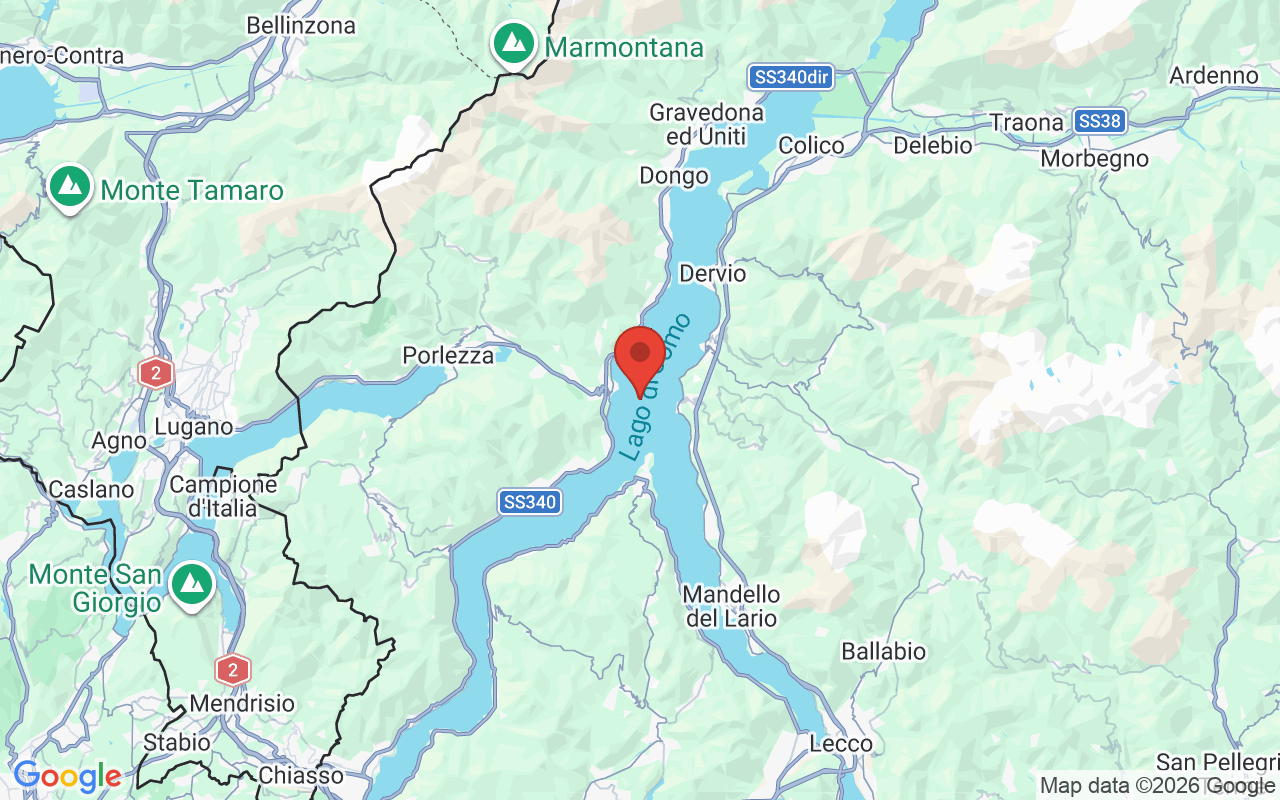
His financial bedrock is physically anchored across premier Western European properties. The centerpiece is the 18th-century Villa Oleandra in Laglio on Lake Como, Italy, acquired in 2002 for approximately €12 million to €14 million ($13.5 million at the time). Comprising 25 rooms, landscaped botanical gardens, a private dock, and an outdoor swimming facility, the asset's current valuation surpasses $100 million. Additional real estate assets include The Mill House in Sonning Eye, Berkshire, UK (purchased in 2014 for approximately £10 million followed by extensive multi-million-pound renovations), and the Domaine du Canadel estate in Brignoles, Provence, France—a 172-hectare working vineyard purchased in 2021 for approximately $8.3 million.
 🔍
🔍3. Comparative Matrix: Benchmarking Clooney Against Tier-1 Contemporary Peers
To identify Clooney's competitive advantages and architectural limitations, his career model must be benchmarked against his direct generational peers: Tom Cruise, Leonardo DiCaprio, and Brad Pitt.
| Evaluation Parameter | George Clooney | Tom Cruise | Leonardo DiCaprio | Brad Pitt |
|---|---|---|---|---|
| Core Artistic Mechanism | Classical screwball wit, institutional drama, ensemble direction | Extreme practical stunt-work, relentless physical commitment | Total method immersion, intense psychological characterization | Chameleon-like character acting, genre fluidity |
| Production Infrastructure | Smokehouse Pictures (Writer-Director-Producer integration) | TC Productions (Showrunner-style physical studio integration) | Appian Way (Curatorial development tailored to prestige directors) | Plan B Entertainment (High-volume indie-to-Oscar production engine) |
| Financial Architecture | High-yield venture exits (Casamigos) & lifestyle endorsements | First-dollar theatrical gross percentages on massive tentpoles | Massive upfront studio cash fees ($20M-$30M+) and back-end points | Production equity sales (Plan B stake to Mediawan) & viticulture |
| Socio-Political Influence | Direct institutional policy intervention, high-tier political fundraising | Strict political neutrality; champion of theatrical exhibition | Targeted environmental activism and biodiversity philanthropic trusts | Architectural foundations and contemporary fine arts curation |
3.1 Creative Mechanism: Classical Panache vs. Method Rigor
While DiCaprio relies on physical suffering and emotional intensity, and Cruise stakes his brand on death-defying practical aviation and stunt maneuvers, Clooney operates within the tonal lineage of Cary Grant, Spencer Tracy, and Clark Gable. Film critics have noted this technical duality, observing that in titles like Michael Clayton (2007), Clooney avoids theatrical over-acting, relying on stillness and understated restraint to project moral exhaustion while synthesizing classical movie-star charm with modern vulnerability.
3.2 Industrial Production Models: Section Eight and Smokehouse Pictures
Clooney early on avoided the passivity of the "actor-for-hire." In 2000, he partnered with Steven Soderbergh to form Section Eight Productions, a boundary-pushing studio-backed indie imprint based at Warner Bros. Section Eight produced critically acclaimed titles including Far from Heaven, Insomnia, Good Night, and Good Luck, and Syriana. Following Section Eight's planned dissolution in 2006, Clooney established Smokehouse Pictures with longtime collaborator Grant Heslov. This vehicle yielded the 2012 Best Picture Academy Award for Argo, proving his ability to package complex political narrative assets into mainstream awards champions.
4. Phase 1 Execution: Deep-Dive Analysis of the Essential Filmography Quintet
A technical assessment of George Clooney's artistic output requires studying five core texts that showcase his cinematic range across acting, directing, and screenwriting.
4.1 'Out of Sight' (1998) & 'Ocean's Eleven' (2001): Defining Contemporary Neo-Noir and Heist Mechanics
In Out of Sight, adapted from Elmore Leonard's novel by Scott Frank and directed by Soderbergh, Clooney portrays career bank robber Jack Foley. The film holds a 94% Rotten Tomatoes rating and serves as a masterclass in cinematic timing. The sequence inside the trunk of a car alongside Jennifer Lopez established Clooney's command of non-verbal chemistry, syncopated line delivery, and controlled screen charisma. Three years later, Ocean's Eleven redefined the modern studio ensemble. Managing a star-studded cast including Brad Pitt, Matt Damon, and Julia Roberts, Clooney's Danny Ocean serves as the calm, unflappable center of gravity around which the complex heist mechanics rotate.
4.2 'Good Night, and Good Luck' (2005) & 'Syriana' (2005): The Political Double-Threat
The year 2005 cemented Clooney's position in cinema history. For Good Night, and Good Luck, which he directed, co-wrote, and financed through personal deferrals, Clooney shot in high-contrast black-and-white on soundstages, seamlessly integrating archival footage of Senator Joseph McCarthy. The film earned six Oscar nominations, including Best Director and Best Original Screenplay for Clooney. Simultaneously, for Stephen Gaghan's geopolitical energy thriller Syriana, Clooney gained 30 pounds to play cynical CIA operative Bob Barnes. The role entailed extreme physical sacrifice—including an on-set stunt that caused a severe, chronic cerebrospinal fluid leak—and earned him the Academy Award for Best Supporting Actor.

4.3 'Michael Clayton' (2007) & 'The Descendants' (2011): Deconstructive Character Studies
Tony Gilroy's Michael Clayton represents the high-water mark of Clooney's dramatic acting capability. Portraying a compromised "fixer" at a prestigious Manhattan corporate law firm, Clooney strips away all vanity. The climactic single-take taxi cab sequence—capturing his micro-expressions as the vehicle navigates New York traffic while the credits roll—stands as a benchmark of modern dramatic restraint. In Alexander Payne's The Descendants (2011), Clooney plays Matt King, an emotionally blindsided Hawaiian land trustee confronting his comatose wife's infidelity. His performance, praised for its raw vulnerability and awkward physicality, earned him a Golden Globe Award and his third Best Actor Oscar nomination.
5. Phase 2 Advanced Tactics: Brand Commercialization, Capital Allocation, and Humanitarian Governance
Unlike stars who remain dependent on studio salaries, Clooney systematically engineered secondary cash streams to finance his creative independence and geopolitical initiatives.
5.1 The Casamigos Case Study: Reverse-Engineered Private Consumption to Corporate Exit
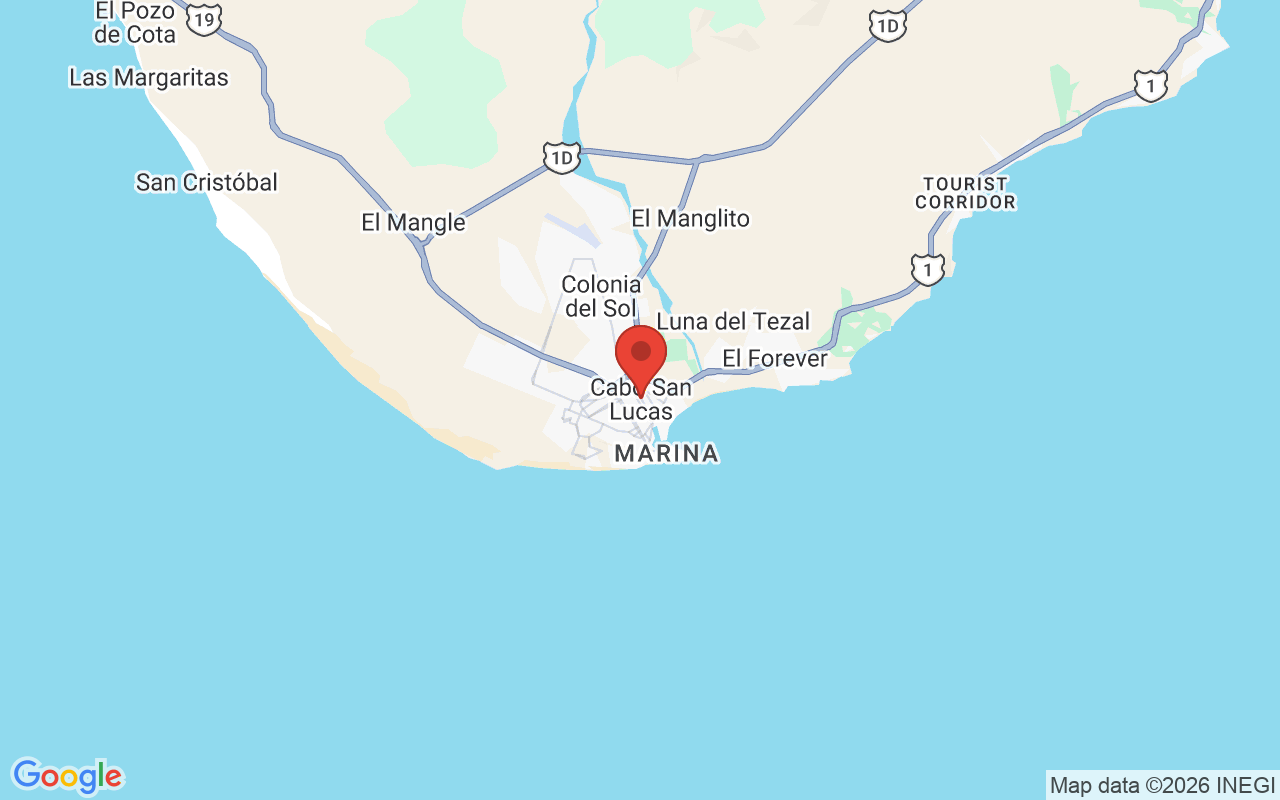
The inception of Casamigos was reportedly accidental. While building side-by-side vacation compounds in Cabo San Lucas, Mexico, Clooney and Rande Gerber sought a smooth, additive-free house tequila for personal consumption. They commissioned a distillery in Jalisco to formulate a spirit tailored specifically to avoid alcohol burn. However, when annual production hit 1,000 bottles, the Mexican distillery informed them that their volume exceeded private-use exemptions, requiring formal commercial licensure. Rather than throttling consumption, they launched Casamigos in 2013, marketing it as an authentic, founder-crafted lifestyle product. Four years later, Diageo acquired the operation in an industry-defining $1 billion transaction.
 🔍
🔍5.2 The Nespresso Global Ambassadorship and Geopolitical Funding
Beginning in 2006, Clooney signed on as the primary brand ambassador for Nestlé's Nespresso division across Europe and international territories, eventually expanding to North American television in 2015. Generating an estimated total compensation exceeding $40 million, Clooney leveraged this commercial platform with strategic transparency. He openly disclosed deploying these funds to finance the Satellite Sentinel Project, utilizing commercial satellites in partnership with DigitalGlobe to monitor human rights violations and troop movements along the border of Sudan and South Sudan.
5.3 Institutional Diplomacy: The Clooney Foundation for Justice and TrialWatch Architecture
Following his 2014 marriage to premier international human rights barrister Amal Alamuddin Clooney, the actor systematized his humanitarian work into the Clooney Foundation for Justice (CFJ). Abandoning celebrity awareness galas, CFJ operates with courtroom-level technicality:
- TrialWatch: An institutional initiative run through
cfj.orgthat trains and deploys neutral legal monitors into corrupt judicial systems worldwide. These observers document trials targeting journalists, dissidents, and marginalized populations, issuing objective "fairness reports" to push back against judicial authoritarianism. - The Docket: An investigative branch composed of international lawyers collecting operational evidence to build criminal cases against corporate entities and warlords profiting from war crimes.
6. Political Influence and Power Brokering: The 2024 Campaign Intervention
Clooney's engagement in United States domestic politics has transitioned from baseline endorsement to historic policy-shaping intervention.
6.1 The Historic New York Times Op-Ed Anatomy
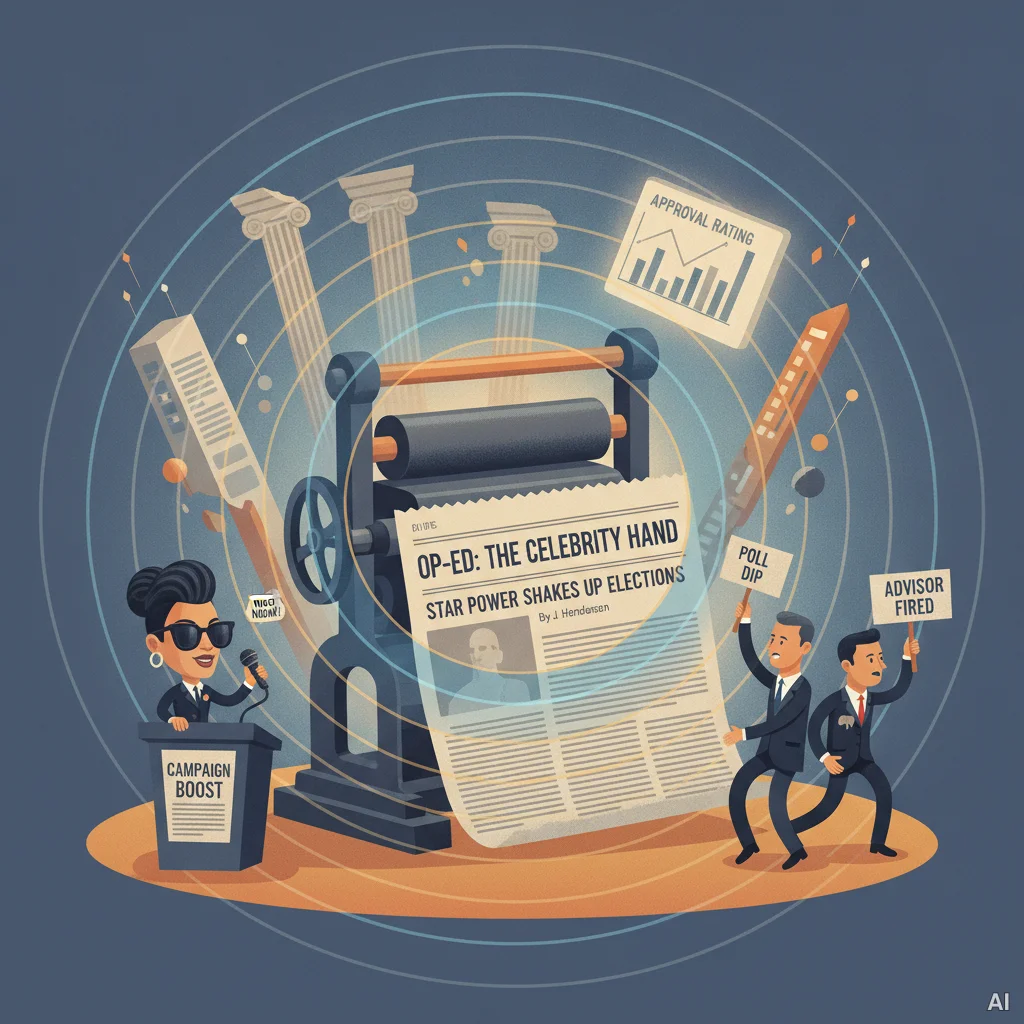
In mid-June 2024, Clooney co-hosted a marquee Democratic Party presidential fundraising gala in Los Angeles alongside President Joe Biden, raising over $30 million in a single evening. Yet, three weeks later—following President Biden's faltering debate performance—Clooney published a historic opinion essay in The New York Times on July 10, 2024, titled "I Love Joe Biden. But We Need a New Nominee." In the piece, Clooney laid down an unvarnished assessment:
"I love Joe Biden. As a senator, as a vice president and as president. I consider him a friend, and I believe in him... But the one battle he cannot win is the fight against time. None of us can. It's devastating to say it, but the Joe Biden I was with three weeks ago at the fund-raiser was not the Joe 'big F-ing deal' Biden of 2010. He wasn't even the Joe Biden of 2020. He was the same man we all witnessed at the debate... Our party leaders need to stop telling us that 51 million people didn't see what we just saw."
6.2 Backlash, Counter-Attacks, and The Doctrine of Non-Electoral Influence
The essay sent seismic shockwaves through Democratic Party leadership, accelerating the consensus that ultimately culminated in President Biden's historic withdrawal from the race eleven days later. The political fallout was immediate. Former President Donald Trump retaliated via Truth Social, branding Clooney a "fake movie actor... who should get out of politics and go back to television." Within Democratic loyalist factions, Clooney was attacked as a billionaire Hollywood gatekeeper. Yet, when asked about personal political aspirations, Clooney maintained a clear-eyed posture, declining elected runs with a characteristically technical assessment: entering an election immediately alienates 50% of the public, whereas remaining a private citizen gives him unconstrained leverage to speak plainly to power.
7. Critical Pitfalls, Tactical Failures, and Analytical Vulnerabilities
An objective audit requires confronting Clooney's creative miscalculations, box office missteps, and strategic vulnerabilities.
7.1 The 'Batman & Robin' (1997) Disaster and Self-Deprecating PR Recovery
Joel Schumacher's Batman & Robin (1997) registered catastrophic metrics: an 11% rating on Rotten Tomatoes and a Metacritic score of 28. Hampered by the infamous anatomically accentuated batsuit, Clooney's performance was widely panned. His subsequent handling of the disaster, however, became an industry blueprint for crisis management. Rather than deflecting blame onto the director or studio, Clooney spent decades publicly admitting fault, frequently joking that he "personally destroyed the Batman franchise." This self-deprecating candor protected his public goodwill, transforming what could have been a career-ending failure into a signature personal asset.
7.2 Directorial Stagnation: 'Suburbicon' and Streaming Era Mid-Tiers
While Clooney's initial directorial outings (Confessions of a Dangerous Mind, Good Night, and Good Luck, The Ides of March) received widespread critical praise, his later directorial work has seen diminishing critical returns. The 2017 satirical crime piece Suburbicon collapsed with a 28% Rotten Tomatoes score, criticized for an uneven mashup of early Coen Brothers scripts and racial strife. Later studio streaming efforts, including Netflix's sci-fi drama The Midnight Sky (2020) and Amazon's coming-of-age adaptation The Tender Bar (2021), achieved stable viewership but were dinged by critics for conventional sentimentalism. The data reveals that while Clooney excels at directing sharp, contained dialogue-driven procedural dramas, wide-canvas speculative stories frequently strain his directorial range.
8. Obscure Case Files: 4 Hidden Historical Artifacts and Anomalies
Several lesser-known biographical and financial episodes provide vital context on Clooney's career resilience and legendary professional generosity.
8.1 Neurological Adversity: Overcoming Bell's Palsy
At age 14, during his freshman year of high school, Clooney developed Bell's Palsy, a neurological condition that left the entire left side of his face paralyzed for nine months. Enduring ruthless teasing from classmates, Clooney adopted self-deprecating humor as an active psychological defense mechanism. He later credited this period as the crucible that forged his self-effacing charm, teaching him to disarm hostile rooms with quick-witted levity long before his physical appearance became an asset.
8.2 The 300-Pound Companion: Max the Star Pig
Between 1988 and 2006, Clooney shared his home with a Vietnamese pot-bellied pig named Max. Originally purchased as a gift for then-partner Kelly Preston, Max remained with Clooney for 18 years, eventually growing to over 300 pounds. The animal slept under Clooney's bed, joined him on private charter flights, and became a fixture of Hollywood press junkets until passing away peacefully in 2006. Max became a running symbol of Clooney's long resistance to conventional domestic arrangements during his prominent bachelor era.
8.3 'The Boys' Liquidity Event: $14 Million in Cash Dividends
In September 2013, before the Casamigos exit, Clooney orchestrated a private gesture of gratitude. He invited 14 close personal friends (dubbed "The Boys")—collaborators who had provided couches to sleep on, micro-loans, and emotional support during his lean early years—to his home for dinner. At each place setting sat a black Tumi briefcase packed with $1,000,000 in cash ($20 bills). Recognizing that a windfall brings tax burdens, Clooney paid the full gift tax on all $14 million out of pocket, ensuring that each friend received a clean $1 million net gain.

9. Future Horizon & Strategic Forecast: Broadway, Streaming Platforms, and Political Realities
Looking ahead, George Clooney is executing several deliberate, high-profile career pivots across live theater, prestige streaming, and behind-the-scenes political counsel.
9.1 The 2025 Broadway Debut: 'Good Night, and Good Luck'
In spring 2025, Clooney made his official Broadway stage debut at the historic Winter Garden Theatre in a live theatrical staging of Good Night, and Good Luck. Directed by Tony Award-winner David Cromer, the production flipped Clooney's original cinematic role: stepping out of the supporting shoes of producer Fred Friendly, Clooney took center stage as iconic newsman Edward R. Murrow. The move challenged Clooney to master the unbroken, live dramatic rigor of stage performance, demonstrating his continued commitment to serious political journalism as an artistic subject.

9.2 Streaming Evolution: 'Wolfs' and Modern Auteur Collaborations
In the digital streaming realm, Clooney reunited with Brad Pitt for Jon Watts's slick, dialogue-driven crime thriller Wolfs for Apple Original Films. He also joined writer-director Noah Baumbach's high-prestige ensemble project alongside Adam Sandler for Netflix. These choices underscore a pragmatic platform hedge: selectively lending his vintage, Old Hollywood persona to deep-pocketed tech giants while maintaining full creative agency over his independent directorial projects.
10. Frequently Asked Questions (FAQ): Technical & Historical Breakdown
Q1: Exactly how much money did George Clooney make from the Casamigos Tequila sale?
A: The 2017 transaction with Diageo was structured for $700 million in upfront cash, alongside an additional $300 million tied to performance earn-outs over a 10-year horizon. After accounting for partner splits with Rande Gerber and Mike Meldman, initial investor equity paybacks, and federal and state taxes, Clooney earned roughly $239 million pre-tax in 2018 alone, according to Forbes.
Q2: Why does George Clooney hold a historically unique Academy Awards record?
A: Clooney is the only figure in Academy history nominated across six distinct creative categories: Best Picture (Argo), Best Director (Good Night, and Good Luck), Best Actor (Michael Clayton, Up in the Air, The Descendants), Best Supporting Actor (Syriana), Best Adapted Screenplay (The Ides of March), and Best Original Screenplay (Good Night, and Good Luck). He has won two Oscars: Best Supporting Actor for Syriana and Best Picture for Argo.
Q3: What was the physical fallout from his on-set injury while filming 'Syriana'?
A: During an intense torture sequence for Syriana in 2005, Clooney suffered a severe spinal injury that went undiagnosed for weeks as a torn dura mater, causing spinal fluid to leak out through his nasal passages. The injury caused excruciating, debilitating headaches that required major spinal surgery, extended convalescence, and prolonged pain management therapy.
Q4: What is TrialWatch, and how does the Clooney Foundation for Justice function?
A: Run through cfj.org, TrialWatch is a core program within the Clooney Foundation for Justice that trains neutral attorneys and volunteer monitors to attend and document high-stakes trials worldwide. The initiative issues comprehensive fairness reports assessing judicial transparency, helping expose kangaroo courts that weaponize legal frameworks against political journalists, activists, and minority groups.
Q5: Is George Clooney planning to run for formal political office in California or nationally?
A: No. Clooney has repeatedly ruled out running for public office, including the California governorship or U.S. Senate. His strategic calculation is clear: running for office instantly polarizes 50% of the electorate, whereas remaining an independent, non-elected private actor allows him to raise tens of millions of dollars, fund high-impact legal infrastructure, and publish high-leverage op-eds that challenge sitting leadership without being beholden to campaign compromises.
ℹ️ This article was drafted with the help of an AI tool and reviewed/edited by a human before publishing. · Original: AdEngine-X
📚 References
This list may include both live search sources the AI referenced while writing and public-data sources checked during fact verification. Please verify the original sources before citing or reusing.
0 Comments
Loading comments...