Today's Connections Hints: 7 Expert Strategies and Daily Clues to Save Your Streak (2026 Latest Edition)
(Advertisers wanted)
(Advertisers wanted)
📌 Topic & Subject
This article explores the popular New York Times daily word game "Connections," detailing its global phenomenon, gameplay mechanics, and statistics. It covers expert strategies and spoiler-free hints designed to help players maintain their winning streaks without ruining the puzzle's challenge.
(Advertisers wanted)
(Advertisers wanted)
📌 Table of Contents
- 1. Why "Connections Hint Today" Has Taken Over Our Morning Routine
- 2. By the Numbers: Statistics & Analytics Behind NYT Connections
- 3. The Creative Mind Behind the Grid: The Genius and Philosophy of Wyna Liu
- 4. Behind the Controversy: Connections, Wordle, and the Legacy of 'Only Connect'
- 5. Step 1 — Core Gameplay: Mechanics, Timelines, and Grid Structure
- 6. Step 2 — Advanced Solving Strategies: Thinking Like Wyna Liu
- 7. The Danger of the "5-Word Trap" and Major Pitfalls to Avoid
- 8. The Social Realm: Reddit r/NYTConnections, Emojis, and Community Culture
- 9. Next-Level Tools and Future Horizons: The Companion and Themed Spin-Offs
- 10. Frequently Asked Questions (FAQ)
Why "Connections Hint Today" Has Taken Over Our Morning Routine
Let’s be honest. There is nothing quite like that uniquely chaotic thrill of opening the New York Times Games app first thing in the morning, freshly brewed cup of coffee in hand. You sit down expecting a peaceful, refreshing two-minute brain warm-up, only to find yourself staring blankly at 16 seemingly unrelated words, questioning your entire grasp of the English language. It is precisely this bewildering moment that drives millions of people to type "Connections hint today" into search bars before their morning toast even pops up.
Since bursting onto the digital scene in the summer of 2023, Connections has evolved from a quirky word experiment into a massive global daily ritual. It now proudly stands as the second most-played game across the entire NYT Games portfolio, right behind the legendary Wordle. Every morning, millions of players worldwide engage in a tense game of mental chess with the puzzle editors. But here’s the catch: nobody wants the answers simply handed to them on a silver platter. Finding out which four words go together without figuring it out yourself is nothing short of anticlimactic. What we truly crave are gentle, progressive, spoiler-free hints that keep the thrill of solving alive while protecting our precious win streaks.

From Morning Coffee to Daily Ritual: A Global Phenomenon
What makes Connections so uniquely addictive compared to conventional crosswords or anagrams? It directly taps into the human instinct for pattern recognition. The moment you open the 4×4 grid, your brain instantly tries to find meaning amidst the randomness. Seeing a word like "CRANE" triggers simultaneous thoughts of birds, construction equipment, origami, and classic Hollywood actors. Thanks to this delightful cognitive friction, around 9 million daily active users (DAUs) stay glued to their screens every single day.
Whether commuting on the subway, squeezing in a round between Zoom meetings, or sharing results in family group chats, looking up subtle daily clues has become a shared cultural language. It's a sense of community solidarity that says, "I see the trap Wyna Liu set today, but I’m not falling for it alone."
Why Looking Directly at Answers Ruins the Fun (The Rise of Smart Hints)
Let's talk about the psychology of puzzle hints. In the early days of web gaming, seeking help meant staring straight at a full answer key. But today’s savvy word puzzle community demands nuance. Seeing the final color groups right away robs you of that exhilarating dopamine rush when everything clicks into place at the last second.
A smart, well-crafted hint acts like a mental flashlight without giving away the answers outright. It subtly teases a category theme without naming specific tiles, or points out the sneaky trap words designed to drain one of your four precious lives. By using stepped hints, you retain 100% of your bragging rights and genuine satisfaction when that gleaming, four-colored grid finally locks into place.
By the Numbers: Statistics & Analytics Behind NYT Connections
If you've ever felt like a particular day's puzzle was statistically rigged to torment you, you're not imagining things! Looking under the hood at Connections data analytics reveals a fascinating mathematical dynamic behind how players win, where they stumble, and what triggers total wipeouts.
Key Statistics: Win Rates, Mistakes, and Word Frequency
According to data aggregated by language research outfits like WordsRated and NYT player metrics, the baseline average failure rate across all standard games hovers around 9.1%. However, whenever the puzzle editor drops an ultra-abstract wordplay grid, that failure rate skyrockets to over 55%!
Metric | Statistic | Gameplay Context & Analysis |
|---|---|---|
Daily Active Users (DAU) | ~9,000,000 | Ranks as the second most-engaged daily word game, right behind Wordle. |
Grid Layout & Tile Count | 16 tiles (4×4 grid) | Must be sorted into 4 distinct groups of 4 words each. |
Max Allowed Mistakes | 4 attempts | Submitting a 4th incorrect guess results in an immediate game over. |
Average Failure Rate | ~9.1% (Standard) / Up to 55% (High Difficulty) |
Spikes sharply when heavy doses of anagrams, homophones, or trivia traps are involved.
"Perfect Clear" (0 Mistakes)
Approx. 57.0%
The percentage of players who won by correctly identifying all four groups without making a single mistake.
Mistake Distribution Curve
1 Mistake: 16.5% | 2 Mistakes: 9.4% | 3 Mistakes: 9.3%
The overall average number of attempts per player is approximately 4.65.
Word Reuse Statistics
Approx. 58% Unique Words / 42% Reused Words
The most frequently repeated word in the game's history is "BALL" (featured over 25 times).
Anatomy of a Perfect Grid: Colors, Themes, and Trap Ratios
Did you know that over approx. 80% of all past categories are built around direct synonyms, dictionary definitions, and common idiomatic associations? The remaining 20% showcases the whimsical and unpredictable realms of puzzle design, including word manipulation, omitted words, palindromes, homophones, and obscure pop culture trivia.
The beauty of this design lies in the harmony between predictability and deception. The game offers enough familiar linguistic footing to build confidence before catching unsuspecting players off guard with the unpredictable Purple category.
The Creative Mind Behind the Grid: The Genius and Philosophy of Wyna Liu
Behind every great puzzle is a master orchestrating the chaos, and for Connections, that architect is Wyna Liu, Associate Puzzle Editor at The New York Times. Her journey to joining the ranks of legendary puzzle designers is anything but conventional.
From 3D Jewelry and NYU Tech to NYT Puzzle Maestro
Before crafting daily brainteasers for millions of players worldwide, Wyna Liu earned a master's degree from NYU's Interactive Telecommunications Program (ITP). Her diverse background spans 3D jewelry design, kinetic art, and yoga instruction. It is precisely this interdisciplinary foundation that makes Connections feel entirely different from traditional word puzzles.
Liu doesn't view words merely as flat arrangements of letters on a 2D page; she treats them as interlocking, tangible, 3D geometric forms. A single word tile is designed to hold multiple emotional and semantic facets. In her design workshop, words never remain simple definitions—they become modular building blocks that can rotate across slang, history, phonetics, and visual humor.
Embracing 'Righteous Anger': A Peek into the Editor's Mindset
Have you ever solved a puzzle only to shout at your smartphone screen in utter disbelief and bursts of laughter? Liu is not only well aware of this reaction, but she fully embraces it. In interviews discussing player responses, she noted that feedback often leans toward delightful outrage, explaining that getting passionately worked up is part of the fun. Because words can branch out in countless directions, engineering unexpected and humorous connections lies at the very heart of the puzzle's charm.
This philosophy fundamentally shifts how we approach the board. Traps are not malicious bugs; they are thoughtfully crafted inside jokes waiting for you to catch the punchline.
Behind the Controversy: Connections, Wordle, and the Legacy of 'Only Connect'
To fully grasp how Connections captured the cultural zeitgeist, we must examine how it distinguishes itself from its siblings and predecessors in the modern puzzle renaissance.
Connections vs. Wordle: Lateral Intuition vs. Algorithmic Deduction
While Wordle took the world by storm with deductive, information-theory-based logic—where green and yellow tiles systematically eliminate letter possibilities like a computer algorithm—Connections demands lateral thinking. A tricky Connections board cannot be solved through brute-force computational power alone. It requires an instinctive grasp of human slang, cultural double entendres, wordplay, and contextual flexibility. If Wordle is science, Connections is pure art.
The 'Connecting Wall' Homage: Victoria Coren Mitchell and Trivia History
When Connections launched in beta on June 12, 2023 (before officially integrating into the NYT Games ecosystem in August 2023), trivia enthusiasts immediately recognized its structural blueprint. It bore a striking resemblance to the 'Connecting Wall', the iconic round from the legendary British TV quiz show Only Connect.
Victoria Coren Mitchell, the host of Only Connect, publicly addressed the obvious structural similarities on social media, sparking a fascinating transatlantic debate on homage, inspiration, and format evolution. However, while Only Connect features a nerve-wracking 3-minute countdown timer and hyper-niche academic trivia, the NYT's Connections brilliantly modernized the format: eliminating time pressure, visualizing a color-coded difficulty hierarchy, and building an interface optimized for smooth, intuitive mobile touch.
Strands vs. Connections: Spatial Exploration vs. Conceptual Traps
Compared to newer additions like NYT's Strands, which operates as a themed spatial word search on a 6×8 grid, Connections preys directly on cognitive vulnerabilities. In Strands, once you find a valid themed word, it is definitively correct. In Connections, however, you might assemble four valid words that fit together seamlessly, only to realize too late that the puzzle setter deliberately laid a five-word overlap trap to lure you into burning an attempt.
Step 1 — Core Gameplay: Mechanics, Timelines, and Grid Structure
Whether you are new to the game or aiming to maintain a consistent win streak, mastering the core rules and operational framework is essential.
Understanding the Color Spectrum: Yellow, Green, Blue, Purple
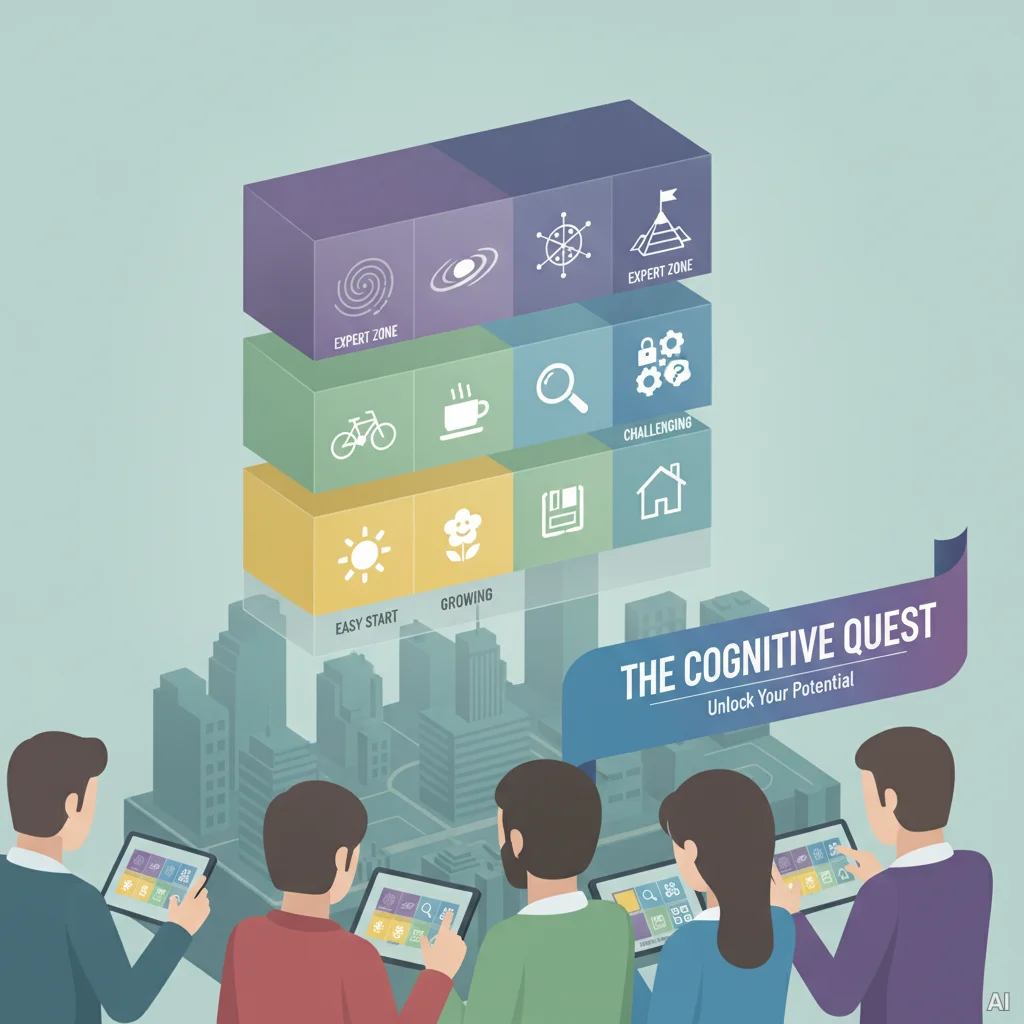
Every game contains 16 tiles divided into 4 distinct difficulty tiers. Knowing what each color represents helps you calibrate your thinking properly as you scan the board:
🟨 Yellow (Straightforward / Intuitive): The most direct group. It primarily consists of straightforward dictionary synonyms, clear definitions, or basic objects (e.g., types of shoes, words meaning 'happy').
🟩 Green (Common Knowledge / Real-World Associations): Slightly more contextual, requiring basic general knowledge or everyday cultural associations (e.g., parts of a tree, items in a desk drawer).
🟦 Blue (Trivia / Multiple Meanings / Jargon): Involves polysemous words (words with multiple meanings), pop culture trivia, movie/music references, or specific professional jargon (e.g., board game titles missing a letter, nautical terms).
🟪 Purple (Abstract Wordplay / Cryptic Meta Clues): The notorious tier! It relies heavily on homophones, letter manipulation/anagrams, palindromes, or compound phrases such as "words that follow 'HOT'", "words that become fruits if you drop the first letter".
Release Schedule, App Navigation, and Reset Timer (Midnight Local Time)
One of the best design aspects of NYT Games is its localized release schedule. The puzzle resets at 00:00 (midnight local time) in your respective time zone. This means that even when traveling around the world, a fresh puzzle naturally unlocks each day right as the calendar date rolls over.
You can play seamlessly via modern desktop and mobile web browsers or through the dedicated NYT Games app (available on iOS and Android). If you are logged into your NYT profile, your progress will automatically sync across devices.
Free-to-Play vs. NYT Games Subscription Benefits (Archive & Stats)
The daily base puzzle is 100% free to play for anyone worldwide. There is no need to pull out a credit card to enjoy today's puzzle.
However, if you want to explore the extensive past puzzle archive or view in-depth historical gameplay analytics, you will need an NYT All Access or NYT Games subscription (typically $5–$6 per month or around $40 annually). Subscribers gain access to extended assistive tools, past archives, and performance metrics designed to elevate the daily playing experience.
Step 2 — Advanced Solving Strategies: Thinking Like Wyna Liu
Ready to turn a mere 57% perfect clear rate into a near-flawless winning streak? Here are the advanced mental frameworks that top-tier players utilize every single day.
The Mandatory 3-Shuffle Rule: Breaking Free from the Editor's Visual Bait
The initial 16 tiles you see when opening a new board are not placed randomly. They have been meticulously arranged by the editor to trick your visual cortex! If words like DOG, CAT, BIRD, and FISH sit neatly aligned in a single row, it is almost certainly a trap.
Pro Tip: Before tapping even a single tile, hit the Shuffle button 2–3 times. Scrambling the visual layout forces your brain to evaluate words based on their semantic value rather than their spatial proximity.
Spotting the "Outlier Tile": Isolating Definitive Meanings
Scan the 16 words and look for the board's most linguistically "unusual" word. Words that serve as multiple parts of speech (e.g., SPRING, DUCK, RECORD, etc.) can fit into dozens of categories. However, highly specific and uncommon words (such as OBOE or KILOWATT) realistically fit into only one or two contexts.
Once you identify this outlier tile, brainstorm what it could possibly relate to. Finding three words that logically pair with it can help you immediately solve a blue or purple category right from the start, leaving behind simpler synonym groups.
Decoding the Purple Category: Wordplay, Prefixes, and Palindromes
The moment you feel stuck, switch into "Purple Mode." Stop asking what the words mean, and start analyzing how they are constructed. Ask yourself these 4 diagnostic questions:
Can a common word be placed before or after all these words? (e.g., ___ TAPE: Red, Duct, Scotch, Video).
Do they share hidden pronunciations or homophones? (e.g., words that sound like letters of the alphabet: SEA, BE, QUEUE, YOU).
Does removing the first or last letter reveal an entirely new category of words?
Are they anagrams of everyday words or spelled backward (palindromes)?
The Danger of the "5-Word Trap" and Major Pitfalls to Avoid
Even veteran players often fall into classic psychological traps that break their win streaks. Recognizing these patterns in advance is your best defense.
Beware the Fatal Temptation of "One Away..."
Nothing gets a player's adrenaline pumping quite like the small pop-up banner reading "One away..." after submitting an incorrect guess. This tells you that 3 out of your 4 selected tiles were correct.
The instinctive reaction is to immediately swap out one word and guess again. Never do this! If there is a 5-word overlap on the board (e.g., 5 types of pasta), firing off hasty guesses can burn through all 3 of your remaining lives in under 15 seconds. When you see "One away...", pause, take a step back, and figure out where that 5th tile actually belongs elsewhere on the grid.
American Idioms, Sports Jargon, and Cultural Blind Spots
Because the puzzle is crafted in the NYT newsroom based in New York, global players frequently run into localized cultural nuances. Whether it's baseball terms (BUNT, FLY, SLIDER, STRIKE), U.S. state postal abbreviations, or traditional American idioms, keeping an eye out for regional expressions will help you avoid sudden elimination.
Rushed Guessing: How 4 Lives Disappear in an Instant
There is zero time penalty in Connections. Whether you solve the puzzle in 90 seconds or 9 hours makes no difference to your score or streak. If you are not completely sure, close the app, go about your day, and return to the board in the afternoon with fresh eyes. Tricky word tiles that felt utterly impossible at 8:00 AM often become immediately obvious at 2:00 PM.

The Social Realm: Reddit r/NYTConnections, Emojis, and Community Culture
One of the irresistible joys of Connections is participating in the massive, vibrant community that forms around the daily puzzle.
The Four-Color Grid Flex: The Psychology of Social Sharing
Much like Wordle before it, Connections engineered a viral sharing mechanism that communicates victory or defeat without spoilers. Sharing a clean grid of solid-colored blocks (🟨🟨🟨🟨 🟩🟩🟩🟩 🟦🟦🟦🟦 🟪🟪🟪🟪) on X, Instagram Stories, or Threads is the ultimate digital flex—an instant, wordless testament to intellectual prowess.
Over 60,000 Reddit Discussions: Collective Catharsis and Daily Playful Grievances
The r/NYTConnections Reddit community has established itself as a bustling digital town square with over 60,000 daily discussion threads, serving as both an analytical hub and a comforting support group. Whenever a controversial category emerges—like obscure '90s slang or clever yet devious homophones—thousands of players gather to share memes, vent playful frustrations, and dissect the ingenuity of the day's puzzle construction.
Next-Level Tools and Future Horizons: The Companion and Themed Spin-Offs
Where is the world of Connections headed next? Its ecosystem is becoming smarter, broader, and more technologically refined with every passing month.
Leveraging the Connections Companion: Difficulty Ratings and Bot Insights
Following in the footsteps of Wordle's famous WordleBot, The New York Times introduced the Connections Companion. This official digital recap tool rates daily puzzles on an analytical difficulty scale from 1.0 to 5.0 and reveals what percentage of global players fell into specific traps. Checking the Companion after completing your daily puzzle is the best way to benchmark your intuition against millions of other players.
AI-Resilience & Sports Edition: The Future of NYT Games
As Large Language Models (LLMs) grow increasingly adept at mapping lexical relationships, puzzle creators actively lean into human-centric, multi-layered cultural humor that AI still struggles to decipher. Furthermore, themed spin-offs like Connections: Sports Edition, launched in partnership with sports outlet The Athletic, showcase how the core gameplay is expanding into specialized lifestyle verticals.
Backed by over 10 million paid digital subscriptions supporting The New York Times Company, Connections stands as a vital pillar of digital engagement—proving that even in a fast-paced multimedia world, the simple thrill of weaving four words together never goes out of style.
Frequently Asked Questions (FAQ)
1. What time does NYT Connections reset every day?
The daily puzzle officially resets at 00:00 (midnight local time) based on your device's geographical standard time. If you finish today's puzzle at 11:58 PM, a brand-new board will open up in just 2 minutes!
2. Why is the Purple group always so elusive compared to Yellow?
The color hierarchy is intentionally structured by difficulty. Yellow is the most straightforward and literal, Green represents basic general knowledge and facts, Blue involves double meanings and specialized jargon, and Purple is reserved for abstract wordplay, letter additions/removals, homophones, and compound phrases.
3. What does "One away..." actually mean in terms of game strategy?
The "One away..." pop-up indicates that exactly 3 of your 4 selected tiles belong to the correct group, and 1 is incorrect. Be cautious: this usually signals a "5-Word Trap," where 5 tiles on the board seem to fit the category, and you must deduce which one belongs elsewhere.
4. Can I play past Connections puzzles for free?
Today's live puzzle is completely free for everyone on both the web and the mobile app. However, accessing the archive of past puzzles requires an NYT Games or NYT All Access subscription.
5. How does the NYT prevent AI bots from easily solving Connections?
Unlike purely mathematical or programmatic puzzles, Connections relies heavily on nuanced wordplay, multi-layered cultural puns, visual idioms, and intentional red herrings that require human lateral thinking, making automated algorithmic solving far more challenging.
ℹ️ This article was drafted with the help of AI tools and reviewed and edited by a human before publication.
ℹ️ This article was drafted with the help of an AI tool and reviewed/edited by a human before publishing. · Original: AdEngine-X
📚 References
This list may include both live search sources the AI referenced while writing and public-data sources checked during fact verification. Please verify the original sources before citing or reusing.
0 Comments
Loading comments...