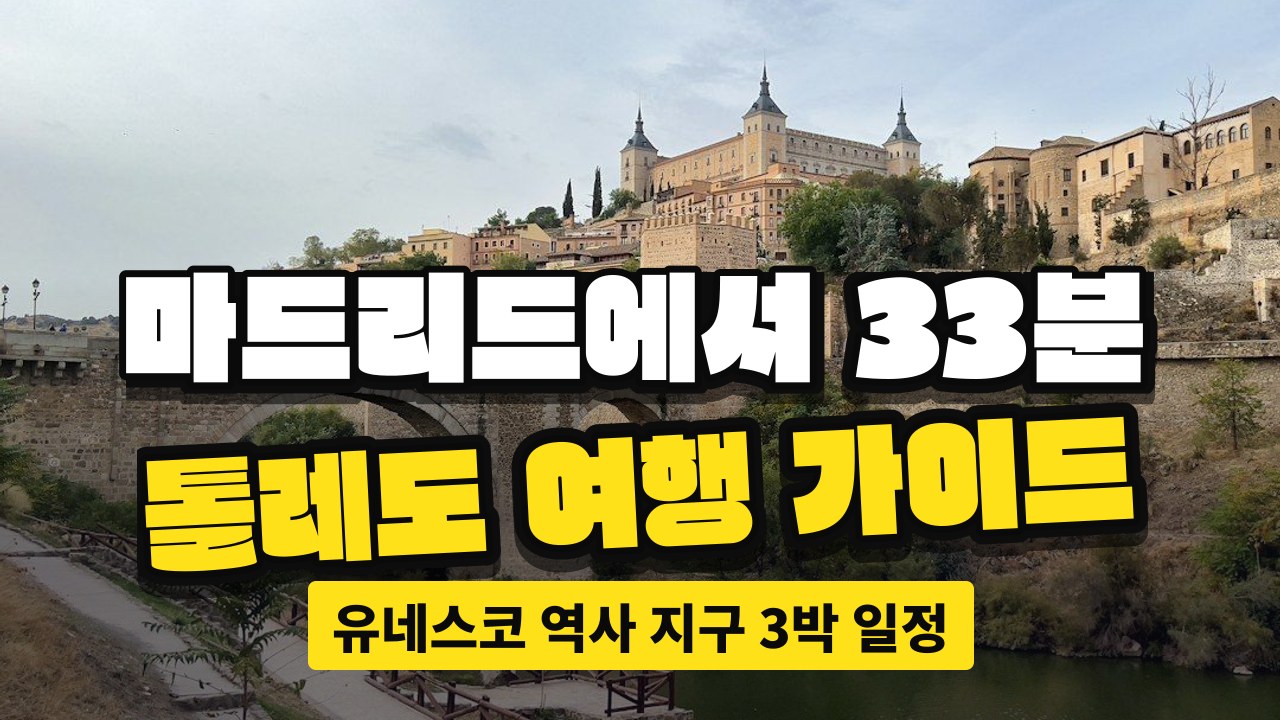
Toledo Spain travel guide for independent cultural travelers
📌 Topic & Subject
This article serves as a comprehensive travel guide for independent cultural travelers visiting Toledo, Spain. It outlines a three-night itinerary covering the city's UNESCO-listed historic center, multiconfessional architecture such as Mudéjar structures and Sephardic synagogues, and practical tips on transportation, lodging, and local customs.
📌 Table of Contents
- 1. Toledo regional context and day trip comparison
- 2. The historical weight of a granite promontory
- 3. Pre-trip preparation and entry essentials
- 4. Executing the foundational three-night itinerary
- 5. Advanced exploration and concealed traditions
- 6. Common visitor pitfalls to navigate
- 7. Frequently asked questions
- 8. Essential departure checklist for cultural travelers
Toledo sits on a granite massif 70 kilometers south of Madrid, surrounded on three sides by the deep gorge of the Tagus River. The municipality encompasses 232.1 square kilometers, yet its historic core occupies a compact 1.2 square kilometers behind medieval ramparts. Approximately 86,000 residents are estimated to live in the wider city, but fewer than 10,000 remain within the walled Casco Histórico. Roman legions fortified the crag as Toletum, and the Visigoths made it their political and religious capital. Following the conquest by Alfonso VI in 1085, scholars of Christian, Muslim, and Jewish descent worked side by side. When Philip II transferred the Spanish imperial court to Madrid in 1561, Toledo slipped quietly out of administrative prominence, preserving its stone street plan intact for centuries.

Toledo regional context and day trip comparison
The table below summarizes key metrics across the three principal historic destinations situated within day-trip distance of Madrid.
| Destination | Transit time from Madrid | Round-trip transit cost | Primary architectural profile | UNESCO designation |
|---|---|---|---|---|
| Toledo | 33 minutes (Avant train) | €22.20 | Mudéjar, Gothic, Sephardic | 1986 |
| Segovia | 27 minutes (Alvia train) | €24.80 | Roman, Castilian Gothic | 1985 |
| Ávila | 90 minutes (Regional train) | €19.40 | Romanesque, 11th-century walls | 1985 |
The defining distinction among these three destinations lies in Toledo's layered multiconfessional heritage, which concentrates substantial Islamic brickwork, Sephardic synagogues, and high Gothic architecture inside a single perimeter. While Segovia offers Roman engineering and Ávila delivers military fortifications, Toledo functions as an intellectual crossroads where medieval translation movements introduced classical philosophy back to Western Europe.
The historical weight of a granite promontory
Centuries of deliberate isolation preserved Toledo's dense medieval footprint against modern redevelopment. Miguel de Cervantes praised the setting in La ilustre fregona, calling it the rocky burden, the glory of Spain and light of its cities. French author Théophile Gautier later likened the town to a massive stone sarcophagus resting under an unyielding sun.
The Tagus River carved a defensive barrier that dictated urban density for two millennia. Houses expanded upward, leaning across narrow corridors called callejones to shade stone pavements from summer temperatures that regularly approach 40 degrees Celsius. In 1986, UNESCO inscribed the historic center as a World Heritage site, citing the uninterrupted physical dialogue among three major world religions.

Pre-trip preparation and entry essentials
A successful three-night journey requires thoughtful logistical choices regarding luggage, timing, and ticketing.
- Footwear specifications: The old town features steep inclines paved with irregular river stones known as cantos rodados. Pack firm-soled walking shoes with substantial arch support to prevent foot fatigue.
- Transit bookings: Renfe operates direct Avant high-speed trains from Madrid Puerta de Atocha to Toledo, taking 33 minutes each way. Secure tickets three to five days ahead, as weekend departures frequently sell out at €13.90 for a one-way fare.
- The monument pass: Purchase the Pulsera Turística for €12.00 to €14.00 at any of its seven participating sites. It grants repeated entry to key monuments throughout your stay.
- Cathedral access requirements: Toledo Cathedral enforces modest dress standards. Shoulders and knees must remain covered, and Sunday tourist admissions open at 14:00 following morning liturgical services.
Executing the foundational three-night itinerary
Three nights allow you to experience the historic center after the daily wave of tour buses departs for Madrid.
Day 1: Arrival and the northern battlements
Arrive at the 1919 Neo-Mudéjar railway station and take city bus line 5 or line 61 directly to Plaza de Zocodover. Alternatively, pedestrian escalators at Safont lift visitors up the cliff face without requiring strenuous climbs. Check into an old-town hotel or guesthouse, where nightly rates average €94. Begin your walk at the Puerta de Bisagra, passing through the 10th-century Mezquita del Cristo de la Luz to study its original Islamic brick vaulting.
Day 2: The cathedral and the artistic peak of El Greco
Dedicate your morning to the Catedral Primada, paying €12.00 for the standard entry ticket. Inside the sacristy hang masterworks by Francisco Goya, Titian, and El Greco. Continue westward into the Judería to the Church of Santo Tomé to view El Greco's 1586 masterpiece, The Burial of the Count of Orgaz. In the canvas, the painter looks outward at the viewer while his son Jorge Manuel points toward the miracle.

Day 3: The Sephardic legacy and quiet cloisters
Spend the third morning exploring the Sinagoga de Santa María la Blanca and the Sinagoga del Tránsito, which houses the Sephardic Museum. Walk to the northern perimeter of the Jewish quarter to reach the Monastery of San Juan de los Reyes. The Catholic Monarchs commissioned the monastery, and iron chains hung along its outer granite walls mark the liberation of Christian prisoners during the Granada campaigns.

Day 4: River bends and the distant vantage
Cross the San Martín Bridge on foot before checking out of your accommodations. Take a ten-minute taxi ride to the Mirador del Valle, situated along the southern river bluff. From this viewpoint, the fortress towers of the Alcázar and the single spire of the cathedral align against the sky exactly as depicted in El Greco's landscape painting.

Advanced exploration and concealed traditions
Deliberate exploration uncovers quiet traditions hidden behind heavy wooden gates.
Toledo is an exceptional museum city whose urban fabric preserves structural testimony to more than two millennia of cultural coexistence.
Convent confectionery represents one of the city's living monastic crafts. Cloistered nuns produce traditional marzipan from ground almonds and sugar at Convento de San Clemente and Convento de Jesús y María. Visitors enter a quiet vestibule, place cash upon a revolving wooden shelf called a torno, and receive fresh boxes in return without direct contact. Beneath street level, vaulted cisterns, Islamic bathhouses like the Baños del Ángel, and the legendary Cuevas de Hércules extend through the bedrock, accessible through local heritage tours.

Common visitor pitfalls to navigate
Overcrowding concentrates heavily between 11:00 and 17:00, when day visitors saturate the 500-meter corridor between Zocodover and the cathedral. Schedule interior visits during early mornings or late afternoons to avoid queues. Be cautious when purchasing decorative swords or mass-market sweets in tourist corridors, where imported replicas often crowd out authentic Castilian damascene steel and traditional wood-fired marzipan. Finally, avoid hailing standard automobiles inside the historic quarter; its labyrinthine streets feature sudden dead ends and automated camera restrictions that carry municipal fines for unauthorized vehicles.
Frequently asked questions
Is three nights excessive for visiting Toledo?
Three nights allow you to explore quiet morning lanes, subterranean spaces, and evening viewpoints after day tourists depart. Over 70 percent of visitors leave before nightfall, missing the city's quietest hours.
How should travelers travel from Toledo station to the old center?
Urban bus routes 5, 61, and 62 link the station directly to Plaza de Zocodover. Travelers on foot can use the Safont escalators to bypass the cliff ascent.
What does the Pulsera Turística include?
The bracelet covers seven historical sites, including the Monastery of San Juan de los Reyes and the Church of Santo Tomé. The Toledo Cathedral requires a separate admission ticket.
Can travelers explore the city with wheeled luggage?
Wheel-based luggage faces significant resistance across steep inclines and uneven cobblestones. Choosing accommodations near access lifts or arranging a taxi from the station avoids difficult uphill transport.
When are shops and historical monuments open?
Most monuments welcome guests daily from 10:00 to 18:30. Many traditional family restaurants close Sunday evenings and Mondays, while the cathedral restricts tourist entries on Sunday mornings for Mass.
Book your rail tickets and lodging several days early to begin experiencing the quiet stone streets of medieval Toledo, but check for any changes in schedules or availability.
Essential departure checklist for cultural travelers
Before ascending the granite promontory, verify your final preparations:
- Transit: Reserve Renfe Avant rail tickets 3 to 5 days ahead, and use Safont escalators or urban buses to bypass the cliff ascent from the station.
- Footwear: Wear thick-soled shoes built for uneven cobblestones and steep inclines.
- Timing: Plan around Sunday morning cathedral closures, and reserve your quietest walks for after 18:00 when day crowds depart.
ℹ️ This article was drafted with the help of an AI tool and reviewed/edited by a human before publishing. · Original: AdEngine-X

Discovering South Korea: Must-Visit Destinations for International Travelers
🇺🇸 English (영어) · 제임스정 · 8/14/2026

Frances Tiafoe Tennis Guide 2026: 3-Night 4-Day Family Trip Itinerary, Costs & Junior Coaching Checklist
🇺🇸 English (영어) · Lifestyle Desk · 8/23/2026

Costco Ultra-Fast Delivery via DoorDash and Uber: A Dad's 8-Step Practical Guide, Budget Math, and Family Checklist (2026)
🇺🇸 English (영어) · 마샬팀장 · 9/20/2026
Dolly Parton & Dollywood Family Vacation Guide: 3-Night 4-Day Smoky Mountains Itinerary, Budget Breakdown & Parent Checklist
🇺🇸 English (영어) · Lifestyle Desk · 8/25/2026
More from this author




📚 References
This list may include both live search sources the AI referenced while writing and public-data sources checked during fact verification. Please verify the original sources before citing or reusing.
0 Comments
Loading comments...