Costco Ultra-Fast Delivery via DoorDash and Uber: A Dad's 8-Step Practical Guide, Budget Math, and Family Checklist (2026)
(Advertisers wanted)
(Advertisers wanted)
📌 Topic & Subject
This article provides a comprehensive financial and practical guide for parents regarding Costco's nationwide same-day delivery expansion through DoorDash and Uber Eats. It breaks down the corporate strategy, item markups, hidden fees, and compares the service against competitors like Instacart, Walmart+, and Amazon Prime.
(Advertisers wanted)
(Advertisers wanted)
📌 Table of Contents
- 1. The Big Shift: Why Costco Opened Its Gates to DoorDash and Uber Eats
- 2. Under the Hood: The Corporate Strategy and Cold Financial Metrics
- 3. The Family Balance Sheet: Breaking Down Markups, Hidden Fees, and Real Costs
- 4. Comprehensive Comparison: Costco vs. Instacart, Walmart+, Target, and Amazon
- 5. The Ground Reality: Parent Sanity vs. Gig Driver Frustration
- 6. The Savvy Dad’s Playbook: Advanced Cost-Optimization and Stacking Hacks
- 7. Actionable Family Logistics: The Step-by-Step Delivery Checklist
- 8. Long-Term Outlook: What This Means for Household Budgets and Retail Giants
1. The Big Shift: Why Costco Opened Its Gates to DoorDash and Uber Eats
If you have ever spent a rain-soaked Saturday morning circling a Costco parking lot for twenty minutes with two restless toddlers kicking the back of your car seat, you already know the emotional cost of a bulk shopping run. Costco Wholesale has built one of the most resilient retail empires on earth around the concept of the physical "treasure hunt." For decades, the warehouse giant demanded our physical presence: we walked concrete floors, navigated towering pallets, sampled artisan cheeses, and loaded seventy-pound carts with bulk paper towels, rotisserie chickens, and industrial boxes of diapers.
However, modern family life moves at an unrelenting pace. Between soccer practices, work deadlines, and grocery emergencies, parents have increasingly prioritized hours saved over casual warehouse wandering. In a landmark nationwide move, Costco has officially expanded its ultra-fast, same-day delivery partnerships with both DoorDash and Uber Technologies (Uber Eats) across the United States. This is not merely an incremental tech update; it represents a tectonic shift in how wholesale shopping fits into household logistics.
From Warehouse Exclusivity to Last-Mile Convenience
Historically, Costco approached e-commerce with intense conservatism. While competitors poured billions into automated fulfillment centers and private delivery fleets, Costco stayed laser-focused on keeping warehouse overhead low. Since 2017, Costco relied almost exclusively on Instacart to power its online same-day grocery channel. That single-partner reliance began shifting in 2021 when Costco ran a localized test with Uber across 25 locations in Texas, gradually widening to 17 states by early 2024.
The current rollout dissolves that exclusivity entirely. DoorDash has rolled out on-demand, same-day delivery across Costco warehouses nationwide, while Uber Eats expanded from its 17-state footprint to blanket virtually all operating Costco locations across 47 states—encompassing roughly 600 delivery-eligible warehouses out of its total 639 US footprint (excluding only Rhode Island, West Virginia, and Wyoming, where physical Costco clubs do not operate). By bringing DoorDash and Uber into direct competition, Costco has transformed its last-mile ecosystem from a single-vendor channel into a high-stakes multi-platform marketplace.
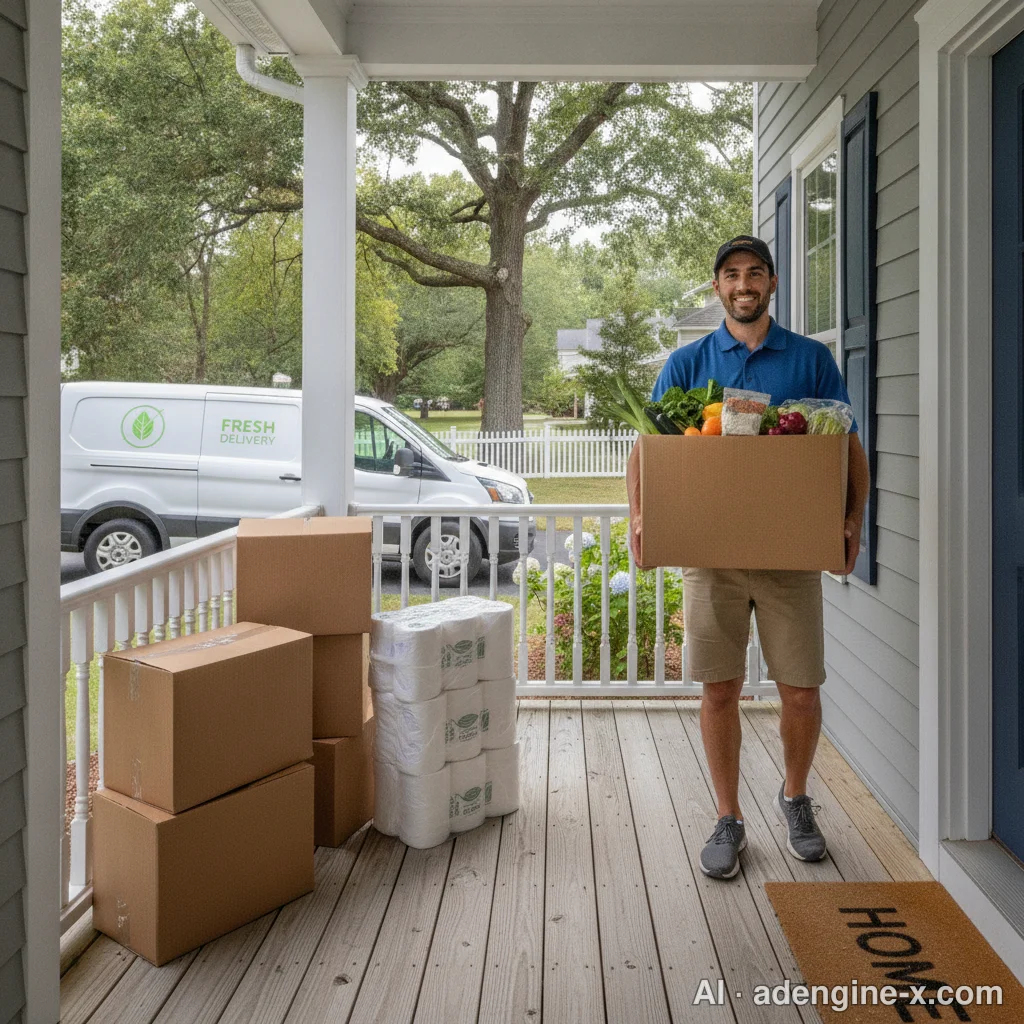
The Global Playbook: Lessons from Tokyo, Paris, and Sydney
Costco’s leadership did not make this move blindly. Before unlocking nationwide delivery across American suburbs, both gig platforms served extensive apprenticeships overseas. DoorDash rigorously battle-tested Costco logistics across international territories including Australia, Sweden, New Zealand, Iceland, and Puerto Rico. Concurrently, Uber Eats established and scaled Costco grocery operations across six major international markets: Canada, Mexico, Japan, Taiwan, France, and Spain.
These international pilots demonstrated two vital operational truths. First, international suburban families embraced high-frequency, smaller-basket deliveries of Costco goods when transit was frictionless. Second, gig couriers could successfully adapt their vehicle space to handle awkward, oversized warehouse packages without paralyzing store flow. Having ironed out barcode scanning, inventory latency, and parking bay friction in global metros, the platforms were finally equipped to manage the massive volume of the US domestic market.
2. Under the Hood: The Corporate Strategy and Cold Financial Metrics
When analyzing major retail moves from a family financial planner's perspective, looking under the corporate hood reveals why this partnership was inevitable—and who truly bears the operational risks.
Costco’s $396 Billion Moat and Zero-CapEx Logistics
Costco currently commands a market capitalization of approximately $396 billion and generates trailing twelve-month revenues near $294 billion. Yet, the core engine of Costco’s profitability has never been the margin on its merchandise—which is famously capped around 14% to 15%—but rather its recurring annual membership fees. With an active global member base standing between 81 million and 82.9 million members, protecting the renewal rate (which consistently exceeds 90% in North America) is Costco's paramount priority.
From an operational and financial standpoint, expanding nationwide with DoorDash and Uber Eats allows Costco to avoid purchasing delivery trucks or paying drivers to haul goods across town. The warehouse club effectively offloads capital expenditures and delivery logistics to gig platforms while keeping its core membership fee revenue untouched.
Costco Chief Executive Officer Ron Vachris reinforced this momentum during earnings discussions, noting that the warehouse club's same-day delivery sector has been growing at a significantly faster trajectory than its broader digital e-commerce business. Vachris highlighted that ultra-fast fulfillment acts as a powerful retention engine, observing that Costco's highest-spending, most frequent shoppers are the exact demographic leaning hardest into on-demand delivery.
Uber’s $15 Billion Grocery Bet and DoorDash’s Most-Searched Retailer
For the platforms, securing Costco nationwide is a transformative win. Uber Chief Executive Officer Dara Khosrowshahi has repeatedly framed the "Grocery & Retail" sector as a $1 trillion market opportunity. Uber's non-restaurant retail vertical has surged to an annualized run rate of $15 billion in Gross Bookings, expanding at an eye-catching clip of roughly 40% year-over-year. Andrew Macdonald, Uber’s Chief Operating Officer, emphasized that taking Costco nationwide gives members unprecedented shopping flexibility while driving massive recurring order volume directly to drivers.
DoorDash faced equally intense consumer demand. According to official company disclosures, Costco long held the title of one of the most-searched retailers not yet available on the DoorDash application. Millions of consumers were already opening the app, typing "Costco," and leaving empty-handed. Wall Street analysts have taken notice: Mizuho Securities described the nationwide expansion as a solid, "modest positive" for Costco, confirming that modern warehouse clubs must possess omnichannel capabilities if they hope to defend their turf against Amazon and Walmart.
3. The Family Balance Sheet: Breaking Down Markups, Hidden Fees, and Real Costs
Now, let us sit down at the kitchen table and examine the actual numbers. While having two cases of Kirkland Signature organic whole milk and a giant pack of paper towels delivered to your porch within 90 minutes feels like magic, convenience carries a measurable price tag.
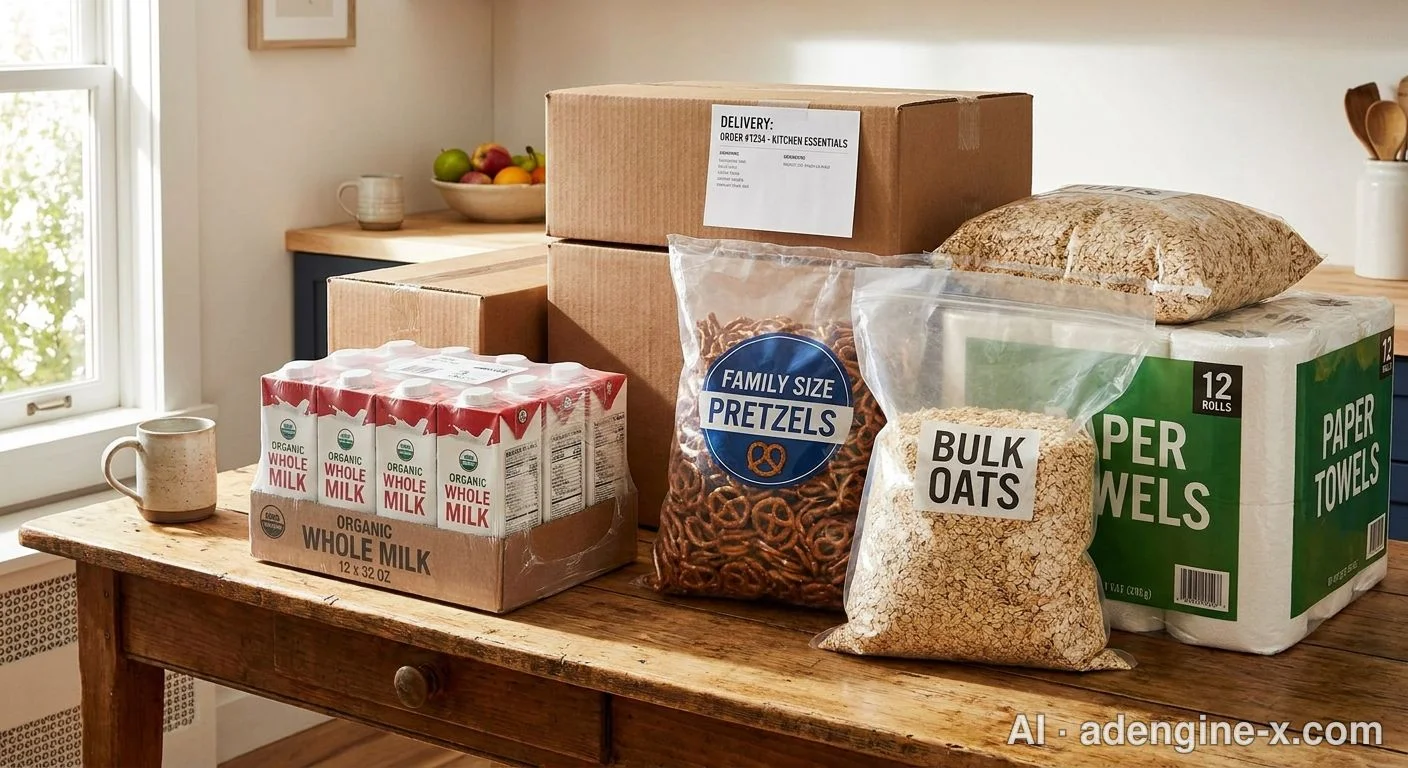
Deconstructing the Cart: 10% to 20% Markup vs. In-Store Prices
When ordering Costco merchandise through DoorDash or Uber Eats, you are rarely paying the shelf price you see marked in yellow on the warehouse floor. Instead, both platforms apply an item-level price premium, typically ranging from 10% to 20% above warehouse pricing. This markup covers platform commissions and merchant processing without Costco sacrificing its narrow wholesale product margins.
For example, consider a typical household restock basket:
- Kirkland Signature Bath Tissue (30 rolls): Warehouse shelf price ~$23.99 | App price ~$27.49
- Organic Boneless Chicken Breasts (~6 lbs): Warehouse shelf price ~$21.50 | App price ~$25.20
- Kirkland Signature Paper Towels (12 rolls): Warehouse shelf price ~$22.99 | App price ~$26.80
- Organic Berry Medley Frozen Fruit (3 lbs): Warehouse shelf price ~$11.99 | App price ~$13.99
On an in-store receipt totaling roughly $180, the identical items in the delivery app will routinely tally between $205 and $215 before delivery charges and tips enter the equation.
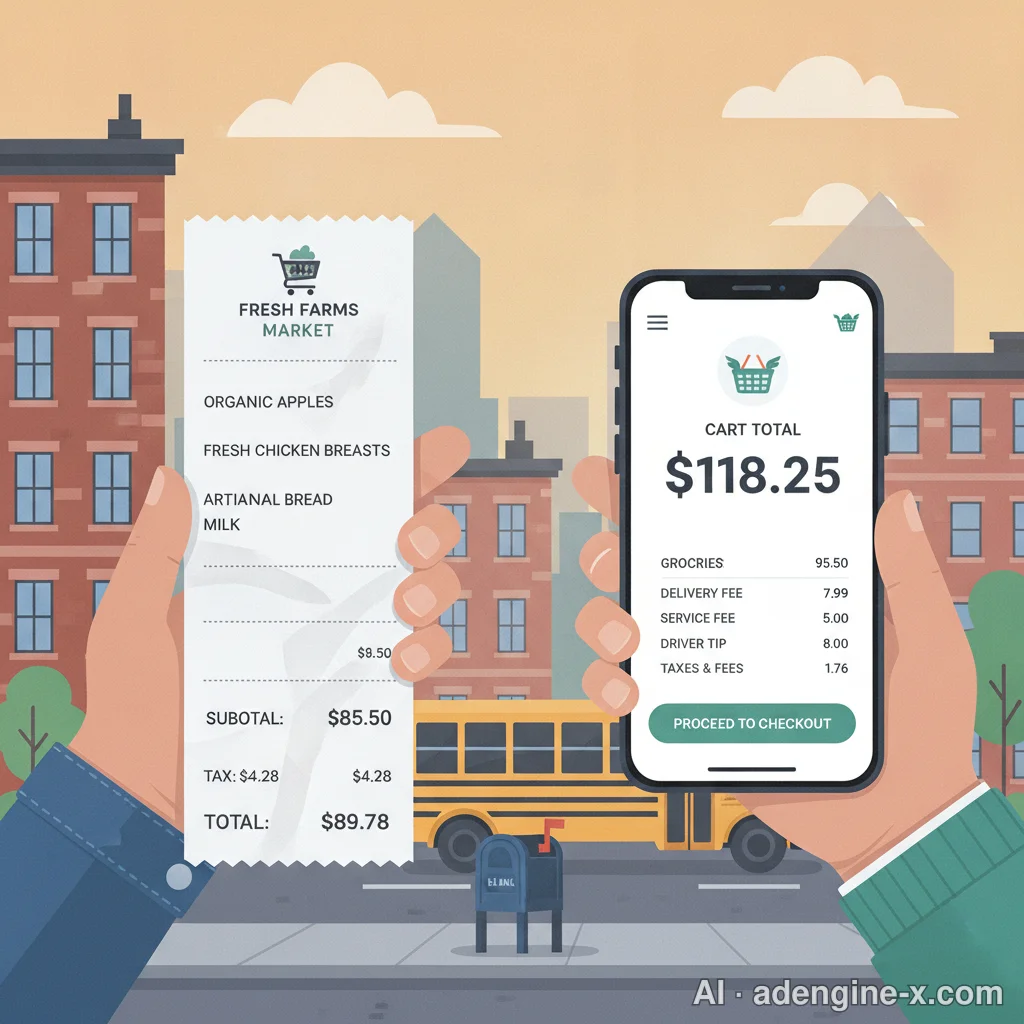
Delivery Fees, Service Charges, and the Tipping Reality
Beyond product markups, the checkout screen introduces secondary layers of expense:
- Base Delivery Fee: Ranges from $3.99 to $9.99 depending on your proximity to the warehouse, local traffic, and fleet availability.
- Service Fee: Typically calculated between 5% and 10% of the pre-discount item subtotal.
- Driver Gratuity: The critical human component. Bulk goods represent substantial physical labor. A standard $3 to $5 default tip is neither ethical nor practical when asking a courier to haul heavy cases of water up a driveway. A realistic gratuity for a substantial bulk order ranges from 10% to 15%, adding another $15 to $25 to your total outlay.
All told, an order that would have cost $200 at the cash register can comfortably reach $250 to $265 delivered. For an analytical head of household, that $50 to $65 variance is your "convenience premium." If that delivery prevents you from burning two hours of family time, wrestling kids in crowded aisles, and spending $40 on impulse buys from the seasonal aisle, the math can easily work in your favor. If utilized carelessly three times a week, however, it will quietly hollow out your monthly grocery budget.
4. Comprehensive Comparison: Costco vs. Instacart, Walmart+, Target, and Amazon
To make the smartest purchasing decisions, parents need a clear view of how Costco's new gig delivery model stacks up against the other major grocery delivery giants competing for your subscription dollars.
| Service Platform | Fulfillment Model | Pricing & Markups | Membership Requirement | Delivery Speed | Family Value Proposition |
|---|---|---|---|---|---|
| Costco (DoorDash / Uber Eats) | Gig courier on-demand warehouse pickup | 10% – 20% markup over warehouse floor price | Valid Costco Membership required for member pricing | 60 to 120 minutes on-demand | Unmatched for rapid bulk pantry & paper restocks without visiting the warehouse. |
| Instacart (Costco Same-Day) | Dedicated gig shopper batch picking | 15% – 25% markup (slightly higher platform fee spread) | Open to non-members at higher prices; members get discounts | 1 to 2 hours or scheduled windows | Mature catalog interface; excellent real-time chat with experienced warehouse shoppers. |
| Walmart+ | Store associates pick; dedicated & Spark drivers deliver | 0% markup (identical to in-store pricing) | $98/year or $12.95/month Walmart+ subscription | Same-day slots; 3-hour express available ($5–$10 extra) | Lowest recurring price point for standard weekly groceries and everyday household consumables. |
| Target Circle 360 (Shipt) | Dedicated Shipt personal shoppers | Virtually identical to store shelf prices on most items | $99/year ($49 intro promo often available) | As fast as 60 minutes | Superb for school supplies, children’s apparel, baby formula, and emergency general retail. |
| Amazon Prime (Fresh / Whole Foods) | Dedicated Amazon fulfillment hubs & stores | Variable pricing; premium tiers on organic Whole Foods | $139/year Prime + $9.95 delivery fee on Whole Foods | 2-hour reserved windows; same-day delivery | Tight packaging control; high organic selection; seamless integration with media subscriptions. |
Where Costco on Gig Platforms Fits in a Parent’s Weekly Routine
Seeing the landscape laid out makes one thing clear: Costco through DoorDash or Uber Eats is not designed to replace your routine mid-week stop for a fresh bunch of cilantro and a carton of sour cream. That role belongs to Walmart+ or your local regional grocer.
Instead, Costco on gig apps functions as your family's heavy-artillery logistics backstop. When your household comes down with the flu, when you are hosting an impromptu sports team gathering of twenty hungry teenagers, or when you realize on a Sunday evening that you have zero diapers and zero laundry detergent, this service bridges the gap in ninety minutes flat without requiring you to abandon your household duties.
5. The Ground Reality: Parent Sanity vs. Gig Driver Frustration
Every convenience system has two sides. Understanding both the consumer experience and the worker experience ensures our households navigate this service smoothly and ethically.
The Saturday Parking Lot Nightmare vs. The Front Porch Drop-off
On parenting forums and community message boards, the initial reaction to this rollout has been genuine relief. A common theme echoed by working parents is avoiding what psychologists refer to as sensory overload. A Saturday afternoon Costco trip involves dodging massive carts, standing in twelve-person deep receipt-check queues, and maneuvering through a packed parking lot. For parents managing neurodivergent children, infants on strict nap schedules, or demanding work shifts, skipping that gauntlet is worth every penny of the platform fee.
The ability to unpack three gallons of organic milk, a twin-pack of whole chickens, and four boxes of whole-grain snacks directly from the front porch while your children finish their homework is an undeniable quality-of-life upgrade.
The Human Side of Heavy Bulks: Why Tipping Your Driver Matters
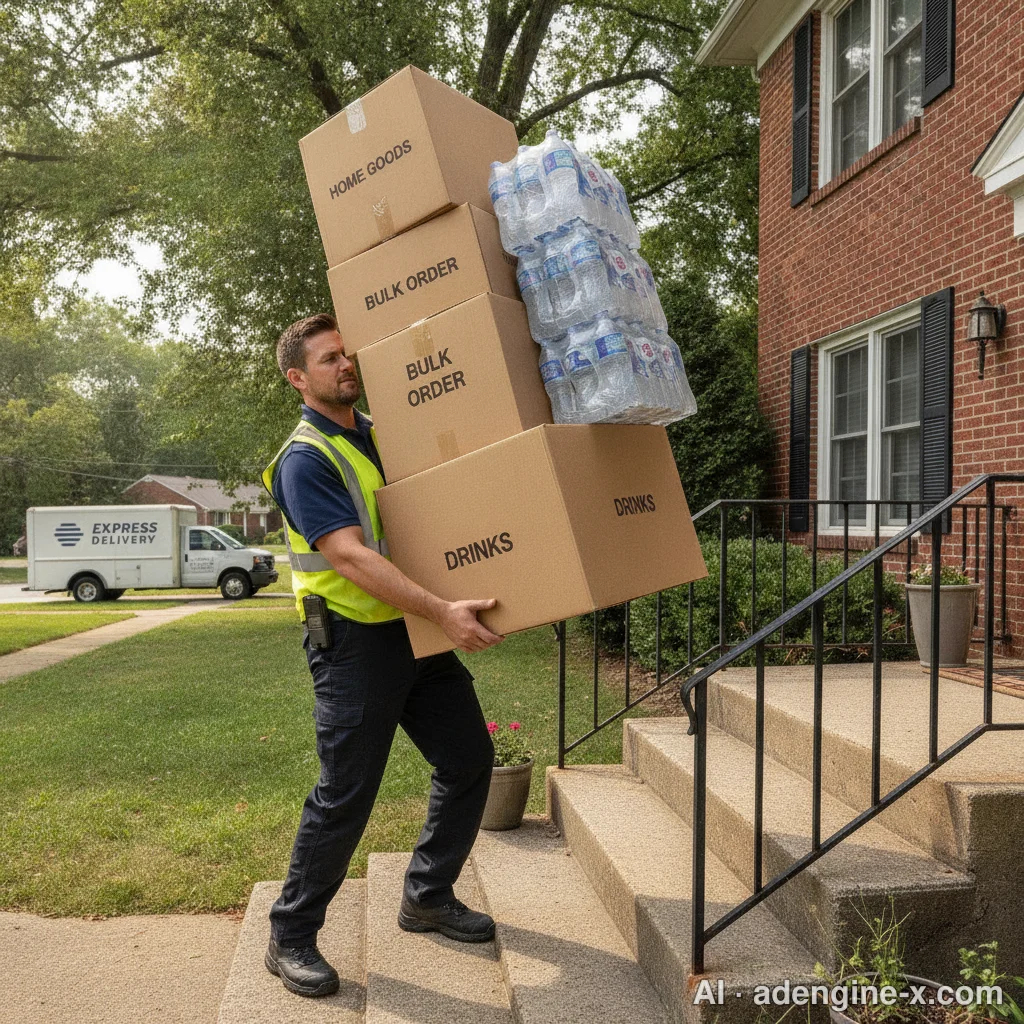
However, if you glance at courier communities on Reddit and gig worker labor forums, the perspective on Costco deliveries is markedly more contentious. Drivers frequently voice dread over wholesale club assignments. A standard restaurant pickup involves carrying a lightweight paper bag weighing two pounds. A Costco pickup often entails loading three 40-bottle cases of water (roughly 45 lbs each), two 25-pound bags of jasmine rice, and an oversized industrial detergent jug into a compact sedan trunk—and then carrying those items up three flights of apartment stairs.
When an order like that carries a meager $3 base pay and a $2 tip, drivers feel exploited, resulting in frequent order rejections, extended delays, or damaged boxes dropped haphazardly at the curb. As conscientious parents, our family rule is straightforward: if you are ordering heavy, bulky consumables, adjust your tip upward accordingly. Compensating the driver fairly not only honors their physical labor but guarantees prompt, careful handling of your household essentials.
6. The Savvy Dad’s Playbook: Advanced Cost-Optimization and Stacking Hacks
If you choose to utilize Costco delivery, there is no reason to pay full markup. With systematic planning, you can stack specific promotions to effectively eliminate the platform markup entirely.
The 20% Discounted Gift Card Arbitrage Strategy
This is the cornerstone strategy utilized by savvy household budget managers. Costco regularly sells $100 Uber gift card packs (delivered digitally or in physical gift card packs) for $79.99, both in-warehouse and on Costco.com. This represents an instant, guaranteed 20% discount on face value.
Here is how to execute the arbitrage:
- Purchase two $100 Uber gift cards through Costco for $159.98.
- Load the $200 balance directly into your Uber / Uber Eats digital wallet.
- Place your Costco grocery order via the Uber Eats app using your gift card balance.
Because you secured the currency at a 20% discount, that savings directly cancels out the 10% to 15% platform product markup and service charges. You effectively obtain on-demand front-porch delivery at or below the physical warehouse cash register price.
Navigating the Uber One 50% Off Promotional Window
To support this nationwide launch, Costco negotiated an exclusive subscription partnership for its active membership base. Costco members can secure an annual Uber One subscription for 50% off in their first year—dropping the cost from $96 to roughly $48—followed by an ongoing 20% discount on renewal years.
Uber One provides a critical benefit: $0 Delivery Fees and up to 5% to 10% reduced service charges on grocery orders exceeding a $60 threshold. Given that virtually any realistic Costco wholesale basket easily clears $60 within three items, combining an Uber One subscription with the discounted gift card strategy yields compounding savings for busy households.
Traps to Avoid: The Executive 2% Reward and the Missing $1.50 Hot Dog
Even seasoned shoppers stumble into two major financial traps when using third-party delivery apps for Costco goods:
- The Executive Membership 2% Cashback Exclusion: If you hold Costco’s premier Executive Membership (the black card), you earn an annual 2% reward certificate on qualifying purchases up to $1,250 per year. Crucial caveat: Transactions processed through third-party platforms (DoorDash, Uber Eats, or Instacart) are classified as third-party distributor billing rather than direct warehouse registers. Consequently, these orders do not accrue your 2% Executive Reward rebate. If you are placing a $500 bulk order for appliances, patio furniture, or seasonal gear, buy it directly in-store or via Costco.com to safeguard your annual dividend.
- The Food Court Exclusion: Despite intense customer clamor, Costco's legendary $1.50 hot dog combo and fresh whole food-court pizzas are overwhelmingly absent from DoorDash and Uber Eats menus. Food courts operate on razor-thin labor models and high physical customer density; staging prepared hot foods for gig couriers creates severe bottlenecks. Treat gig delivery as a pantry-restock vehicle, not a replacement for a cheap family dinner night.
7. Actionable Family Logistics: The Step-by-Step Delivery Checklist
Before hitting that final order button, run through this battle-tested operational checklist to protect your grocery budget and ensure your groceries arrive intact.
Phase 1: Pre-Order Setup & Membership Integration
- [ ] Sync Your 12-Digit Membership Number: Ensure your active Costco card number is validated in your Uber Eats or DoorDash account profile under "Retail Memberships." Failure to link your account forces the system to treat you as a guest, resulting in steep non-member surcharge pricing or order cancellation.
- [ ] Verify Cart Thresholds: Ensure your eligible items total at least $60 before taxes and fees to activate the $0 delivery tier under Uber One.
- [ ] Apply Discounted Wallet Balances: Verify your pre-loaded 20% discounted gift card balance is selected as the primary payment method rather than your standard bank debit card.
Phase 2: Cart Building & Substitution Shielding
- [ ] Lock In "Refund If Unavailable" Defaults: Fast-moving Costco inventory sells out rapidly. By default, apps often allow couriers to select substitutions. A well-meaning courier might swap an out-of-stock $18 organic chicken pack with an expensive $45 prime meat cut. Manually toggle high-value meats, baby formulas, and specialty vitamins to "Refund item if unavailable".
- [ ] Audit Bulky Item Weight: Calculate the aggregate physical weight of your cart. If your order contains more than two cases of beverages or 50 pounds of flour/rice, make a mental note to adjust your driver gratuity appropriately.
- [ ] Skip Delicate Electronics: High-value tablets, laptops, and designer watches are best purchased directly through Costco channels with full serial-number tracking and concierge warranty documentation intact.
Phase 3: Delivery Timing and Driver Communication
- [ ] Sidestep Friday & Weekend Peak Congestion: Warehouse congestion peaks between 11:30 AM and 2:30 PM on Saturdays and Sundays. Placing orders during these windows causes severe delays as couriers struggle through crowded aisles and endless checkout lines. Target Tuesday through Thursday morning windows (10:30 AM – 11:45 AM) when warehouses are fully stocked and aisles are clear.
- [ ] Clear the Porch Landing Zone: Remember that Costco boxes are enormous. Ensure your entryway or covered porch is clear of strollers, bicycles, and shoes so couriers can safely stage bulky flats of water and paper goods without blocking your front door.
- [ ] Inspect Perishables Immediately: Meet the driver or retrieve perishables within five minutes of porch drop-off. Check the temperature seal on raw poultry, milk, and frozen seafood immediately, photographing any compromised packaging directly in the app for instantaneous customer-service credit.
8. Long-Term Outlook: What This Means for Household Budgets and Retail Giants
The national expansion of Costco across DoorDash and Uber Eats signals a permanent evolution in retail commerce. The era of warehouse clubs operating as insular brick-and-mortar islands is officially behind us.
Instacart’s Defensive Stand and the Impending Price War
Instacart, which previously enjoyed comfortable exclusivity over Costco's same-day fulfillment, now faces direct, aggressive competition on its home turf. To prevent member leakage, Instacart is already responding with enhanced loyalty perks, targeted digital coupons, and deeper technical integrations with warehouse inventory feeds. For consumer families, this platform rivalry is a clear victory: when multiple venture-backed platforms compete to move the same bulk goods, introductory promotional coupons and aggressive discount incentives will proliferate across all three apps.
Retail Media Networks and the Expanding Horizon for Bulky Goods
Looking down the road, this partnership will evolve far beyond grocery replenishment. Both DoorDash and Uber Eats are aggressive operators of Retail Media Networks (RMNs). Major consumer packaged goods conglomerates—such as Procter & Gamble, PepsiCo, and Unilever—are directing millions in advertising budgets to secure top billing in grocery app search bars. When a parent types "detergent" into Uber Eats, sponsored brand placements will become standard, unlocking targeted manufacturer digital coupons that can further suppress app markups.
Furthermore, both delivery networks are expanding catalog limits into bulky high-ticket categories including televisions, patio furniture, seasonal holiday decorations, and small appliances. Backed by PIN-verification delivery security and real-time GPS tracking, last-minute holiday shopping or urgent household appliance replacements will soon shift entirely to on-demand courier networks.
As responsible family financial stewards, our objective remains constant: ruthlessly leverage corporate convenience tools to protect our precious time, while deploying analytical discipline to ensure the household balance sheet remains thoroughly protected. Manage your carts wisely, stack your promotions methodically, and enjoy your reclaimed Saturday mornings.
ℹ️ This article was drafted with the help of an AI tool and reviewed/edited by a human before publishing. · Original: AdEngine-X
📚 References
This list may include both live search sources the AI referenced while writing and public-data sources checked during fact verification. Please verify the original sources before citing or reusing.
0 Comments
Loading comments...