Apple Stock 2026: Why Jim Cramer Says Own It Not Trade It
(Advertisers wanted)
(Advertisers wanted)
📌 Topic & Subject
This article discusses Apple's market position, financial strength, and investment outlook in 2026, highlighting Jim Cramer's rationale for owning rather than trading Apple stock. It examines key developments such as the release of the iPhone 18 lineup and the new foldable iPhone Duo, alongside insights from Wall Street analysts and Apple's robust balance sheet.
(Advertisers wanted)
(Advertisers wanted)
📌 Table of Contents
- 1. A Quiet Observation on Fifth Avenue: What Did Jim Cramer See?
- 2. The Architecture of the Balance Sheet: Numbers That Ground the Narrative
- 3. The Dual Philosophies: Cupertino's Edge Versus Its Rivals
- 4. The Tension Between Wall Street Bets and Long-Term Realities
- 5. Prudent Steps for Investors: Navigating New Highs with Care
- 6. The Road Ahead: Reading the Horizon Beyond the Keynote
A Quiet Observation on Fifth Avenue: What Did Jim Cramer See?
There is a peculiar stillness inside an Apple flagship store in early autumn, even when surrounded by the relentless pulse of Manhattan. Outside, the afternoon light slants across the glass cube on Fifth Avenue, casting long, geometric shadows over travelers and commuters rushing toward Central Park. Inside, the air smells faintly of polished glass, anodized aluminum, and warm silicon. It was here, amidst the quiet click of camera shutters and the murmured wonder of early adopters, that Jim Cramer examined the hardware that would spark his latest declaration to Wall Street.
 🔍
🔍For decades on CNBC's Mad Money, Cramer has maintained a bedrock maxim that has guided millions through erratic market swings: "Own it, don’t trade it." Yet in late September 2026, as Apple (NASDAQ: AAPL) hovered near its 52-week peak of $344.57 with a valuation estimated between $4.91 trillion and $5 trillion, that phrase took on a fresh dimension. Following the September 9 keynote unveiling of the iPhone 18 lineup alongside Apple's first foldable device—the iPhone Duo—Cramer announced that he was not merely updating his primary phone, but buying the $1,999 foldable as a second, companion device for work and daily productivity.
To an outside observer, a television host purchasing two high-end devices might seem like personal indulgence. But to thoughtful investors watching the broader market, it signals an inflection point. For years, skeptics argued that the global smartphone replacement cycle had stretched past forty months, trapping consumer tech in a cycle of diminishing returns. Cramer’s candid reaction points toward a different horizon: the prospect that loyal consumers will not merely replace an aging device, but expand their daily workflow across multiple companion screens, fundamentally raising the ceiling on revenue per user.
Why Does a Second Device Matter to Everyday Investors?
Before diving into financial balance sheets, it helps to step back and reflect on how personal technology enters our quietest daily routines. Historically, consumer hardware manufacturers have been tethered to a single, rigid metric: the upgrade cycle. A company sells you an instrument, waits three to four years as you wear down the battery, and hopes you return when software updates slow the machine. When market saturation sets in, unit shipments flatten, leading equity analysts to question future earnings.
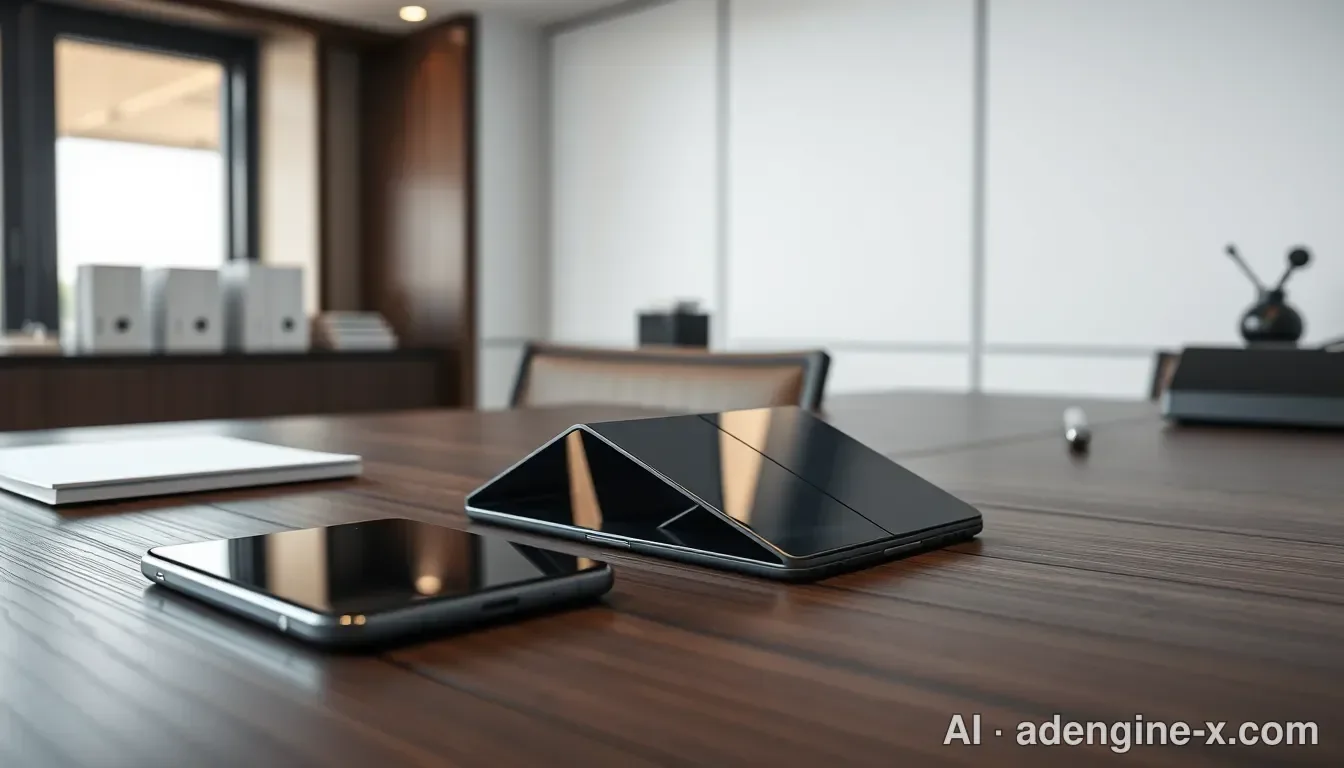
What Cramer observed in the iPhone Duo hints at a structural departure. If even a modest fraction of Apple's active installed base—estimated to surpass one billion individuals—begins carrying both a standard smartphone and a foldable companion slate, the Total Addressable Market (TAM) ceases to be zero-sum. You are no longer trading yesterday's purchase for today's model; you are incorporating a new digital surface into your travel bag, your workspace, and your evening reading. For long-term shareholders, device expansion transforms what was once considered a mature, cyclical utility into a growing enterprise of daily habit.
How Did a Painful Trading Mistake Shape Cramer's Core Rule?
Conviction rarely arrives without scars. Long before he coined market acronyms like FAANG in 2013 or MANGOS in recent AI circles, Cramer managed his personal Charitable Trust through the turbulent post-dot-com era. In the early 2010s, during an episode of quarterly margin compression and nervous Wall Street downgrades, he sold a sizable portion of the trust's Apple holdings in an effort to lock in short-term gains. What followed was a multi-thousand-percent surge that left him watching from the sidelines—a painful reminder of the folly of attempting to market-time an enterprise with an impenetrable consumer moat.
From that error emerged the discipline that defined his tenure: treat Apple not as a speculative semiconductor ticker or a volatile software startup, but as an essential consumer staple. It mirrors the perspective held by Warren Buffett’s Berkshire Hathaway, which historically viewed the Cupertino titan in the same light as a beloved beverage or confection. When Cramer urges individuals to own rather than trade, he speaks from the quiet humility of an investor who learned that trying to outsmart human attachment to an indispensable daily companion is often an expensive mistake.
The Architecture of the Balance Sheet: Numbers That Ground the Narrative
Stepping away from market sentiment and looking directly at the arithmetic of Cupertino provides a sense of quiet clarity. In an era where speculative artificial intelligence ventures burn tens of billions of dollars on experimental infrastructure with distant monetisation dates, Apple's financial mechanics remain remarkably grounded in concrete, recurring cash generation.
| Core Metric & Valuation Pillar | Current 2026 Standing | Strategic Meaning for Capital Allocators |
|---|---|---|
| Equity Price & 52-Week Range | ~$337.00 (Near high of $344.57) | YTD performance sits up approximately 23.6% to 24%, reflecting structural stability despite macro headwinds. |
| Market Capitalization | ~$4.91 Trillion to $5.0 Trillion | Rivals Nvidia for the world's most valuable enterprise, driven by cash generation rather than data center CapEx. |
| Annual Free Cash Flow (FCF) | approximately $136.7 Billion | Outpaces mega-cap peers, providing an unassailable buffer to finance proprietary silicon and shareholder returns. |
| Cumulative Share Repurchases | estimated over $880 Billion (Cook Era) | Systematic share retirement continuously lifts earnings per share (EPS) regardless of top-line shipment pacing. |
| Quarterly Services Revenue | over $31.0 Billion (All-time high) | High-margin software, cloud storage, and subscription ecosystems cushion hardware seasonality. |
| Flagship Hardware Pricing Tier | Pro: $1,199 / Duo: $1,999 (estimated) | Expands average selling price (ASP), testing affluent consumer tolerance against foldable rivals. |
Is the Hardware Cycle Truly Undergoing an Inflection?
It is instructive to listen to how seasoned hardware architects talk about mechanical design when marketing noise fades away. Product briefings emphasized the delicate physics governing the new cameras and folding mechanisms. Variable aperture technology mechanically shapes incoming light using adjustable micro-blades, while the foldable form factor was engineered from the chassis up to handle multitasking and on-device intelligent workloads without thermal throttling.
Under the hood of both the iPhone 18 Pro and the iPhone Duo beats the A20 Pro chipset, fabricated on TSMC's cutting-edge 2-nanometer architecture and paired with a custom vapor-chamber cooling layout. When combined with iOS 27's contextual Siri capabilities, this silicon allows complex machine learning tasks to resolve locally on the device in milliseconds, rather than pinging distant server farms. For Wall Street analysts like Erik Woodring at Morgan Stanley, who reaffirmed a $360 price target, this confluence of 2nm silicon, local intelligence, and reimagined form factors points to a meaningful transition rather than a simple cosmetic refresh.

What Does Wall Street Research Reveal About Real Consumer Appetite?
Skepticism is the natural companion of high valuations. Many questioned whether consumers facing cumulative living-cost pressures would tolerate an iPhone 18 Pro starting at $1,199 (a $100 increase over the prior generation) or commit $1,999 to an iPhone Duo ahead of its October 16 pre-orders and October 23 retail debut. Yet empirical consumer data tells a more nuanced tale.
In a comprehensive survey of roughly 4,000 consumers conducted by Evercore ISI, analyst teams adjusted their price target upward to $380 with an 'Outperform' rating. Their findings indicated that approximately 53% of prospective buyers expressed a preference for the premium Pro and Pro Max configurations, while approximately 67% reported that their existing handheld devices were aging past comfort, making an immediate upgrade necessary. Bank of America analyst Wamsi Mohan noted that while initial Pro delivery lead times appeared more orderly due to improved supply chain logistics, the actual incremental earnings power may depend on whether early adopters absorb the October foldable release as an additive luxury.
The Dual Philosophies: Cupertino's Edge Versus Its Rivals
To walk the streets of an unfamiliar city is to observe how different tools fit different lives. In the tech industry, the divergence between Apple and its peers has never been starker than it is today. While hyperscale tech conglomerates deploy hundreds of billions in capital expenditures to erect sprawling data centers—hoping enterprise enterprise software models will eventually yield a return—Apple appears to have chosen a disciplined path rooted in its own silicon architecture.
How Does Apple's Foldable Posture Compare with Samsung's Legacy?
The entrance of the iPhone Duo into the market invites an inevitable comparison with Samsung Electronics. The Korean technology titan has spent eight iterations refining the Galaxy Z Fold8 ($1,899.99), carrying the torch for foldable engineering when mainstream consumers were skeptical of visible screen creases and hinge fragility. Apple enters as a deliberate latecomer, pricing its foldable at $1,999—a $100 premium over Samsung’s mature offering—while introducing an expansive 7.6-inch interior display that collapses into a comfortable 5.4-inch outer cover, fortified with an IP68 dust-and-water resistance rating.

Yet behind this retail rivalry lies a quiet, symbiotic reality. Apple relies heavily on Samsung Display for the specialized foldable OLED panels required to manufacture the Duo. Thus, every luxury consumer drawn away from Galaxy hardware simultaneously supports Samsung's high-margin component divisions. Where Apple seeks to differentiate is in the seamless coherence of iOS 27, ensuring that working across folded and unfolded screens feels as natural and fluid as turning the page of a notebook.
Why Does Local Intelligence Win the Capital Efficiency Debate?
Consider the capital distribution choices of contemporary tech giants. Building massive external server complexes requires sustained, depreciating capital expenditures that can weigh heavily on quarterly operating margins. Apple's strategy leans heavily on custom on-device silicon—the A-series and M-series architectures—letting the consumer's pocket or desktop perform private contextual reasoning. By outsourcing heavy frontier model training to collaborative arrangements while handling personal retrieval locally, Apple aims to keep its free cash flow intact.
That $136.7 billion in annual free cash flow is not left idle in low-yielding government bonds. Instead, Tim Cook's administration has directed more than $880 billion into systematic share repurchases over his tenure. When a company retires billions worth of its own common stock each quarter, the ownership slice of each remaining share gently expands. Even during quarters when headline unit sales move sideways, earnings per share climb steadily, reinforcing Cramer's argument that Apple is a wealth-compounding vehicle rather than a swing-trading playground.
The Tension Between Wall Street Bets and Long-Term Realities
No commentary on Jim Cramer is complete without acknowledging the lively, irreverent counter-culture that follows his broadcasts. In social communities across Reddit and WallStreetBets, the "Inverse Cramer" phenomenon has long served as a popular running joke. When his enthusiasm for the iPhone Duo surfaced, retail trading forums lit up with tongue-in-cheek suggestions to purchase short-dated put options, citing his effusive praise as a classic contrarian marker of a local top.
Yet when the laughter subsides, even seasoned retail traders admit to a historic caveat: betting against Cramer’s Apple stance has consistently proved costly over the past fifteen years. While his short-term calls on speculative small caps or volatile biotech equities have seen their share of missteps, his unwavering defense of Apple's balance sheet has stood out as one of modern broadcasting's most enduring and profitable guidelines.
Is a $2,000 Secondary Companion Device Justified for Ordinary Citizens?
There is legitimate societal friction surrounding the notion of a $1,999 "second phone." In online discourse, critics rightly observe that advising working professionals to purchase a secondary luxury device borders on tone-deafness. For an average family balancing housing costs, health premiums, and education expenses, spending two thousand dollars on an experimental folding smartphone is simply out of reach.
The critical point for investors, however, is that Apple does not need the entire middle class to adopt the Duo to drive profitability. In the premium consumer segment—executives, mobile developers, creative directors, and field specialists who routinely carry an iPad Mini or a lightweight laptop alongside their phone—the Duo consolidates multiple tools into a single tailored pocket instrument. If only three to five percent of the installed base purchases the device as an additive tool, it generates billions in high-margin hardware revenue that simply did not exist within the legacy upgrade matrix.
Prudent Steps for Investors: Navigating New Highs with Care
Standing in the quiet shade of a late September morning, watching the ticker flash in green hues near record territory, a prudent investor feels both admiration and restraint. When high-quality assets trade near historic peaks, reckless enthusiasm is rarely a wise companion. Long-term wealth creation is rarely built on breathless impulse; it is cultivated through steady, deliberate stewardship.
How Should You Allocate Capital When Equity Touches Historic Peaks?
For individuals looking at their current holdings, several measured guidelines offer clarity:
- Embrace Dollar-Cost Averaging (DCA): With Apple trading around $337 and closely tracking its $344.57 52-week peak, deploying a large lump-sum carries short-term drawdown risk. Establishing disciplined, recurring monthly tranches smooths out market fluctuations leading up to October earnings announcements and shipment releases.
- Mind Portfolio Concentration: Financial planners generally suggest limiting single-stock exposure to between 5% and 15% of total liquid net worth. Investors holding index funds such as the S&P 500 (VOO/SPY) or the Nasdaq 100 (QQQ) already carry an effective 6% to 8% weighting in Apple, meaning portfolio risk may already be more concentrated than it appears on the surface.
- Harness Dividend Reinvestment (DRIP): While Apple’s modest cash dividend yield floats around 0.5%, automatically directing those regular payments back into fractional shares compounds ownership over decades without requiring fresh out-of-pocket capital.
- Important Regulatory Notice: Specific conditions, tax exposures, and portfolio needs vary across personal situations; formal institutional financial guidance and company public regulatory disclosures must take precedence over any individual market commentary.
What Real Vulnerabilities Could Cloud the Sunny Horizon?
No investment thesis is devoid of friction. As investors weigh the coming hardware cycle, they must keep watch on three tangible vulnerabilities:
- Antitrust and Regulatory Pressures: The European Union’s Digital Markets Act (DMA) and ongoing Department of Justice investigations in the United States continue to challenge Apple’s 30% App Store commission structure. Any material erosion of these high-margin software revenues could temper overall operating margins.
- Supply Chain and Yield Constraints: The transition to TSMC's 2-nanometer node and the mechanical precision required for crease-free foldable displays leave little room for error. A minor delay in panel yield from Samsung Display could push delivery lead times into early 2027, tempering initial holiday quarter estimates.
- Consumer Fatigue at the Top Tier: If broader macroeconomic sentiment cools and disposable income tightens, the willingness of consumers to absorb an across-the-board $100 price increase on Pro models alongside a $1,999 novelty form factor could stall the expected upgrade cadence.
The Road Ahead: Reading the Horizon Beyond the Keynote
As autumn deepens and the calendar moves toward the October 16 pre-orders and October 23 retail debut of the iPhone Duo, market attention will quietly shift from keynote rhetoric to tangible ledger entries. The third-quarter earnings call scheduled for late October will offer the first window into how global supply chains are handling 2nm component volumes and whether consumer pre-orders confirm the broader upgrade thesis.
Should Evercore ISI’s price objective of $380 materialize, Apple’s total market value would cross $5.5 trillion—a milestone that once belonged in the realm of financial fantasy. Yet the true measure of this moment lies beyond immediate valuation numbers. It resides in the subtle, enduring ways an everyday tool nests itself into the quiet fabric of human life. When a company can convince the world that an essential instrument can be reimagined without sacrificing the quiet trust built over decades, it ceases to be a volatile market play.
Watching the light fade across the glass cube of Fifth Avenue as evening arrives, one is reminded that financial markets, beneath all their tickers and quarterly models, reflect human habits, desires, and loyalties. Jim Cramer’s signal was loud and flamboyant, as his broadcasts always are. Yet beneath the theater lies a sober, patient insight that has held true through market cycles, economic expansions, and generational shifts: when an enterprise builds tools that individuals reach for from dawn until dusk, the wisest path is rarely to trade the passing noise. It is, quite simply, to hold on, watch the story unfold, and let time do its quiet, compounding work.
ℹ️ This article was drafted with the help of an AI tool and reviewed/edited by a human before publishing. · Original: AdEngine-X
More from this author

米価下落で農家窮地の真相と家庭の防衛策
🇯🇵 日本語 (일본어) · 마샬팀장 · 2026/9/22

Wendy's Breakfast Cancelled at Hundreds of Sites: Why?
🇺🇸 English (영어) · News Desk · 9/21/2026

Tesla Racial Bias Trial: 2026 Parent Guide on Cars & Stock
🇺🇸 English (영어) · 마샬팀장 · 9/21/2026

奥多摩森林セラピー完全分析|駅から5分の大渓谷とクラフトビールで自律神経を整える週末ごほうびルート【実測データ検証】
🇯🇵 日本語 (일본어) · 마샬팀장 · 2026/9/21
📚 References
This list may include both live search sources the AI referenced while writing and public-data sources checked during fact verification. Please verify the original sources before citing or reusing.
0 Comments
Loading comments...