Wendy's Breakfast Cancelled at Hundreds of Sites: Why?
(Advertisers wanted)
(Advertisers wanted)
📌 Topic & Subject
This article explores the fast-food industry drama surrounding Wendy's recent decision to cancel or scale back breakfast service at hundreds of restaurant locations nationwide. It examines the financial pressures, labor costs, franchisee bankruptcies, and historical challenges tied to fresh-cracked egg menu items like the Breakfast Baconator. Ultimately, it details how declining customer traffic and narrowing profit margins forced corporate leadership to grant franchisees the option to opt out o
(Advertisers wanted)
(Advertisers wanted)
📌 Table of Contents
- 1. Wait, Did Wendy's Really Just Cut Breakfast at Hundreds of Spots?
- 2. The Multi-Decade Obsession: Wendy's Rocky History with Breakfast
- 3. The Brutal Cold Numbers: Inside Wendy's Q2 Earnings Breakdown
- 4. The Franchisee Revolt: When Labor Costs Meet Fresh Eggs
- 5. Executive Confessions and Analyst Critiques: What the Insiders Said
- 6. The Rivalry: How McDonald's and Taco Bell Manage the Morning Rush
- 7. Consumer Outcry, Reddit Threads, and Fast-Food 'Menuflation'
- 8. Smart Commuter Guide: Navigating the New Store Hours and App Deals
- 9. The Strategic Pivot: Where Wendy's Bets Its Capital Next
Wait, Did Wendy's Really Just Cut Breakfast at Hundreds of Spots?
Hey, grab a chair and pour yourself some coffee because we need to talk about some wild drama unfolding across the fast-food world right now. You know how Yahoo Finance and TheStreet recently dropped that explosive report headlined “Burger chain cancels breakfast at hundreds of restaurants” by co-editor-in-chief Daniel Kline? Well, the burger titan behind the headlines is none other than Wendy’s (NASDAQ: WEN). Yes, our beloved home of fresh, never-frozen beef and the iconic Baconator is quietly pulling morning hours and ditching breakfast altogether across hundreds of locations nationwide.
If you walked up to a drive-thru recently craving a Breakfast Baconator only to find the menu board completely blank and the lights dimmed, you are definitely not crazy. This is not just a quirky local store mix-up or a temporary supply chain blip. It is a massive, structural retreat from one of the most fiercely contested battlegrounds in modern corporate food service. Wendy's poured astronomical cash into conquering breakfast, yet franchisee bankruptcies, brutal inflation, and changing commuting routines have pushed operators to their absolute limits. Let’s unpack how Wendy’s got here, why local store owners basically revolted, and what it really means for your morning commute and Wall Street alike.
| Key Metric / Factor | Breakfast Launch Target (2020) | Current 2026 Standing |
|---|---|---|
| Morning Share of Total Sales | Initially rose to around 8% systemwide | Reduced to approximately 5% |
| Customer Foot Traffic | High morning adoption & trial runs | Decreased by 12.5% year-over-year in U.S. stores |
| Franchisee Operational Mandate | Strict mandatory 6:30 AM openings | Voluntary 'Opt-out' relief permissions granted |
| Strategic Store Footprint | Approximately 5,831 nationwide locations active | Project Fresh closing 292–350 underperforming units |
The Shocking Shift Behind the Drive-Thru Glass
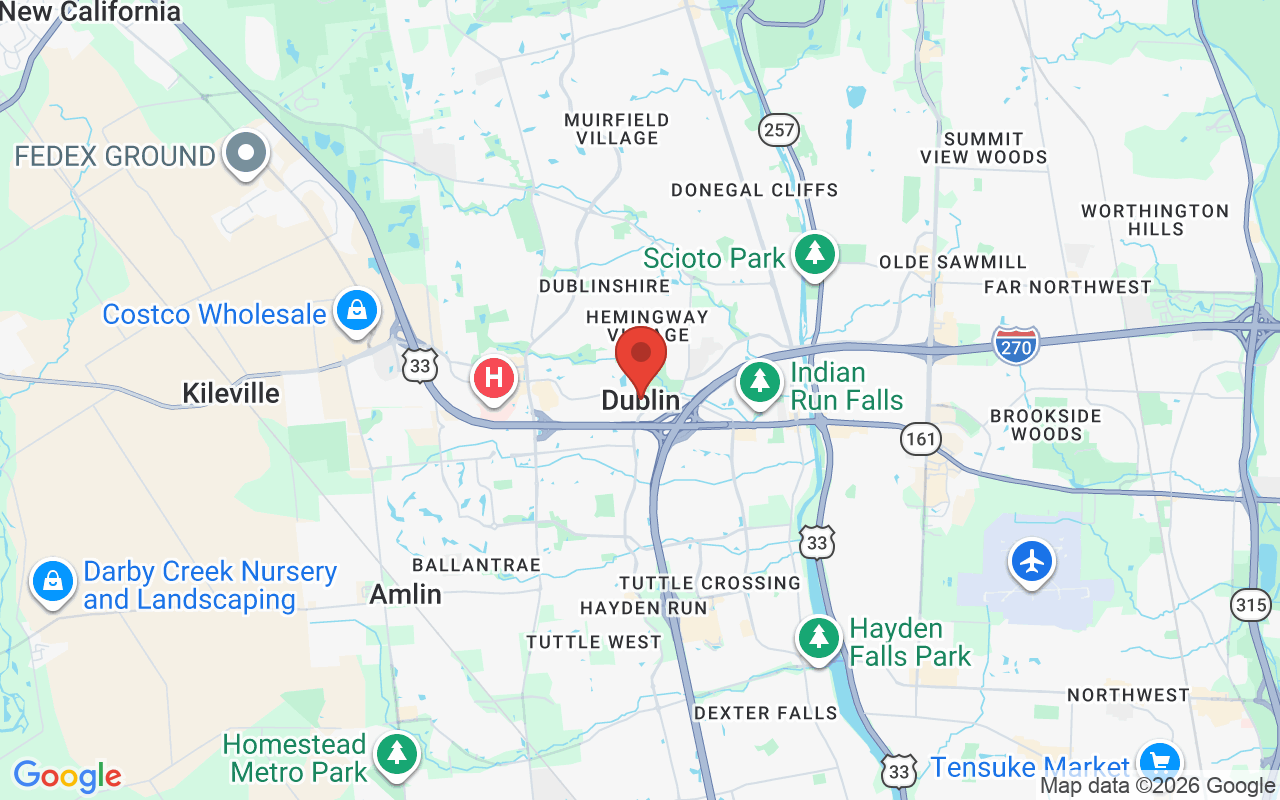
For several years, corporate headquarters in Dublin, Ohio, treated breakfast like an untouchable, golden corporate pillar. They spent somewhere between $70 million and over $100 million in raw marketing muscle leading into 2020 just to convince consumers to abandon their usual Egg McMuffins and stop by Wendy's. When you pull up at 8:00 AM today in dozens of cities, however, you might see employees prepping burger prep tables for lunch instead of cracking farm eggs. Hearing that hundreds of units have officially axed breakfast reveals that the financial math under the hood completely broke down.
 🔍
🔍Why Morning Service Is a Unique High-Wire Act
Breakfast in the quick-service restaurant (QSR) space is not like lunch or dinner. During lunchtime, folks linger, they buy combos, they add Frostys, and groups show up together. Breakfast is lightning fast, intensely routine-driven, and hyper-sensitive to price. You either capture commuters in that narrow 45-minute window on their way to work, or your kitchen crew ends up standing around on company time while utilities hum at maximum capacity. When morning traffic drops even slightly, that early-morning labor bill can destroy a restaurant’s entire daily profit before noon.
The Multi-Decade Obsession: Wendy's Rocky History with Breakfast
To truly understand why cutting breakfast is such a dramatic move, we have to look back at company history. This wasn’t Wendy’s first rodeo; it was actually their fourth major attempt over four decades. Corporate leadership has been obsessed with conquering the morning market since the 1980s, viewing it as the final frontier required to battle McDonald’s on equal footing.
The Ghost of Omelets Past: 1985, 2007, and 2012 Failures
Back in 1985, Wendy’s rolled out an ambitious, custom-cooked breakfast menu featuring made-to-order omelets. It tasted pretty decent, but the preparation speed was notoriously slow. Drive-thru lanes backed up onto busy suburban roads, customers lost their patience, and corporate had to pull the plug with heavy losses. They tried testing breakfast programs again in 2007 and 2012 with artisan sandwiches and panini concepts. Every single time, the same problems surfaced: overly complex recipes, high kitchen scrap rates, and an inability to break consumers away from long-established habits elsewhere.
The 2020 Masterplan: Fresh-Cracked Eggs and Big Promises
By late 2019, leadership resolved to do breakfast right once and for all. In March 2020, just days before global pandemic lockdowns reshaped daily life, Wendy’s rolled out breakfast across roughly 5,800 domestic stores. Their marketing was sharp, humorous, and directly targeted competitors. They bragged on national television that while other chains used frozen, spongy yellow egg pucks, Wendy's would cook real, fresh-cracked grade-A eggs right on the griddle.
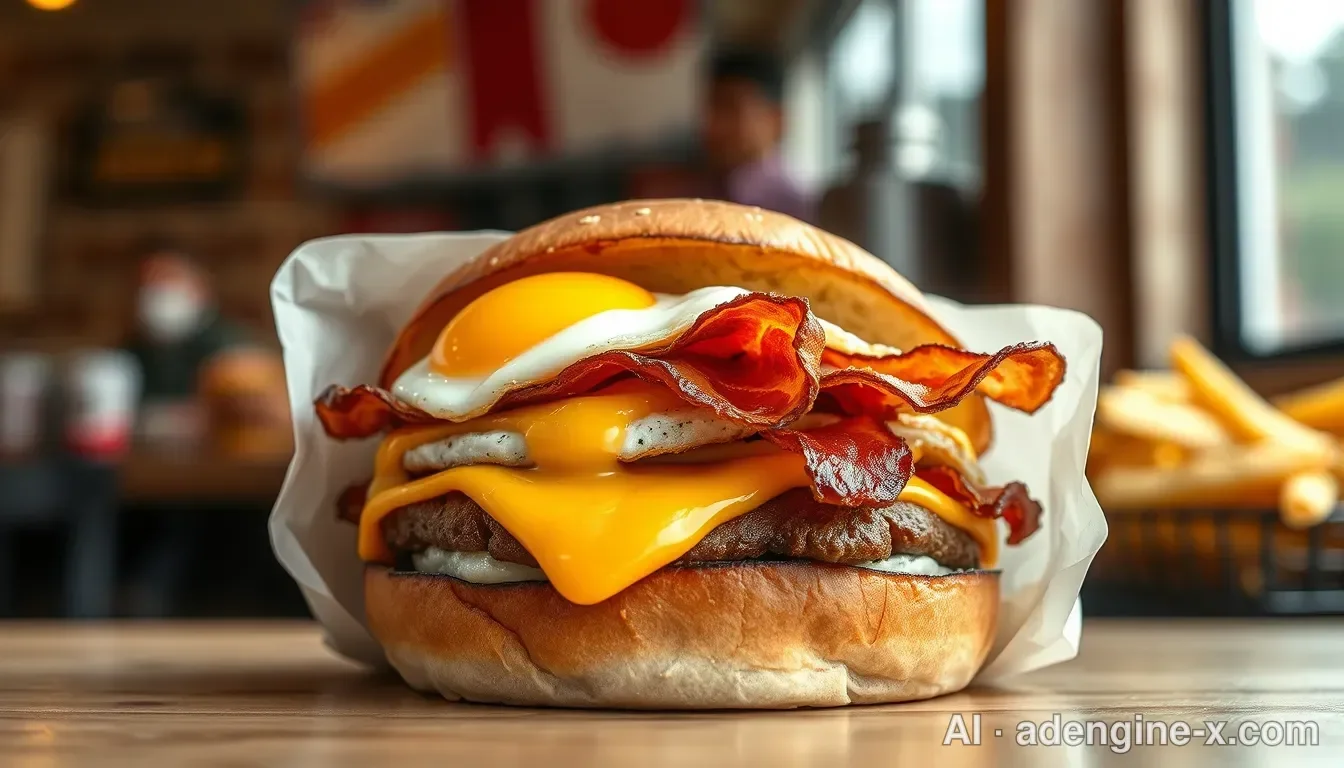
Products like the Honey Butter Chicken Biscuit, the Breakfast Baconator (loaded with a grilled sausage patty, egg, six full strips of Applewood smoked bacon, and warm cheese sauce), and the frosty cold-brew hybrid Frosty-ccino became genuine viral hits. Morning sales surged to around 8% of total revenue, and it looked like the multi-decade curse had finally been broken. But sustaining that volume turned out to be far tougher than launching it.
The Brutal Cold Numbers: Inside Wendy's Q2 Earnings Breakdown
Corporate decisions of this scale are never made on a whim; they are forced by unforgiving balance sheets. In recent financial reporting periods, the underlying numbers across Wendy’s domestic footprint flashed bright red warnings that executive leadership could no longer ignore.
Traffic Collapses and Same-Restaurant Contraction
Let’s look at the cold, hard operational data. Customer traffic across U.S. Wendy’s restaurants tumbled by an alarming 12.5% year-over-year. Think about that for a second: more than one out of every eight previous transactions vanished. Systemwide sales fell 6.5% on a constant currency basis, while U.S. same-restaurant sales slid 7.0% into negative territory. When top-line volume drops that fast, operators face immense margin pressure.
Breakfast contributed heavily to this slide. That initial morning sales mix of 8% fell toward roughly 5%. If morning sales only represent a tiny sliver of gross receipts, keeping an entire store staffed and running from 6:30 AM to 10:30 AM stops making economic sense for an independent business owner.
Project Fresh and the 350-Store Rationalization
Because of this financial drag, Wendy's accelerated an overhaul initiative known internally as 'Project Fresh.' The plan calls for closing between 5% and 6% of underperforming locations nationwide, translating to between 292 and 350 restaurants. In the first half of 2026 alone, approximately 289 struggling locations were permanently shuttered.
The closures hit key regional markets especially hard. Net store counts dropped across major states, including Florida (down 24 units), Texas (down 23 units), Illinois (down 18 units), Arizona (down 15 units), and double-digit reductions across Ohio and Colorado. When locations already operate on paper-thin margins, carrying unprofitable morning operational hours only accelerates financial trouble.
The Franchisee Revolt: When Labor Costs Meet Fresh Eggs
Here is the juicy operational reality you rarely see in sleek corporate commercials. Wendy's is overwhelmingly a franchised business model; independent operators run roughly 90% or more of all locations. Franchisees purchase the real estate or leases, buy the fryers, and sign paychecks for the line cooks. When headquarters mandates initiatives that burn money locally, tensions escalate quickly.
| Morning Operations Strategy | Key Pros & Upside | Severe Operational Risks & Cons |
|---|---|---|
| Maintaining Full Morning Hours (6:30 AM - 10:30 AM) | Maximizes real estate utility, captures app loyalty rewards, keeps menu consistent nationwide. | High pre-dawn labor overhead ($15-$20/hr), griddle timing conflicts, egg waste if orders lull. |
| Cancelling Breakfast / Opting Out (Open at 10:30 AM) | Immediate payroll reduction, zero morning scrap, kitchen preps directly for busy lunch rush. | Customer confusion, lost drive-thru traffic (-12.5%), alienates morning Baconator loyalists. |
The 'Fresh-Cracked' Operational Nightmare
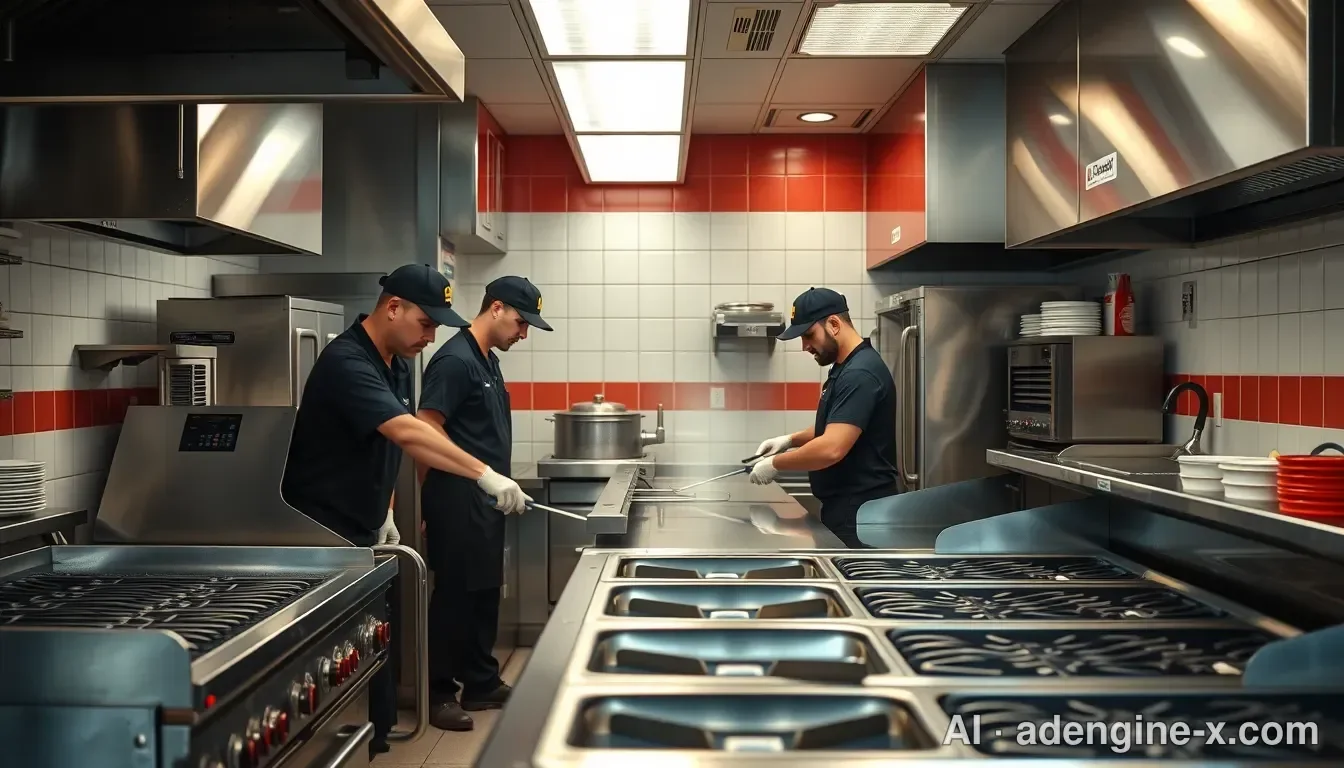
Remember that clever marketing campaign about fresh-cracked eggs? Well, behind the counter, it turned into an operational headache. Cracking real, raw eggs onto a specialized griddle requires strict temperature management, sanitation controls, and dedicated crew members during an early 5:30 AM prep shift. Unlike pre-cooked frozen egg discs that heat quickly, real eggs demand hands-on attention.
With wage rates climbing to $15 to $20 per hour in many metropolitan areas, franchisees need robust car counts to offset baseline staffing costs. Store owners voiced frustration in trade reporting that having three or four morning employees handle only a half-dozen cars per hour created an unsustainable drain. The promise of higher volumes simply did not materialize in hundreds of suburban locations.
Chapter 11 Filings and the 'Opt-Out' Valve
Financial pressures culminated in Chapter 11 bankruptcy reorganizations for large franchise operators, including groups affiliated with sprawling multi-unit portfolios like Meritage Hospitality Group. Across those distressed networks, breakfast was eliminated or severely cut at more than 120 locations almost overnight.
Faced with store operator distress, Wendy’s executive leadership made an extraordinary concession: they granted franchisees the option to formally “opt out” of serving breakfast. In the quick-service franchise universe, brand consistency is usually strictly enforced. Letting store owners choose their operating hours and drop an entire daypart reflects how severe the underlying pressure became.
Executive Confessions and Analyst Critiques: What the Insiders Said
The tension surfaced directly during recent corporate earnings calls and financial media interviews, offering rare public transparency into executive calculations.
During an earnings call, Wendy’s CEO Bob Wright explained that while breakfast remains an important daypart, management is analyzing its strategic role deeply, noting that offering an opt-out had provided helpful relief for franchisees facing local margin pressures while the brand refocuses on its core dayparts.
During the earnings call, Wendy’s CFO Steve Cirulis similarly indicated that the quarterly drop in customer traffic and same-restaurant sales was influenced in part by operators shortening or cutting breakfast hours alongside reduced promotional discounts.
The Expert View: A Painful Corporate Concession
Covering the story for Yahoo Finance and TheStreet, co-editor-in-chief Daniel Kline underscored how unusual this retreat really is. Kline pointed out that in fast food, breakfast is traditionally considered prime real estate because coffee, biscuits, and fried potatoes can carry healthy operating margins. But when customer flow dries up, fixed hourly labor transforms the morning into a cash drain. Kline observed that letting franchisees drop breakfast is a rare operational concession that signals just how tough conditions have become for regional operators.
The Rivalry: How McDonald's and Taco Bell Manage the Morning Rush
To put Wendy’s dilemma in perspective, look at how direct competitors handle their morning business. Breakfast habits are famously difficult to shift, and consumers rarely change their morning routes without a compelling reason.
McDonald's: The Unshakeable Golden Arches
McDonald’s remains the undisputed heavyweight champion of fast-food breakfast. The morning daypart drives an estimated 25% to 30% of total system revenues at McDonald's. Generations of commuters have ordered Egg McMuffins, crispy hash browns, and drip coffee on autopilot. Even when McDonald’s phased out all-day breakfast in 2020 to streamline drive-thru lines during the pandemic, their core 5:30 AM to 10:30 AM window remained highly profitable. Wendy’s struggled to pull routine commuters away from those entrenched habits.
Taco Bell's Strategic Playbook
Taco Bell faced an almost identical challenge. After rolling out breakfast items like the Breakfast Crunchwrap back in 2014, Yum! Brands eventually realized that morning demand was uneven across their store network. Instead of forcing thousands of franchisees to operate at an early-morning loss, Taco Bell made breakfast optional for operators. Stores in high-density commuter paths keep running breakfast, while suburban locations open later to focus on lunch, dinner, and late-night volume. Wendy’s appears to be adopting a very similar playbook.
Consumer Outcry, Reddit Threads, and Fast-Food 'Menuflation'
While accountants look at spreadsheets, regular consumers are dealing with confusion at the drive-thru window. The internet reaction has been an entertaining blend of frustration and sticker shock.
The Reddit and TikTok Community Reaction
Over on the r/wendys subreddit and across TikTok, food vloggers and loyal diners expressed genuine dismay. A vocal group of fans genuinely preferred Wendy’s pillowy brioche buns, savory sausage gravy, and seasoned potato wedges over standard competitor offerings. Viral videos documented drivers pulling into dark Wendy’s locations at 8:00 AM, confused about why the kitchen was closed. For fans of the Honey Butter Chicken Biscuit, seeing locations open only at 10:30 AM felt like a quiet letdown.
The $11 Value Problem
At the same time, consumer sympathy was dampened by rising fast-food prices across the board. Commenters widely pointed out that ordering a specialty breakfast sandwich, seasoned wedges, and a specialty cold brew now routinely totals $10 to $11 in many locations. At that price point, fast food loses its traditional edge against local bagel delis or specialized coffee shops. When quick-service chains push pricing that high, budget-conscious consumers often choose to eat at home instead.
Smart Commuter Guide: Navigating the New Store Hours and App Deals
If you still enjoy Wendy’s morning menu, you have to be tactical to avoid showing up at a locked drive-thru lane. Here is how to navigate the operational changes smoothly.
How to Verify Store Hours in Real Time
- Do Not Rely on Third-Party Search Engines: Many generic web maps still display legacy operating schedules (listing standard 6:30 AM openings) that haven't been updated locally.
- Use the Official Wendy's Mobile App: Open the app, select the specific restaurant you plan to visit, and check the 'Order Ahead' tab. If the breakfast menu is absent, that location has formally opted out and opens at 10:00 AM or 10:30 AM for lunch service.
- Look for Highway Travel Hubs: Locations along interstate highways and near major transit centers are far more likely to maintain full morning hours than quiet neighborhood stores.
Menu Staples and App Bargains
For restaurants that still serve breakfast, promotional deals remain common as operators attempt to rebuild morning volume. Keep an eye out for these signature items and savings:
- Breakfast Baconator ($4.99 – $5.99): The heavy hitter featuring sausage, fresh egg, six strips of bacon, melted American cheese, and warm Swiss cheese sauce.
- Honey Butter Chicken Biscuit ($3.99 – $4.49): Crispy chicken tender fillet coated in maple honey butter on a flaky biscuit.
- French Toast Sticks (6-piece, ~$3.99): A portable breakfast option popular with families on morning school runs.
- Frosty-ccino ($2.99 – $3.49): Cold brew coffee blended with signature vanilla or chocolate Frosty mix.
- Digital App Coupons: Because traffic has dipped, Wendy’s regularly runs '2 for $3' mix-and-match breakfast specials or $1 sandwich promotions inside their digital rewards program.
The Strategic Pivot: Where Wendy's Bets Its Capital Next
Where does Wendy’s redirect its energy now that breakfast is scaled back? Executive leadership is already redeploying resources toward higher-margin operational windows.
Chasing the Late-Night and Delivery Crowds
Instead of battling for scarce 7:00 AM commuters, Wendy's is increasingly targeting evening and late-night demand. Running kitchens past 10:00 PM to capture third-party delivery orders and late-night drivers yields larger average ticket sizes than early-morning coffee runs. Cheeseburgers, spicy nuggets, and family meal bundles carry higher gross margins with less delicate prep requirements than fresh-cooked breakfast foods.
Investments in Drive-Thru Automation and 'FreshAI'
To tackle stubborn labor costs, Wendy’s continues testing its “Wendy’s FreshAI” automated drive-thru ordering systems alongside self-service indoor kiosks. The goal is simple: reduce reliance on front-counter cashiers so kitchen crews can focus entirely on food assembly and drive-thru fulfillment speed.
Ultimately, Wendy's breakfast rollback is a fascinating case study in modern restaurant economics. Expanding menu hours looks great in investor presentations, but real-world execution requires cooperative unit economics. Letting struggling stores drop breakfast helps protect franchisee solvency, even if it marks a tactical retreat in the burger wars. Next time you roll through a fast-food lane at dawn, remember: behind that paper bag of breakfast food lies a complex web of corporate strategy, real-estate costs, and franchise balance sheets.
ℹ️ This article was drafted with the help of an AI tool and reviewed/edited by a human before publishing. · Original: AdEngine-X
More from this author

米価下落で農家窮地の真相と家庭の防衛策
🇯🇵 日本語 (일본어) · 마샬팀장 · 2026/9/22

Apple Stock 2026: Why Jim Cramer Says Own It Not Trade It
🇺🇸 English (영어) · Finance Desk · 9/22/2026

Tesla Racial Bias Trial: 2026 Parent Guide on Cars & Stock
🇺🇸 English (영어) · 마샬팀장 · 9/21/2026

奥多摩森林セラピー完全分析|駅から5分の大渓谷とクラフトビールで自律神経を整える週末ごほうびルート【実測データ検証】
🇯🇵 日本語 (일본어) · 마샬팀장 · 2026/9/21
📚 References
This list may include both live search sources the AI referenced while writing and public-data sources checked during fact verification. Please verify the original sources before citing or reusing.
0 Comments
Loading comments...