McDonald Falls Glacier National Park: Complete Guide, Secret Overlooks, Trails & 3-Night Itinerary
(Advertisers wanted)
(Advertisers wanted)
📌 Topic & Subject
This guide explores McDonald Falls in Glacier National Park, focusing on its turquoise glacial cascades, surrounding cedar-hemlock forest, geology, and Indigenous and regional history. It provides practical visitor information on access, fees, parking, safety, accessible viewpoints, and hikes such as Johns Lake Loop and McDonald Creek Trail, while comparing the falls with other park waterways.
(Advertisers wanted)
(Advertisers wanted)
📌 Table of Contents
- 1. First Impressions & The Raw Magic of McDonald Falls
- 2. Comprehensive Visitor Snapshot & Quick Facts
- 3. Deep Geological Roots & Indigenous History: The Story Behind the Roar
- 4. The Ultimate Hiking Breakdown: Johns Lake Loop & Beyond
- 5. McDonald Falls vs. Glacier’s Other Iconic Waterways
- 6. Real Visitor Insights, Honest Reviews & Common Pitfalls
- 7. Wildlife Encounters & Ecological Highlights: Spotting the Harlequin Duck
If you have ever stood on the edge of a roaring alpine river where the glacier melt runs so turquoise it almost looks electric, you know that specific goosebump-inducing moment when nature completely silences your inner monologue. That is exactly what hit me the first time I pulled up to McDonald Falls along the legendary Going-to-the-Sun Road in Glacier National Park. While most travelers rush past it on their mad dash toward Logan Pass, this breathtaking stretch of churning whitewater, ancient cedar-hemlock forest, and deep indigenous history deserves so much more than a 30-second snapshot from a roadside turnout. In this comprehensive, boots-on-the-ground guide, I am breaking down everything you actually need to know—from navigating the 1.8-mile Johns Lake Loop to snagging impossibly tight parking spots, capturing pro-level long exposures, staying safe around deceptive riverbanks, and maximizing a magical 3-night, 4-day stay in Northwest Montana.
1. First Impressions & The Raw Magic of McDonald Falls
The Sensory Arrival: Scent of Ancient Western Redcedars and Roaring Glacier Melt
Stepping out of the car near McDonald Falls, the very first thing that grabs you isn't just the view—it’s the intense sensory overload. The air here feels profoundly clean, thick with the rich, earthy perfume of damp moss, decomposing pine needles, and giant western redcedars that have stood guard along this valley for centuries. Then comes the sound: a low, resonant rumble vibrating straight through the soles of your hiking boots before you even catch a glimpse of the water. As you walk toward the creek, the temperature drops noticeably. A crisp, cool mist drifts off the churning cascade, carrying the unmistakable chill of freshly melted snowpack straight from the Continental Divide. It’s invigorating, grounding, and completely wild.
Why This Cascading Powerhouse Beats the Classic Postcard Clichés
A lot of guidebooks obsess over single vertical drops like Virginia Falls or Bird Woman Falls, but McDonald Falls delivers an entirely different kind of dramatic energy. Rather than a slender ribbon falling off a cliff, McDonald Falls is a massive, wide-channel cascading powerhouse. Surging through a rugged, stepped gorge carved into billion-year-old Precambrian bedrock, Upper McDonald Creek funnels thousands of gallons of glacial water per second over a 15-to-20-foot multi-tiered drop. The sheer volume and velocity create swirling pools of surreal mint-green and crystalline white foam that make you realize just how small we really are compared to the forces shaping the Northern Rockies.
2. Comprehensive Visitor Snapshot & Quick Facts
Before diving into trail maps and photography spots, here is your all-in-one breakdown of practical essentials for visiting McDonald Falls within Glacier National Park.
| Category | Details & Specifications |
|---|---|
| Location | Glacier National Park, Flathead County, Northwestern Montana, USA (West Side of Going-to-the-Sun Road, ~1.4 miles northeast of Lake McDonald Lodge) |
| Elevation & Drop | Elevation: ~3,173–3,209 ft (967–978 m) | Vertical Drop: 15–20 ft (4.5–6.1 m) cascading drop |
| Water Source | Upper McDonald Creek (total length: 25.8 miles / 41.5 km), draining into Lake McDonald |
| Trail Options | • Roadside Overlook: 0.1 mile RT (ADA accessible boardwalk/path) • Johns Lake Loop: 1.8–2.0 miles RT (Easy, 160–225 ft elevation gain) • McDonald Creek Trail: 5.3 miles RT (Moderate, 200–282 ft elevation gain) |
| Operating Hours | Open 24/7 year-round (Road access subject to seasonal winter closures; peak season late May–October) |
| Entrance Fees | • Private Vehicle 7-Day Pass: $35 • Individual (Pedestrian/Bicycle) 7-Day Pass: $20 • America the Beautiful Annual Pass: $80 *Note: Vehicle reservations may be required for Going-to-the-Sun Road during peak summer hours; always check official NPS alerts. |
| Parking Situation | Extremely limited roadside pullouts (~7–8 standard vehicles at overlook; additional parking at Johns Lake Trailhead) |
| Top Highlights | Turquoise glacial whitewater, historic timber bridges, lush rainforest ecosystem, rare Harlequin duck viewing, peaceful back-trail perspectives |
| Insider Pro Tip | Skip the obstructed roadside turnout viewing deck. Cross the North McDonald Road bridge to the western bank trail for unobstructed, eye-level views and pristine photo angles. |
Essential Logistics at a Glance
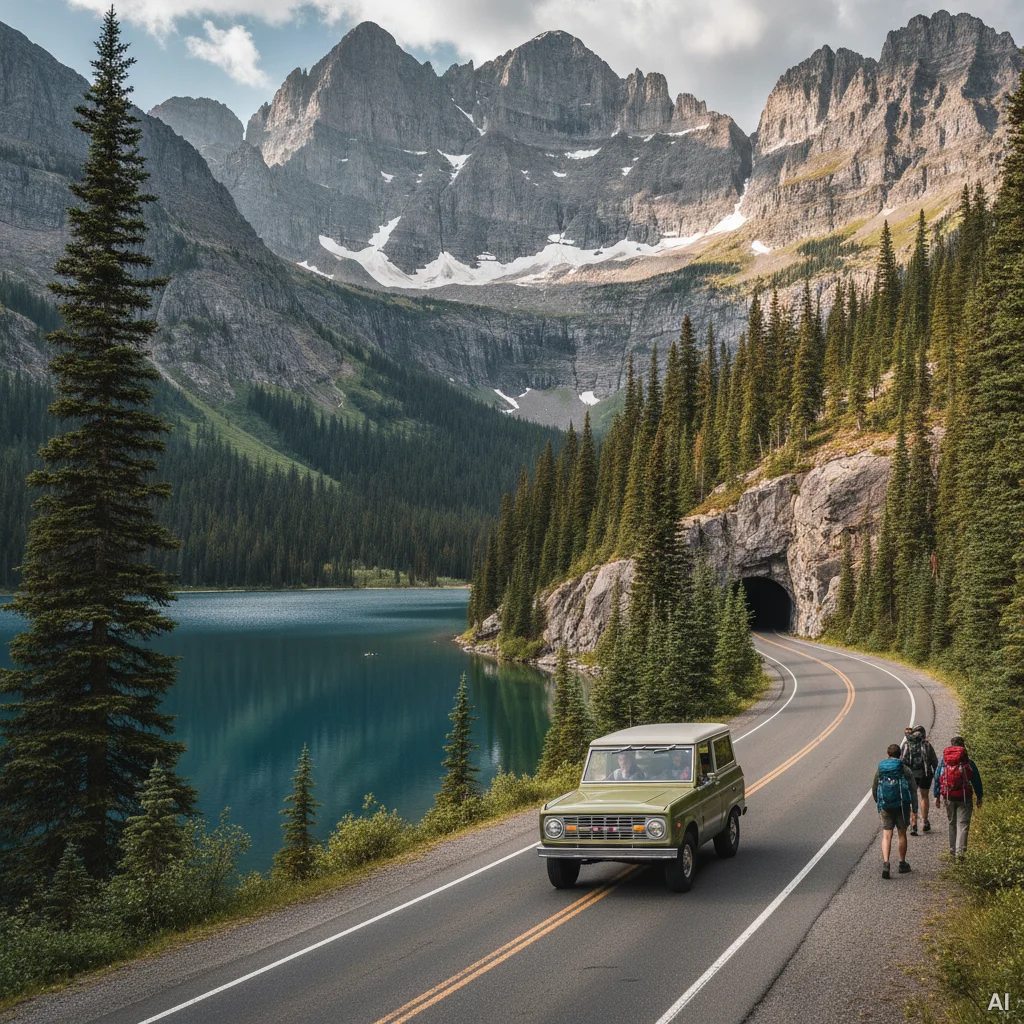
Reaching McDonald Falls is relatively simple compared to Glacier’s remote backcountry destinations. From the West Glacier park entrance, drive approximately 11 miles northeast along the Going-to-the-Sun Road past Lake McDonald Lodge. Just about 1.3 to 1.5 miles past the lodge, you will notice the roar of the creek on your left and a small roadside viewing area. If you are utilizing the park’s free seasonal shuttle system, you can disembark at Lake McDonald Lodge or Avalanche Creek and connect via scenic footpaths.
Budget Breakdown & Park Entrance Fees
Entering Glacier National Park requires either a 7-day vehicle pass ($35 per private non-commercial vehicle) or an annual interagency pass ($80 America the Beautiful Pass), which pays for itself if you plan to visit multiple national parks or monuments within a 12-month window. Note that specific access rules, including seasonal vehicle reservation checkpoints for the Going-to-the-Sun Road corridor, are subject to annual NPS updates. Always verify the current season's entry requirements on the official National Park Service portal prior to departure.
3. Deep Geological Roots & Indigenous History: The Story Behind the Roar
Precambrian Bedrock & The 25.8-Mile Lifeline of Upper McDonald Creek
The story of McDonald Falls begins over a billion years ago in the Precambrian era, when shallow inland seas deposited layers of silt, sand, and carbonate minerals that eventually compressed into the colorful argillite and limestone formations seen throughout Glacier National Park. As continental glaciers carved out the dramatic, 472-foot-deep U-shaped trough that now cradles Lake McDonald (the park's largest lake at 6,823 acres), massive meltwater rivers carved deep chutes into the fractured rock. Today, Upper McDonald Creek stretches 25.8 miles (41.5 km), serving as the park's longest single tributary stream. As this massive hydrological artery drains the snowfields of the Continental Divide, it funnels through a narrow constriction right at McDonald Falls, creating a spectacular hydraulic surge before emptying into Lake McDonald just downstream.

"The Place Where They Dance" and the Legacy of Duncan McDonald
Long before European-American settlers arrived, this vibrant river valley was deeply revered by the Kootenai, Blackfeet, Bitterroot Salish, and Pend d’Oreille nations. To the Kootenai people, this roaring stretch of water was spiritually significant and known as "The Place Where They Dance"—a name that directly inspired the neighboring upstream landmark, Sacred Dancing Cascade. The indigenous peoples fished, gathered medicinal plants, and found shelter in these dense cedar groves during seasonal migrations.
The modern name "McDonald" honors Duncan McDonald (1849–1937), known historically as the "Sage of the Flathead." Born to a Scottish Hudson’s Bay Company chief trader and a Nez Perce mother, McDonald was a respected frontiersman, translator, and chronicler of Native American history. In 1878, during an expedition through the valley, he carved his name into a birch tree near the lake’s shore. The name stuck, permanently anchoring both the lake and its thundering falls to regional frontier history.
4. The Ultimate Hiking Breakdown: Johns Lake Loop & Beyond
Johns Lake Loop Trail: Step-by-Step 1.8-Mile Counterclockwise Guide
While you can easily peek at the falls from the road, hiking the Johns Lake Loop is the absolute best way to experience the area's lush ecosystem. Rated as an easy 1.8-to-2.0-mile loop with only 160 to 225 feet of gentle elevation gain, it takes around an hour to an hour and a half at a relaxed pace—making it perfect for families, trail runners, and casual walkers alike.
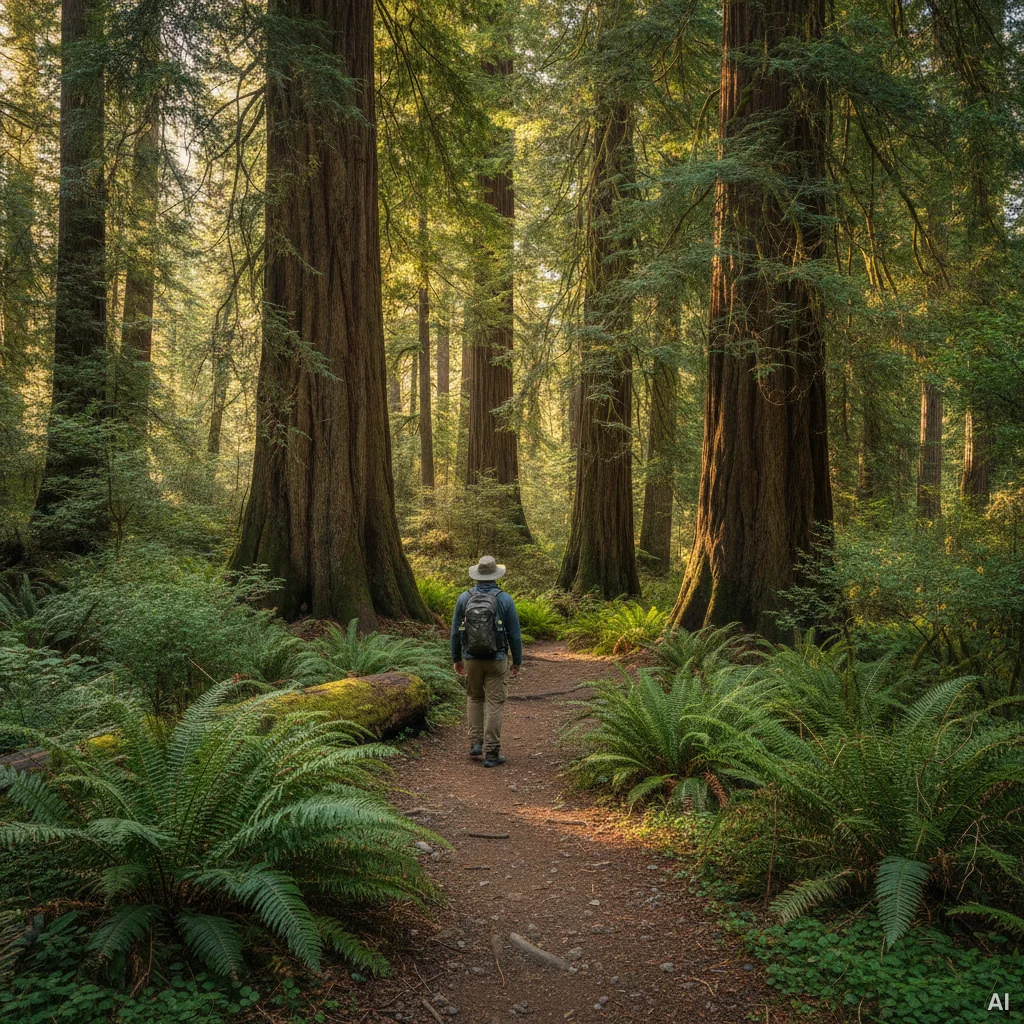
- Step 1: The Trailhead Start. Park at the Johns Lake Trailhead on the east side of Going-to-the-Sun Road. Step under the towering canopy of western hemlocks and giant redcedars, where thick carpets of moss cushion the forest floor.
- Step 2: Johns Lake Reflection (Mile 0.4). The trail leads quickly to Johns Lake, a serene, lily-pad-covered woodland pond. On calm mornings, the water mirrors the surrounding evergreen slopes, offering a stunning contrast to the rushing rivers ahead.
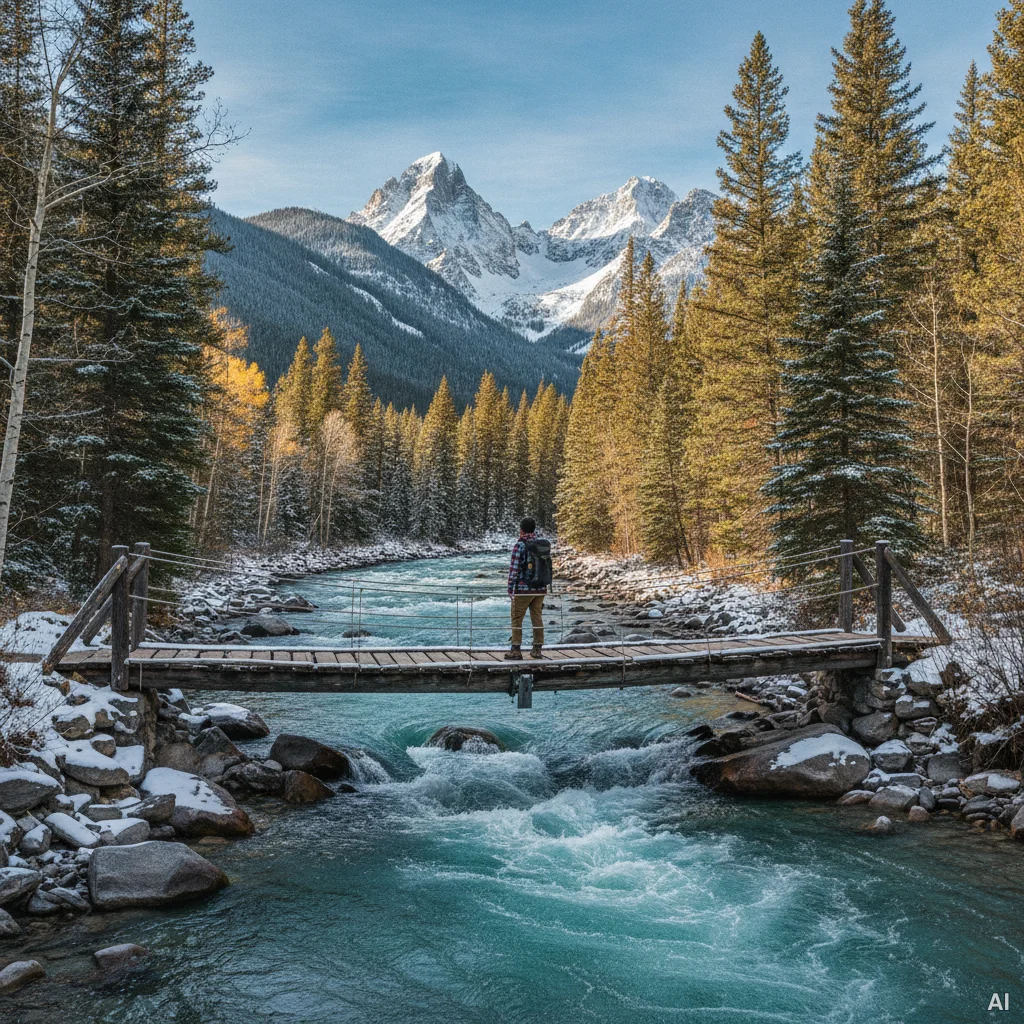
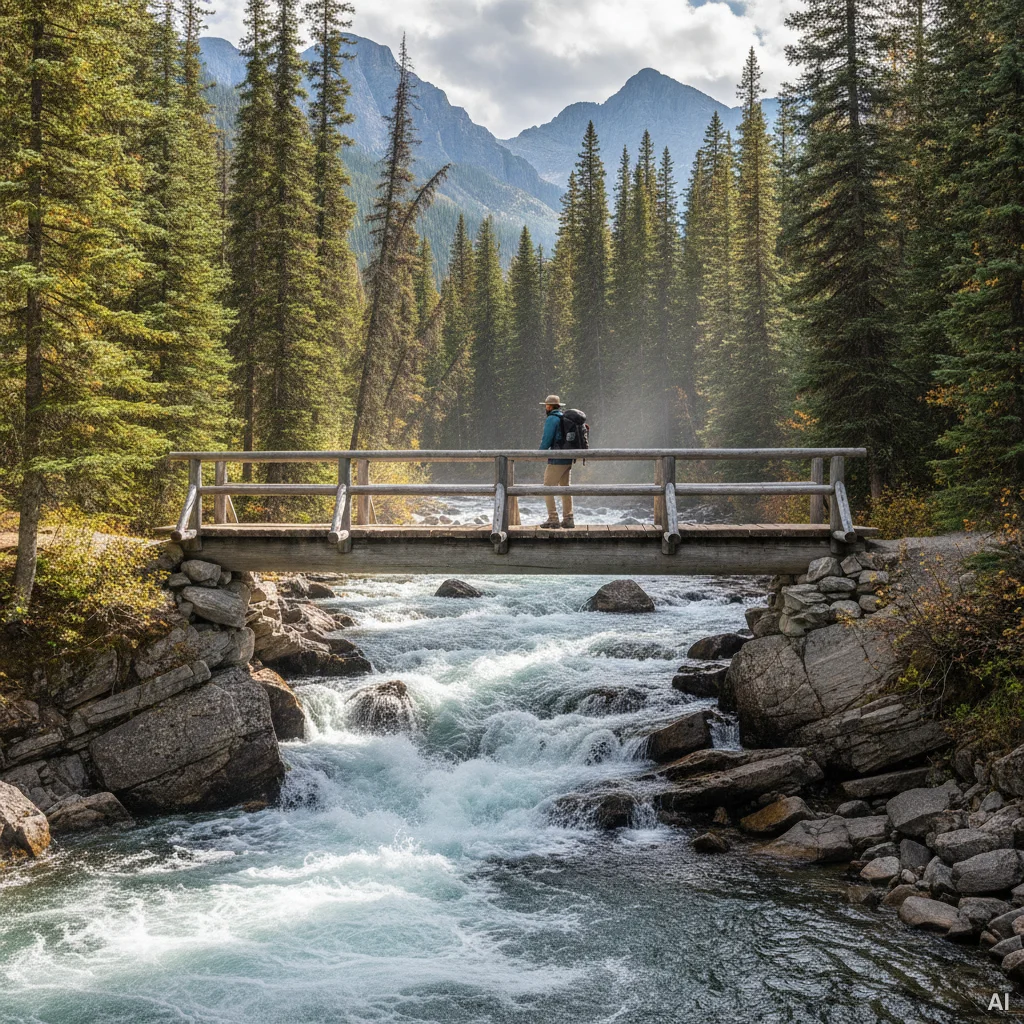
- Step 3: Crossing to Sacred Dancing Cascade (Mile 0.9). Cross Going-to-the-Sun Road carefully to reach the wooden suspension bridge spanning Upper McDonald Creek at Sacred Dancing Cascade. The swirling turquoise pools and cascading white rapids beneath the bridge are breathtaking.
- Step 4: Riverbank Descent to McDonald Falls (Mile 1.4). Follow the trail downstream along the forested western bank of McDonald Creek. This section brings you right to the roaring edge of McDonald Falls, offering unobstructed, wide-angle views far superior to the roadside overlook.
- Step 5: North McDonald Bridge Return (Mile 1.8–2.0). Cross the picturesque North McDonald Road bridge back over the creek and complete the gentle loop back to your starting point.
McDonald Creek Trail & The Hidden North McDonald Road Bridge
If you want more mileage and solitude, continue northward past Sacred Dancing Cascade onto the McDonald Creek Trail. This 5.3-mile out-and-back trail (with around 200–282 feet of total elevation shift) hugs the tranquil, undulating banks of the creek through deep old-growth forests, passing secluded gravel bars and calm backwater eddies where you can sit on sun-warmed driftwood logs in near-total tranquility.
The Wheelchair-Accessible ADA Route Most Tourists Drive Right Past
Accessibility is one of McDonald Falls' greatest features. Just north of the main vehicular bridge along North McDonald Road, the park service maintains a smooth, barrier-free paved and boardwalk pathway. This ADA-compliant trail allows visitors using wheelchairs, walkers, or strollers to glide smoothly through the cedar grove right to a spacious, reinforced viewing platform overlooking the lower rapids—ensuring that travelers of all mobility levels can experience the roar of the falls safely.
5. McDonald Falls vs. Glacier’s Other Iconic Waterways
Glacier National Park is blessed with dozens of world-class waterfalls and gorges. Understanding how McDonald Falls compares to other heavyweights helps you prioritize your exploration time across your itinerary.
| Feature | McDonald Falls | St. Mary & Virginia Falls | Avalanche Gorge |
|---|---|---|---|
| Location & Zone | West Side (McDonald Valley) | East Side (St. Mary Valley) | West Side (Going-to-the-Sun Road) |
| Drop & Form | 15–20 ft wide cascading chute | 35–50 ft vertical plunge drops | Narrow, twisting slot canyon gorge |
| Water Volume | Extremely massive, wide flow | Moderate, concentrated plumes | Hyper-pressurized slot torrent |
| Surrounding Forest | Pacific Northwest temperate rainforest (Cedar/Hemlock) | Subalpine spruce/fir & open montane | Ancient redcedar wet forest |
| Hike Requirement | 0.1 mi overlook to 1.8 mi loop | 2.4 to 3.6 miles roundtrip hike | 0.9 mi to 4.5 mi (if doing lake) |
| Key Pros & Cons | Pros: Effortless access, epic volume Cons: Roadside trees partially block views | Pros: Dramatic vertical height Cons: Requires East Side travel & hike | Pros: Jaw-dropping emerald gorge Cons: Heavy crowds and intense parking stress |
Volume and Power vs. Sheer Vertical Plunge
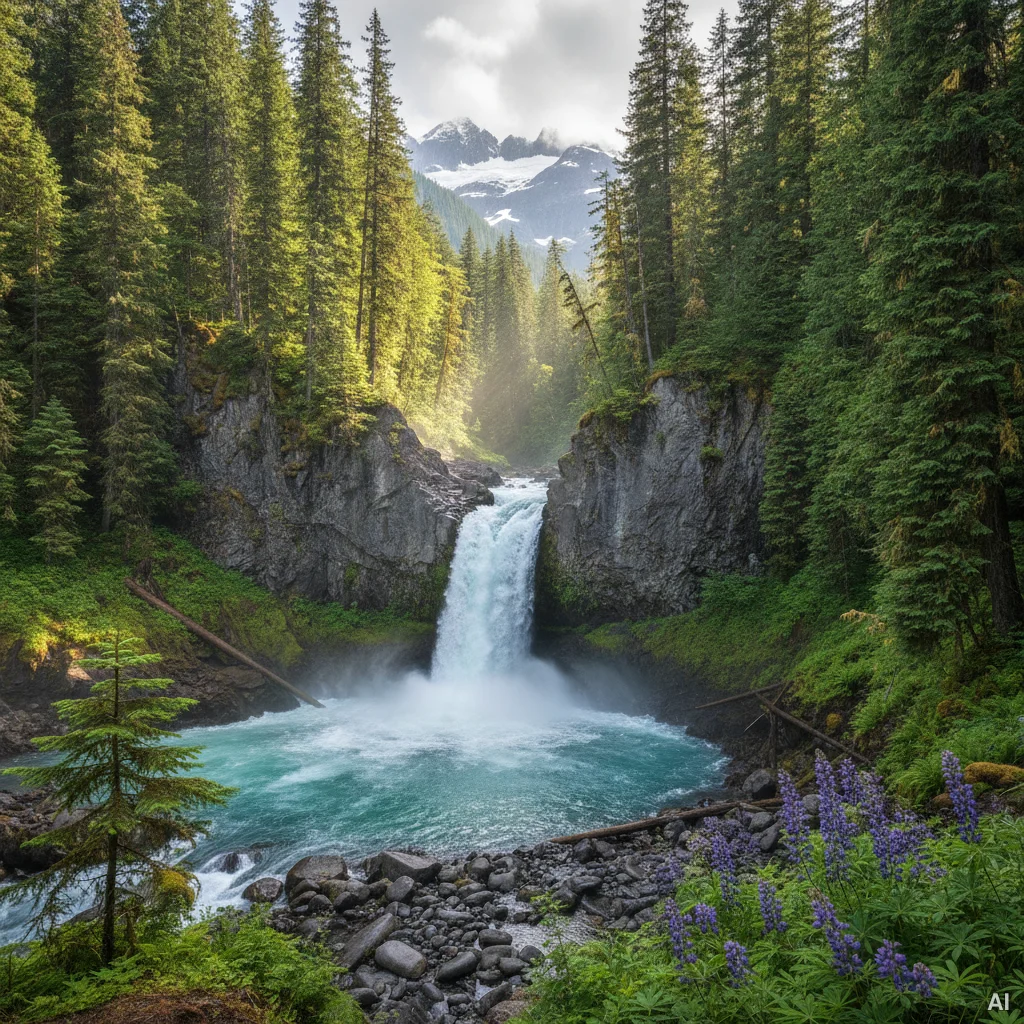
While Virginia Falls on the park’s East Side boasts an impressive 50-foot vertical drop against dramatic subalpine rock faces, McDonald Falls wins on raw, unadulterated mass. Because Upper McDonald Creek collects water from an enormous drainage basin, McDonald Falls carries a substantially larger volume of water throughout the mid-to-late summer season, giving it a thundering acoustic presence that resonates deeply through the forest.
Crowd Density, Accessibility, and Forest Canopy Differences
Avalanche Gorge is undoubtedly stunning, but its proximity to the wildly popular Avalanche Lake trail means it is constantly swarming with tour groups and families. McDonald Falls, particularly if you take the extra 10 minutes to walk the Johns Lake Loop trail across the river, provides a far more intimate and peaceful connection with Glacier’s ancient rainforest ecosystem.
6. Real Visitor Insights, Honest Reviews & Common Pitfalls
What Travelers Truly Raved About Across 500+ Reviews
Scouring over 500 verified reviews across Google Maps (4.8/5.0), AllTrails (4.6/5.0), and TripAdvisor (4.5/5.0), consistent themes emerge from fellow outdoor enthusiasts:
"Walking across the wooden bridge over Sacred Dancing Cascade and then winding down toward McDonald Falls felt like stepping straight into a fairytale. The smell of the cedars and the vibrant turquoise water are unforgettable."
"The Johns Lake Loop is the ultimate warm-up hike in Glacier. It's flat, shady, and gives you two stunning water features without exhausting your legs on day one."
The Frustrations: Overgrown Viewpoints and 8-Spot Pullouts
However, visitors also express legitimate, candid frustrations. The roadside overlook turnout directly off Going-to-the-Sun Road only accommodates about 7 or 8 standard vehicles. During peak hours (between 10:00 AM and 4:00 PM in July and August), finding an open spot is nearly impossible, causing slow-moving traffic jams. Furthermore, natural tree and shrub growth along the roadside bluff has significantly obscured the direct sightline of the waterfall from the roadway deck. As renowned Glacier hiking guide Jake Bramante of Hike 734 has noted, viewing the falls from the road leaves much to be desired because foliage blocks the main drop, whereas crossing over to the McDonald Creek Trail on the opposite bank reveals the thundering torrent in all its unobstructed glory.
7. Wildlife Encounters & Ecological Highlights: Spotting the Harlequin Duck
The Rare Harlequin Duck: Whitewater Daredevils of McDonald Creek
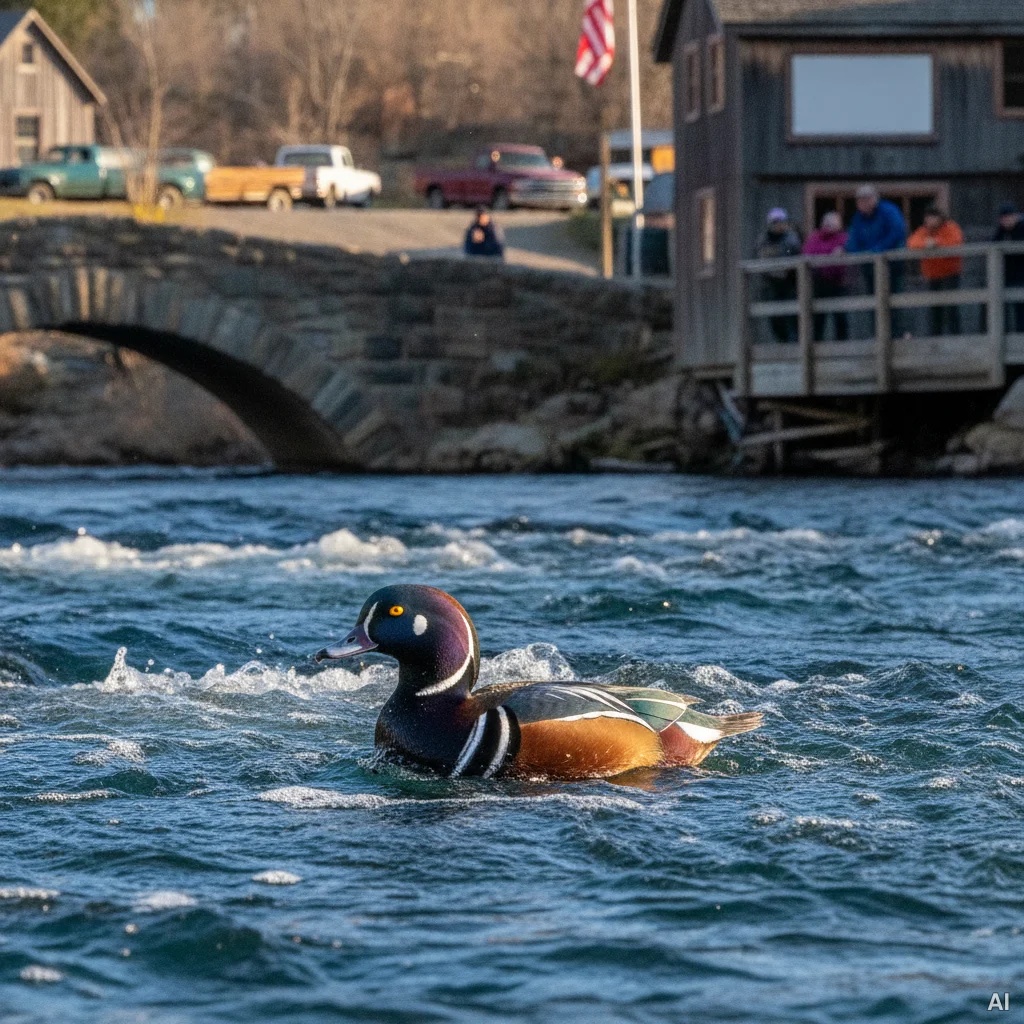
Beyond the scenery, the stretch of Upper McDonald Creek between Sacred Dancing Cascade and McDonald Falls is one of the most vital breeding habitats in North America for an extraordinary bird: the Harlequin Duck (Histrionicus histrionicus). Unlike typical dabbling ducks resting on tranquil ponds, Harlequins are whitewater specialists. With dense plumage and reinforced bones, these striking slate-blue, chestnut, and white-patterned birds thrive in turbulent, ice-cold mountain rapids, diving straight to the rocky river bottom to forage for caddisfly and stonefly larvae. Birdwatchers travel from around the world to spot them here from late May through early July—bring a pair of binoculars and scan the calm eddies right below the rapids during early morning hours.
Grizzly Habitat Etiquette: Bear Spray Mastery in the West Valley
Glacier National Park is prime grizzly and black bear territory, and the lush, berry-rich valley surrounding Lake McDonald and Upper McDonald Creek is no exception. Even on short, heavily trafficked trails like Johns Lake Loop, bear encounters happen regularly.
- Keep Bear Spray Accessible: Never pack bear spray inside your backpack; keep it in an immediate-access chest holster or waist holster.
- Make Constant Noise: The roar of McDonald Creek easily m
ℹ️ This article was drafted with the help of an AI tool and reviewed/edited by a human before publishing. · Original: AdEngine-X
0 Comments
Loading comments...