Cruz Azul Comprehensive Review 2026: Tactical Systems, Financial Data, and Complete Matchday Guide
(Advertisers wanted)
(Advertisers wanted)
📌 Topic & Subject
This comprehensive review examines the institutional history, corporate governance, and sporting legacy of the Mexican professional football club Cruz Azul. It details the club's unique structure as a worker-owned cement industrial cooperative, its competitive standing within Liga MX's Cuatro Grandes, and notable historical phenomena such as the 1970s dynasty and the linguistic evolution of the 'cruzazuleada'.
(Advertisers wanted)
(Advertisers wanted)
📌 Table of Contents
- 1. Overview and Structural Significance: The Industrial Hegemony of Cruz Azul
- 2. Core Comparative Matrix: Structural, Financial, and Performance Benchmarks
- 3. Historical Trajectory and Institutional Evolution
- 4. Sociological and Lexical Phenomena: The Cruzazuleada Paradigm
- 5. Corporate Restructuring, Governance, and Legal Turmoil
- 6. Tactical Systems, Analytics, and Modern Sporting Model
- 7. Stadium Logistics and Comprehensive Matchday Operations
- 8. Crucial Common Pitfalls and Strategic Mitigation
- 9. Frequently Asked Questions (FAQ)
1. Overview and Structural Significance: The Industrial Hegemony of Cruz Azul
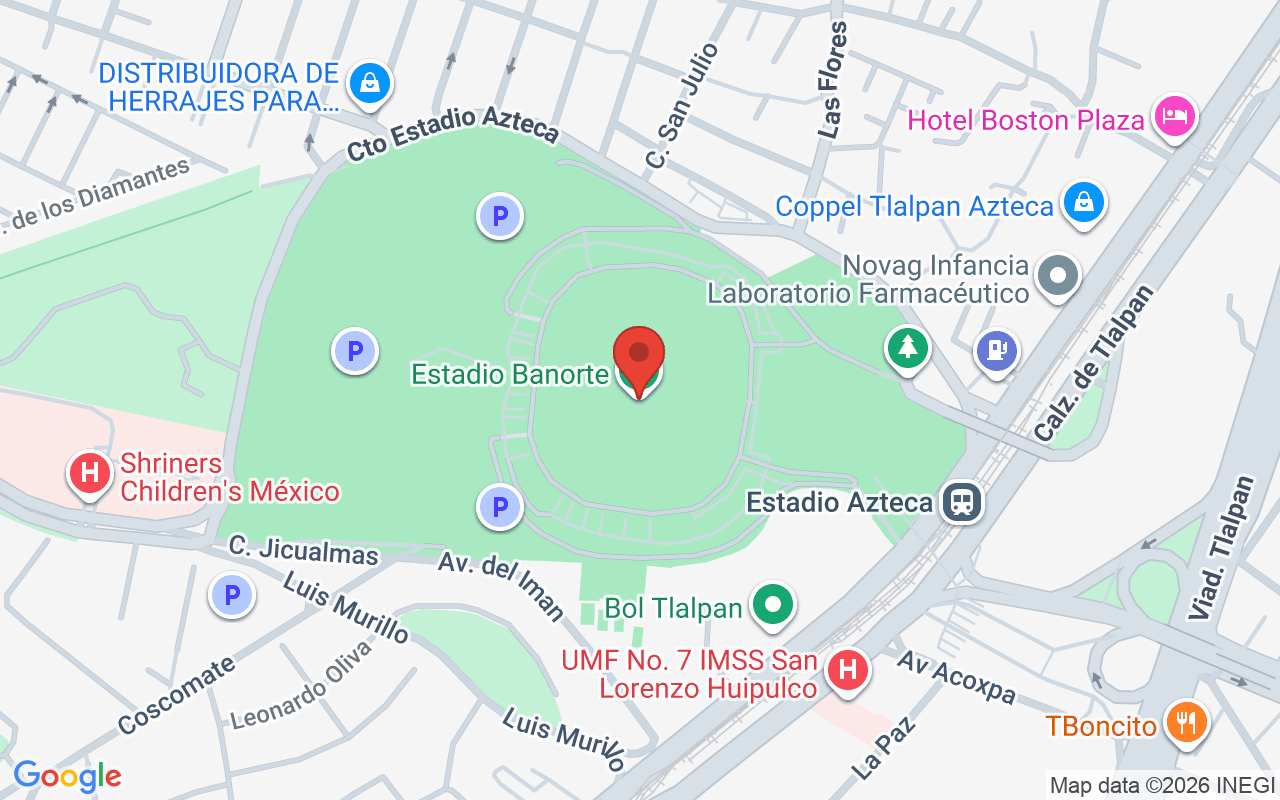
Club de Fútbol Cruz Azul S.A. de C.V., founded on May 22, 1927, occupies an anomalous yet decisive position within North American professional sports. Rooted originally in Jasso (now Ciudad Cooperativa Cruz Azul), Hidalgo, the institution emerged directly from the labor force and executive sponsorship of Cooperativa La Cruz Azul, an industrial cement-manufacturing cooperative. Following its promotion to the Primera División in 1964 and its subsequent relocation to Mexico City’s massive Estadio Azteca in 1971, Cruz Azul constructed a dominant sporting legacy, capturing six domestic league titles in the 1970s alone. This crushing systemic efficiency earned the club its moniker, La Máquina (The Machine), establishing it as an unassailable member of Mexican football’s traditional elite, the Cuatro Grandes, alongside Club América, C.D. Guadalajara (Chivas), and Pumas UNAM.
Unlike conventional joint-stock sports franchises or individual billionaire vanity assets, Cruz Azul is structurally controlled as a subsidiary asset of one of Mexico’s largest worker-owned industrial cooperatives. This corporate framework shields the organization from typical equity-dilution pressures but exposes it directly to the internal labor politics, cooperative governance mandates, and industrial disputes of its parent enterprise. Analyzing Cruz Azul requires evaluating both sporting analytics and socioeconomic operating constraints, ranging from altitude-related biometric fatigue at 2,240 meters above sea level to complex institutional litigation and cross-border commercial expansions.
1.1 Institutional Identity and Sociopolitical Origins
The operational foundation of Cruz Azul cannot be isolated from its industrial roots in Hidalgo. Cooperativa La Cruz Azul maintains massive industrial cement plants in Hidalgo, Oaxaca, Puebla, and Aguascalientes, turning out millions of metric tons of building materials annually and generating billions of Mexican pesos in gross domestic revenue. The football team functions simultaneously as a national marketing vehicle, a consumer brand asset, and a point of pride for tens of thousands of cooperative workers. While this structure guarantees stable capital injections independent of standard private-equity return windows, it historically tied board-level governance to trade-union balance sheets and cooperative elections, creating administrative bottlenecks.

1.2 The Cuatro Grandes Competitive Matrix
Within Liga MX, the Cuatro Grandes represent four starkly differentiated institutional typologies: media conglomerate-backed commercialism (Club América), ethno-nationalist domestic squad quotas (Chivas Guadalajara), public university patronages (Pumas UNAM), and industrial labor-cooperative governance (Cruz Azul). Cruz Azul delivers a tactical bridge between international roster spending and structural domestic stability, routinely generating North America’s highest television ratings, merchandising volume, and cross-border ticket revenue in both Mexico and key United States metropolitan regions.
2. Core Comparative Matrix: Structural, Financial, and Performance Benchmarks
The operational profile of Cruz Azul diverges markedly from its primary domestic competitors across governance, roster valuation, infrastructure ownership, and conversion efficiency in championship deciders. The following data-driven matrix cross-references Cruz Azul against its direct peers within Liga MX's Cuatro Grandes hierarchy based on verified historical and financial parameters.
| Analytical Parameter | Cruz Azul (La Máquina) | Club América (Las Águilas) | Chivas Guadalajara (Rebaño Sagrado) | Pumas UNAM (Los Universitarios) |
|---|---|---|---|---|
| Ownership & Governance | Worker-owned Cement Industrial Cooperative (Cooperativa La Cruz Azul) | Publicly Traded Media Conglomerate (Grupo Televisa / Ollamani spinoff) | Private Family Holding Entity (Grupo Omnilife / Vergara Family) | Public University Trust (Patronato del Club Universidad Nacional / UNAM) |
| Liga MX Championships | 9 Titles (1968–69, México 1970, 1971–72, 72–73, 73–74, 78–79, 79–80, Invierno 1997, Guard1anes 2021) | 16 Titles (All-time Mexican record holder) | 12 Titles | 7 Titles |
| Runner-Up Finishes (Subcampeón) | 12 Times (Historic league record for most finals lost) | 10 Times | 9 Times | 8 Times |
| Finals Conversion Efficiency | 42.8% (9 wins out of 21 Liga MX finals contested) | 60.0% (15 wins out of 25 Liga MX finals contested) | 57.1% (12 wins out of 21 Liga MX finals contested) | 46.7% (7 wins out of 15 Liga MX finals contested) |
| CONCACAF Champions Titles | 7 Titles (1969, 1970, 1971, 1996, 1997, 2013–14, 2025) | 7 Titles | 2 Titles | 3 Titles |
| Primary Home Infrastructure | Estadio Ciudad de los Deportes (34,253 cap., leaseholder) / Azteca secondary | Estadio Azteca (87,523 cap., proprietary asset under renovation) | Estadio Akron (46,232 cap., proprietary owned facility) | Estadio Olímpico Universitario (72,000 cap., UNAM owned asset) |
| Roster Composition Policy | International market acquisitions (South America/Europe) + Domestic transfers | Capital-intensive elite foreign stars + Tier-1 Mexican national team players | Strict 100% Mexican Nationality Policy (inclusive of dual nationals) | Internal academy development (‘Cantera’) + Mid-tier South American imports |
| Squad Market Value Band | €50,000,000 – €70,000,000 baseline | €75,000,000 – €100,000,000 baseline | €55,000,000 – €70,000,000 baseline | €30,000,000 – €45,000,000 baseline |
3. Historical Trajectory and Institutional Evolution
The evolutionary arc of Cruz Azul is divided into distinct structural eras: the formative regional stage, the golden zenith of the 1970s, the multi-decade championship drought, and the corporate restructuring that characterized the early 2020s. Understanding these phases reveals the cultural and psychological underpinnings of the club’s modern brand equity.
3.1 The 1970s Dynasty and the Birth of ‘La Máquina’
Following promotion under Hungarian manager Jorge Marik in 1964, the cooperative executives made the strategic commercial decision to relocate operational headquarters from Jasso to Mexico City. The squad moved into Estadio Azteca to maximize gate receipts. Between 1971 and 1980, managed largely by the legendary Raúl Cárdenas and subsequently Ignacio Trelles, Cruz Azul engineered six league championships (1971–72, 1972–73, 1973–74, 1978–79, 1979–80). Supported by legendary figures including Argentine goalkeeper Miguel Marín, defensive anchor Javier Guzmán, and midfielder Alberto Quintano, the squad executed an aggressive, highly organized physical style. The national press codified the moniker La Máquina Celeste because the team dismantled domestic opposition with industrial regularity.
 🔍
🔍3.2 The 23-Year Championship Drought (8,575 Days)
Following a dramatic extra-time championship in Invierno 1997, Cruz Azul entered an agonizing title drought that spanned approximately 23 years and 5 months, finally broken on May 30, 2021 (Guard1anes 2021). During this 23-year interregnum, Cruz Azul advanced to and lost six distinct Liga MX playoff finals (Invierno 1999, Clausura 2008, Apertura 2008, Apertura 2009, Clausura 2013, Apertura 2018). This unprecedented sequence of decisive failures gave birth to the sociological phenomenon of the Cruzazuleada, transforming the club into an international study in late-game cognitive collapse.
3.3 The 2001 Copa Libertadores Campaign
Despite domestic failures, Cruz Azul established Mexican tactical legitimacy on the continental stage during the 2001 Copa Libertadores. Entering as an invited non-CONMEBOL side, Cruz Azul advanced through the knockout rounds, eliminating South American giants Cerro Porteño, River Plate (3-0 on aggregate), and Rosario Central. In the two-legged final against Carlos Bianchi’s historic Boca Juniors, Cruz Azul lost 0-1 at the Azteca but traveled to the notorious Estadio Alberto J. Armando (La Bombonera) in Buenos Aires for the second leg. Cruz Azul shocked the Argentine hosts with a 1-0 victory in regulation courtesy of a Paco Palencia strike, forcing a penalty shootout before succumbing 1-3. Cruz Azul remains the first Mexican club in football history to reach the final of the Copa Libertadores.
4. Sociological and Lexical Phenomena: The Cruzazuleada Paradigm
Few sports franchises have altered national linguistic conventions to the degree Cruz Azul has. The repeated occurrence of throwing away seemingly unlosable leads during second-half injury time transitioned from sports coverage into formalized Spanish linguistics.
4.1 Linguistic Codification: AML and RAE Classifications
The institutional codification of the verb cruzazulear represents a rare linguistic milestone. The Academia Mexicana de la Lengua (AML) published an official definition that elevated the club’s sporting trauma into standardized modern vocabulary:
"El verbo 'cruzazulear' es un neologismo del español de México que alude a la acción de perder un partido o un objetivo cuando la victoria se daba por asegurada en el último momento. Su uso se ha extendido del ámbito deportivo a situaciones cotidianas."
Furthermore, in October 2020, the Real Academia Española (RAE) included the term in its linguistic portal, the Observatorio de Palabras, registering it as a neologism utilized in Mexican sports journalism to denote a team or individual suffering a catastrophic defeat under circumstances where success appeared numerically or tactically certain.
4.2 Iconic Tactical Collapses
Two specific tactical collapses crystallize this phenomenon:
- Clausura 2013 Final vs. Club América: Holding a 2-0 aggregate lead with less than five minutes of regulation remaining against an América squad reduced to 10 men, Cruz Azul conceded in the 88th minute to Aquivaldo Mosquera and in the 93rd minute to a deflected diving header by opposing goalkeeper Moisés Muñoz, subsequently losing the penalty shootout 2-4 in torrential rain.
- Guard1anes 2020 Semifinal vs. Pumas UNAM: Cruz Azul secured a dominant 4-0 aggregate victory in the first leg at home. In the second leg at Estadio Olímpico Universitario, Cruz Azul sat deep in a passive low block, conceding four unanswered goals to draw 4-4 on aggregate, thereby getting eliminated on higher regular-season seeding rules.
4.3 Breaking the Narrative: Guard1anes 2021
The collective trauma was officially broken on May 30, 2021, under manager Juan Reynoso—who had captained the squad during their 1997 title. Finishing the regular season on a historic 12-match winning streak, Cruz Azul faced Santos Laguna in the final. After securing a 1-0 away victory in Torreón, Cruz Azul conceded an early goal in the second leg at the Azteca, raising fears of yet another collapse. However, a 51st-minute counterattack goal scored by Jonathan ‘Cabecita’ Rodríguez held firm to seal a 2-1 aggregate triumph, triggering wild celebrations at the Ángel de la Independencia monument in central Mexico City.

5. Corporate Restructuring, Governance, and Legal Turmoil
From a corporate management perspective, Cruz Azul represents a volatile case study in forensic auditing, institutional transition, and the dismantling of an entrenched executive regime.
5.1 The Guillermo ‘Billy’ Álvarez Era and Judicial Intervention
For over 32 consecutive years, Cruz Azul and its parent cooperative were governed by Guillermo ‘Billy’ Álvarez Cuevas. While the organization generated substantial domestic revenues, its front-office operations were plagued by forensic auditing anomalies, lack of transparency regarding foreign player transfers, and escalating conflicts with cooperative members. In 2020, the Mexican Attorney General’s Office (Fiscalía General de la República, FGR), working alongside the Financial Intelligence Unit (Unidad de Inteligencia Financiera, UIF), issued federal arrest warrants and an Interpol Red Notice against Billy Álvarez. The state accused the leadership of organized crime, money laundering, and the diversion of over 114 million Mexican pesos (approximately 8 billion Korean won) through shell corporations. Álvarez resigned his posts and remained a fugitive until his arrest in January 2025; he passed away in federal custody in May 2026.
5.2 Physical Infrastructure Conflicts and Cooperative Politics
The corporate power struggle extended into physical altercations across the industrial plants. In regions such as Tula, Hidalgo, armed civilian factions representing rival cooperative boards clashed over the physical control of production kilns, highlighting the visceral link between industrial assets and the commercial balance sheet of the football club. Control was ultimately consolidated under the Administrative and Surveillance Councils headed by Víctor Velázquez, initiating a forensic institutional cleanup.
5.3 The Sporting Directorate System Under Iván Alonso
Following years of coaching instability and ad-hoc agent deals, the board appointed former Uruguayan executive Iván Alonso as Sporting Director in late 2023. Alonso constructed an integrated athletic operations department, ending the practice of middleman-driven rosters. His restructuring unified scouting analytics, biometric workloads, nutrition, and psychological conditioning across all academy divisions.
6. Tactical Systems, Analytics, and Modern Sporting Model
Under the coaching staff led by Martín Anselmi, appointed in December 2023, Cruz Azul transitioned into a progressive, possession-dominant, positional-play system, diverging sharply from the reactive, conservative strategies of prior eras.
6.1 Anselmi’s Positional Play Architecture
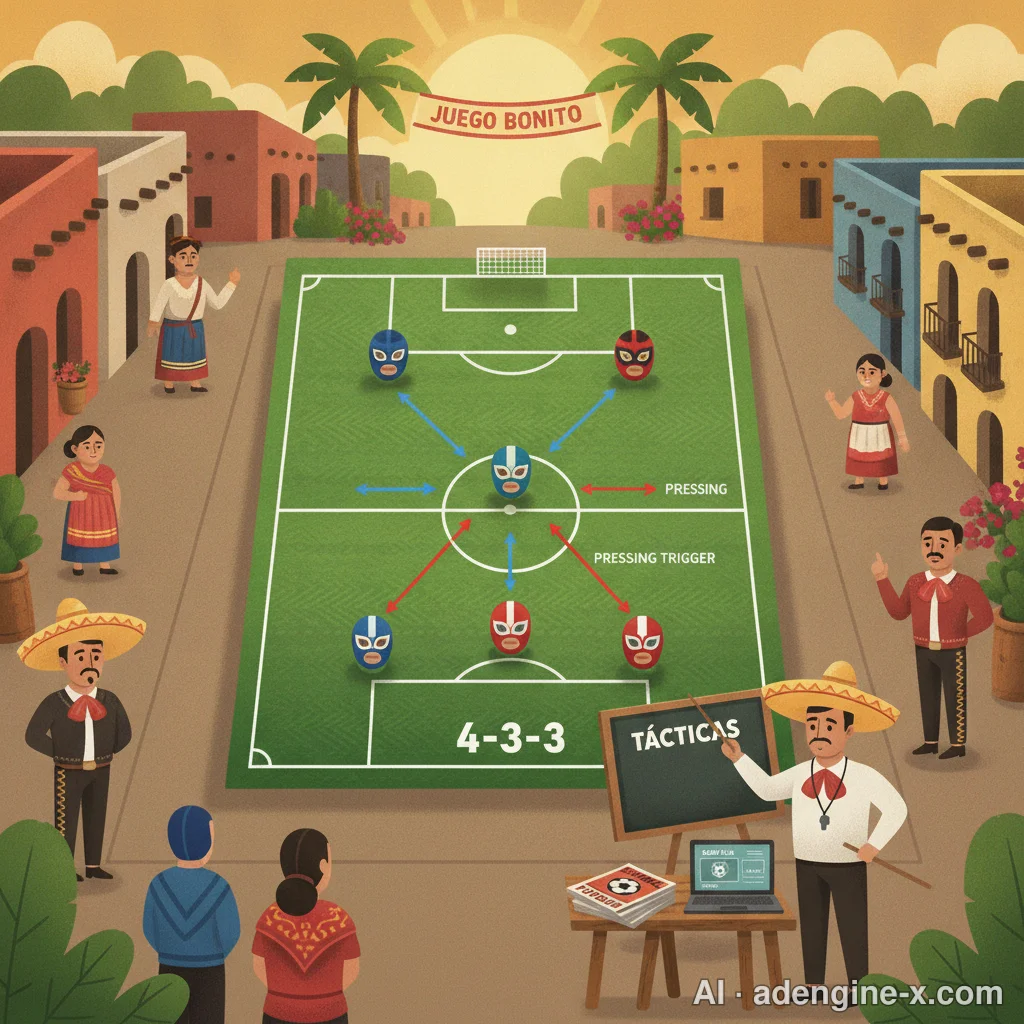
Martín Anselmi established an identity characterized by extreme numerical superiority in central zones, fluid vertical rotations, and structural rest-defense. Operating flexibly between a nominal 3-4-2-1 and a 3-3-3-1 in possession, the squad relies on central defenders capable of stepping directly into the midfield line to bypass the first two lines of defensive pressure.
"Vestir la camiseta de Cruz Azul no es cargar con el peso de la historia, sino asumir la obligación de protagonizar y ser audaces cada fin de semana. No venimos a especular, venimos a construir una máquina que compita a través de un método claro y hábitos colectivos."
6.2 Technical Field Metrics: Roster Profile and High-Value Signings
To support this intense, high-pressing model, Cruz Azul committed capital toward profiles with specific tactical functionality. A major technical signing was Greek international striker Georgios Giakoumakis from MLS side Atlanta United, involving a transfer expenditure of approximately €9,000,000 to €10,000,000. Giakoumakis was signed to rectify Cruz Azul’s chronic deficit in non-penalty expected goals (npxG) and low-box physical box aerial efficiency. Cruz Azul’s total squad market valuation remains pegged between €50,000,000 and €70,000,000 on Transfermarkt indices, maintaining top-five spending status across CONCACAF.
6.3 Environmental Mechanics: The 2,240-Meter Altitude Multiplier
Home fixtures in Mexico City demand unique physical adaptations. Estadio Ciudad de los Deportes and Estadio Azteca sit at approximately 2,240 meters (7,350 feet) above sea level. At this altitude, effective atmospheric pressure is roughly 22% lower than at sea level. This physiological reality induces two measurable outcomes:
- Aerodynamic Behavior: Reduced air drag causes long passes and long-distance strikes to travel roughly 5% faster with less Magnus effect (swerve), forcing goalkeepers and central defenders to alter their visual reaction timings.
- Cardiovascular Strain: Visiting opponents from sea level or low-lying regions experience elevated arterial oxygen desaturation, marked decreases in VO2 max capacity (roughly a 6–8% drop), and accelerated lactic acid accumulation past the 60th minute of gameplay, allowing Cruz Azul to construct statistical advantages in late-match transitions.
7. Stadium Logistics and Comprehensive Matchday Operations
Attending a Cruz Azul home match in Mexico City requires navigating distinct institutional protocols, technological mandates, and urban transit corridors.
7.1 Stadium Specifications and Layout
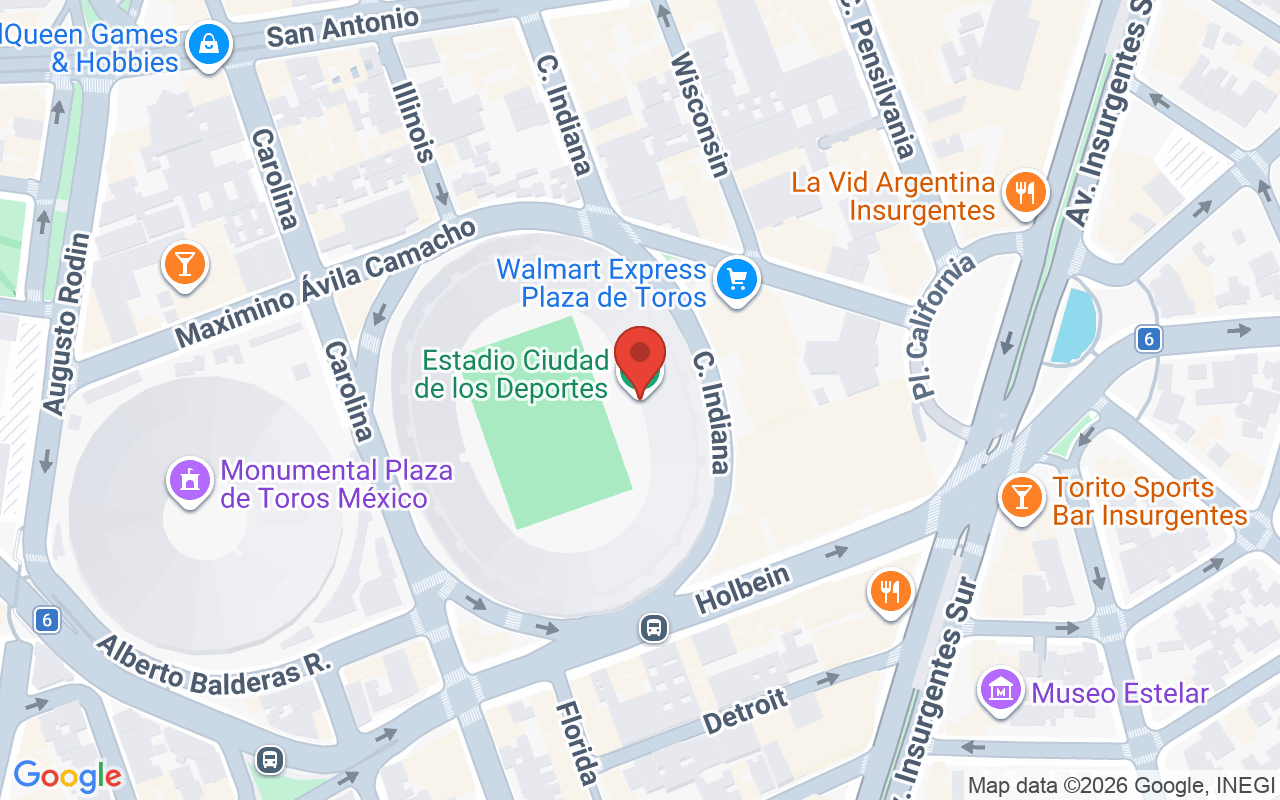
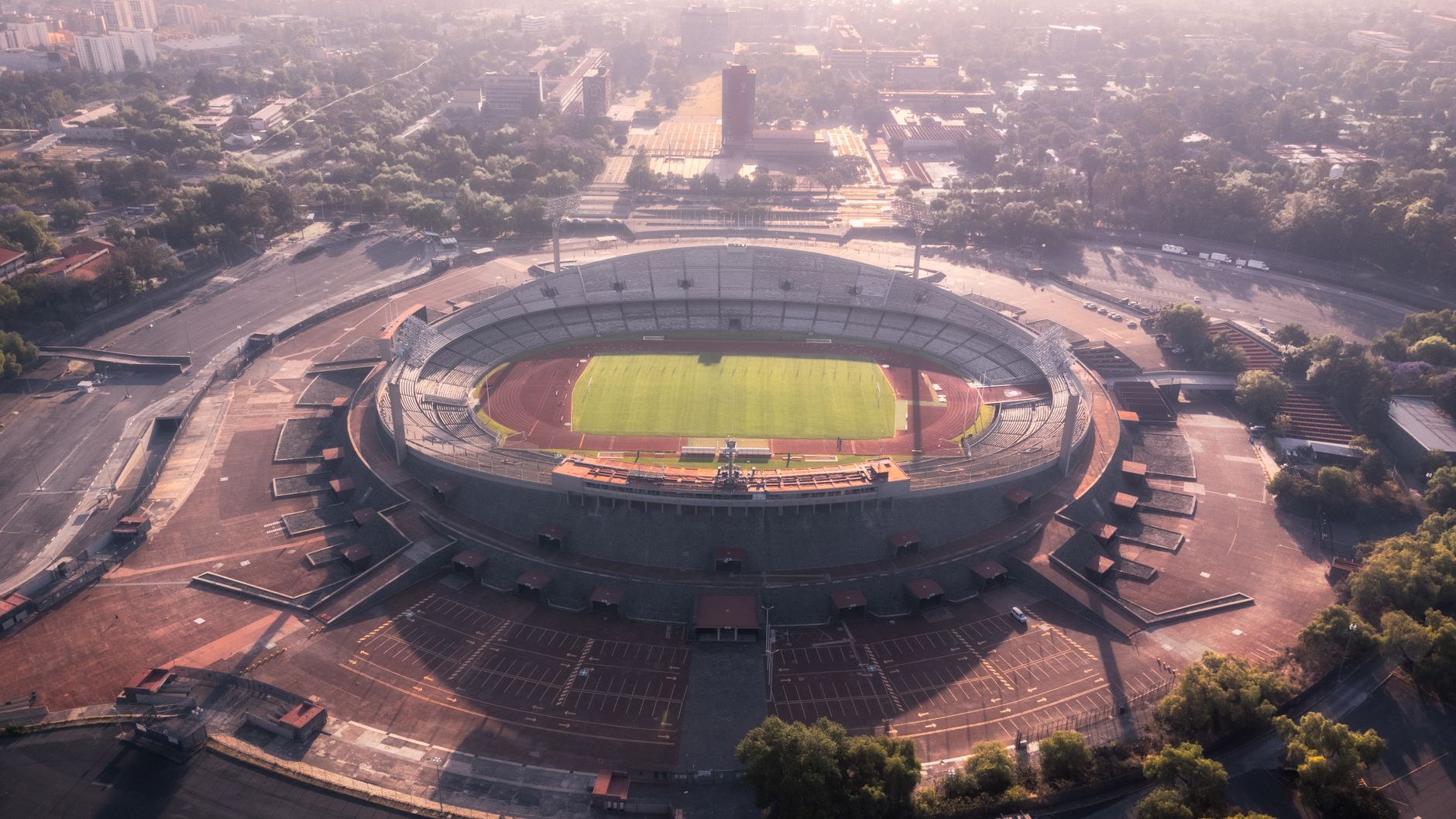
Due to ongoing major renovations at Estadio Azteca ahead of the 2026 FIFA World Cup, Cruz Azul has primarily staged home fixtures at the historic Estadio Ciudad de los Deportes (formerly known as Estadio Azul during the club’s tenancy between 1996 and 2018). The facility specifications are as follows:
 🔍
🔍
- Official Capacity: 34,253 spectators.
- Inauguration: October 6, 1946 (oldest operational major stadium in Mexico City).
- Pitch Dimensions: 108 meters × 68 meters, natural grass playing surface.
- Geographic Location: Calle Indiana 255, Colonia Ciudad de los Deportes, Benito Juárez borough, Mexico City.
7.2 Ticketing Infrastructure and Price Segmentation
Match tickets are distributed digitally via the Ticketmaster México online infrastructure. Remaining ticket allocations are sold at stadium box offices (Taquillas) 2 to 3 days prior to match day. Price points scale heavily depending on opponent profile and playoff positioning:
- Cabecera Alta / Baja (Goal-end Stands): 250 – 450 MXN (~$13 – $24 USD). Traditional high-energy supporter sections.
- Platea / Preferente (Lateral Sideline Sections): 500 – 850 MXN (~$27 – $46 USD). Clear tactical sightlines along the touchline.
- High-Profile Clásico Fixtures / Liguilla Finals: 1,200 – 3,500+ MXN (~$65 – $190+ USD). Scaled dynamically for matches against Club América, Chivas, or Pumas UNAM.
7.3 Mandatory Fan ID Compliance Protocols
Per federal sports-security legislation instituted by the Federación Mexicana de Fútbol (FMF) and Liga MX, possession of a valid physical or digital match ticket does not grant entry on its own. All attendees aged 18 and older must register an official Fan ID Liga MX (powered by Incode technology). The protocol requires:

- Accessing the official Fan ID portal via smartphone web browser prior to arriving at the venue perimeter.
- Submitting clear photographic scans of government-issued identification (Official INE for Mexican citizens; a valid international passport for foreign tourists).
- Capturing an active biometric facial scan to verify identity matching.
- Saving the unique resulting dynamic QR code to a mobile wallet or local image storage. This QR code must be scanned alongside visual identification at security checkpoints prior to the turnstiles.
7.4 Transit Corridors and Arrival Logistics
Estadio Ciudad de los Deportes sits within a dense residential and commercial urban grid in the Benito Juárez borough. Surface vehicular traffic along Avenida de los Insurgentes Sur becomes severely congested starting two hours before kickoff.
- Metrobús Line 1 (Optimal Route): Take the red articulated bus line down the dedicated Insurgentes corridor and disembark directly at station Ciudad de los Deportes. The stadium entrance sits less than a three-minute walk west.
- Metro Line 7: Disembark at station San Antonio. Walk eastward up Calle Maximino Ávila Camacho for roughly 10–12 minutes to approach the stadium gates.
- Rideshare Logistics: Set drop-off and pick-up waypoints at least four blocks north or south along Avenida Insurgentes or toward Colonia Noche Buena to avoid deadlocked one-way perimeter streets.
8. Crucial Common Pitfalls and Strategic Mitigation
Navigating the matchday ecosystem without technical preparation exposes visitors to logistical failures, counterfeit ticket fraud, or denied stadium entry. Review these documented operational pitfalls.
8.1 Counterfeit Street Tickets (El Boleto Apócrifo)
Around Avenida Insurgentes, unauthorized physical scalpers (revendedores) peddle physical printed tickets, especially during sold-out matches. Over 90% of secondary physical paper passes distributed near the venue perimeter for marquee games are altered duplicates or invalid stubs. Digital Ticketmaster access barcodes are scanned live via encrypted laser systems at the turnstiles. Purchasing outside official digital channels creates an extreme probability of total financial loss with zero avenues for legal recourse.
8.2 Baggage Restrictions and Security Prohibitions
Mexican stadium safety guidelines enforced by local police (Secretaría de Seguridad Ciudadana) are extraordinarily stringent. Estadio Ciudad de los Deportes maintains no formal public luggage or locker storage. The following items are confiscated without return at the outer security lines:
- Bags or backpacks exceeding 30 cm × 30 cm in dimension.
- Professional cameras with detachable zoom lenses or tripods.
- External battery power banks, aerosol sprays, lighters, and metal-capped pens.
- Belts featuring large, solid metallic buckles (routinely barred to prevent weaponization in supporter clashes).
8.3 Failure to Pre-Authenticate Fan ID Off-Grid
Cellular data infrastructure around the stadium perimeter routinely saturates as tens of thousands of fans converge. Attempting to register identity credentials, upload biometric photos, and generate a dynamic Fan ID QR code on-site through mobile data networks is prone to connection timeout errors. Completing Fan ID onboarding 24 hours in advance and storing an offline copy on local storage is critical to avoid missing kickoff.
9. Frequently Asked Questions (FAQ)
Is attending a Cruz Azul fixture safe for international travelers and families?
Attending a match at Estadio Ciudad de los Deportes is safe provided fundamental urban precautions are taken. Located within the Benito Juárez borough, one of Mexico City’s most secure urban sectors, the surrounding neighborhoods (Noche Buena, Nápoles, Del Valle) offer pedestrian-friendly thoroughfares with active policing. Within the stadium, family environments prevail in the lateral Preferente and Platea tiers. However, visitors should exercise common-sense vigilance in the lower Cabecera ends where organized supporter groups assemble, avoid engaging in verbal arguments with rival fans, and stay alert on congested perimeter sidewalks after final whistle.
How does the temporary tenancy at Estadio Ciudad de los Deportes compare to Estadio Azteca?
Estadio Ciudad de los Deportes delivers a far more intimate, classic football experience than the cavernous Estadio Azteca. With zero athletic track running around the pitch and steep, English-style concrete terraces, spectator sightlines are exceptionally close to the technical areas. Conversely, because the venue was constructed in 1946, concourses, stairwells, and restroom facilities are narrow and bare-bones compared to modern international venues. Matches at Estadio Azteca provide larger corporate hospitality options, wider concourses, and higher seating capacity, but lose the intense acoustic compression found at Ciudad de los Deportes.
Where does the blue rabbit (El Conejo) mascot originate compared to the locomotive mascot?
Cruz Azul possesses a dual mascot identity rooted in club history. The original historical mascot was a white hare (la liebre or el conejo), inspired by the team’s clean white shorts and jerseys, combined with the rapid sprint transitions of its wingers in the 1960s. This identity was forever immortalized by legendary goalkeeper Óscar ‘El Conejo’ Pérez, who spent over two decades with the franchise. Later in the 1970s, as the industrial cement identity took center stage, the front office developed the mechanized locomotive mascot, La Máquina Celeste. Today, both emblems are preserved across club marketing and visual branding.
Can foreign tourists register for the mandatory Fan ID with an international passport?
Yes. The Incode-powered Liga MX Fan ID platform allows international tourists to select "Foreign Document / Passport" within the identification document dropdown menu. The software scans the machine-readable optical zone of any valid international passport. Once facial biometric verification confirms the passport photo match, an official dynamic QR code is generated instantly. This registration remains valid indefinitely across all Liga MX stadiums hosting top-flight professional matches.
What is the status of Cruz Azul’s long-term proprietary stadium construction project?
Developing a dedicated, single-tenant, club-owned stadium remains Cruz Azul’s chief corporate objective. Decades of leasing Estadio Azul and Estadio Azteca have forced the club to concede concessions, premium luxury box hospitality, and stadium naming-rights revenues to third-party venue operators. Executive board chairman Víctor Velázquez has outlined plans for a modern 45,000-seat facility, targeting land parcels in northern Greater Mexico City (such as Tlalnepantla) or southern municipal zones. While site acquisition, zoning assessments, and environmental impact studies continue, Cruz Azul relies on commercial lease renewals to secure its sporting home.
ℹ️ This article was drafted with the help of an AI tool and reviewed/edited by a human before publishing. · Original: AdEngine-X
📚 References
This list may include both live search sources the AI referenced while writing and public-data sources checked during fact verification. Please verify the original sources before citing or reusing.
0 Comments
Loading comments...