Nasdaq Record: Micron and Sandisk Buy Signals Explained
(Advertisers wanted)
(Advertisers wanted)
📌 Topic & Subject
This article examines the recent Nasdaq record close driven by semiconductor momentum, specifically analyzing the technical buy signals, strong market performance, and growing artificial intelligence infrastructure demand for Micron Technology and SanDisk. It details how memory stocks like DRAM and enterprise flash storage are shifting to support generative computing, while also outlining trading strategies, institutional price targets, and broader macroeconomic risks.
(Advertisers wanted)
(Advertisers wanted)
📌 Table of Contents
- 1. Market divergence and memory stock breakout
- 2. Comparative metrics across semiconductor leaders
- 3. Actionable steps for trading breakout signals
- 4. Real-world implications and macroeconomic risks
On the latest trading session, the Nasdaq Composite secured its second consecutive record close as Micron Technology climbed approximately 5.00% to $1,096.16 and SanDisk advanced approximately 6.82% to $1,766.64. Readers tracking this breakout can evaluate technical entries within five minutes using standard charting platforms at zero initial brokerage cost. While the Dow Jones Industrial Average dropped 185.14 points to 51,863.69, semiconductor strength steered capital toward specialized hardware. For individual market participants, understanding these buy signals clarifies why artificial intelligence infrastructure demands more than basic graphic processing units.
Market divergence and memory stock breakout
Financial markets recently showed a distinct parting of ways. The Dow Jones Industrial Average fell 0.36% across a choppy range between 51,726.08 and 52,319.01. In contrast, the technology-focused Nasdaq Composite achieved its fourth consecutive winning session. Meanwhile, the S&P 500 settled flat at 7,764.64 points. This split stems from index composition, as traditional industrial names weighed down the price-weighted Dow while semiconductor momentum carried broader capitalizations higher.
Divergence across the major indexes
Macroeconomic indicators highlighted a noticeable shift in risk appetite. December gold futures fell 0.9% to settle at $4,345.80 per ounce, reflecting capital movement away from defensive hedges. West Texas Intermediate crude dropped 1.2% to $94.59 per barrel, marking a five-day decline that eased operational expense concerns for corporate data centers. Concurrently, the Cboe Volatility Index closed at its lowest point of the calendar year. Market analysts note that compressed volatility paired with heavy call volume points to aggressive upside positioning across semiconductor leaders.
The shift toward artificial intelligence memory
Investors long treated dynamic random-access memory and flash storage as cyclical commodities. In previous market eras, memory manufacturers suffered through harsh inventory gluts and sudden price drops whenever personal computer sales slowed. That paradigm shifted as generative computing evolved into autonomous agentic systems. These advanced models read and write multi-step reasoning traces directly to storage. As a consequence, dynamic memory and high-capacity flash drives have become critical performance bottlenecks across enterprise server clusters.
Comparative metrics across semiconductor leaders
Micron Technology broke past its technical buy point just ahead of its fiscal fourth-quarter earnings release, where Wall Street consensus projected normalized earnings of approximately $31.43 per share. The stock gained nearly 20% over thirty days, pushing its year-to-date return beyond 270%. SanDisk demonstrated even steeper appreciation, closing at $1,766.64 after gaining more than 25% across four weeks. SanDisk shares have advanced roughly 700% year-to-date.
| Metric or Dimension | Micron Technology (NASDAQ: MU) | SanDisk Corporation (NASDAQ: SNDK) |
|---|---|---|
| Primary Architecture | DRAM, High-Bandwidth Memory (HBM4) | NAND Flash, Enterprise Solid-State Drives |
| Session Close & Change | $1,096.16 (+5.00%, intraday high $1,096.86) | $1,766.64 (+6.82%, up $112.00) |
| Trailing Performance | ~20% (30-day) / >270% (Year-to-Date) | >25% (30-day) / ~700% (Year-to-Date) |
| Institutional Targets | Stifel price target: $1,500 (Buy) | Rosenblatt Securities price target: $2,400 (Buy) |
| Supply Allocation | Wafer reallocation toward HBM packaging | ~66% output committed to cloud hyperscalers |
Working memory versus persistent storage
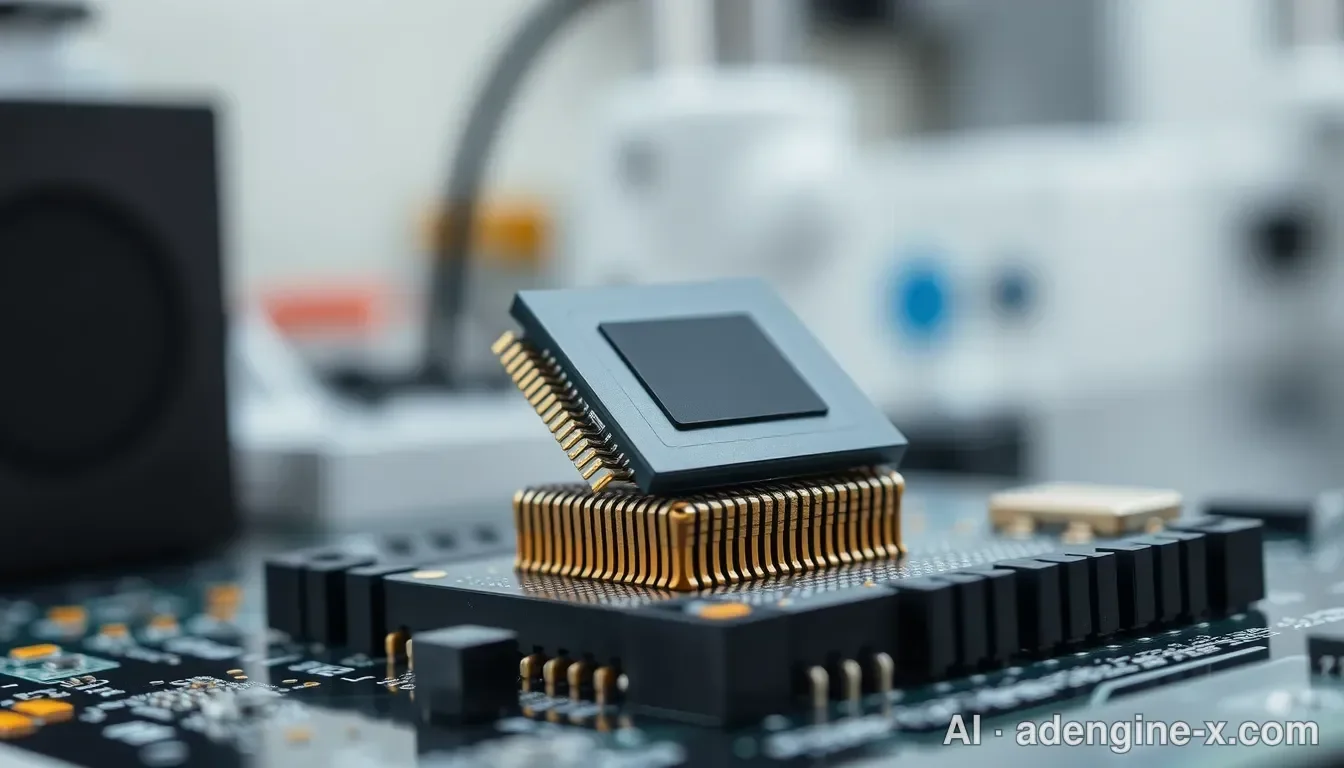
Micron focuses primarily on High Bandwidth Memory, shipping HBM4 units while scheduling mass production of HBM4E for 2027. This memory stacks vertically beside compute processors, transmitting data across thousands of microscopic interconnects. Stifel reaffirmed its Buy rating on Micron with an approximate $1,500 price target, citing expanding gross margins. Because HBM requires several times more silicon wafer area than standard computer memory, its fabrication reduces the global supply of conventional DRAM chips.
Silicon allocation and hyperscale contracts
SanDisk operates on the persistent storage tier, supplying enterprise solid-state drives that hold multi-petabyte machine learning data sets. Rosenblatt Securities recently initiated coverage on SanDisk with a Buy rating, noting that enterprise flash is experiencing unprecedented demand. Corporate disclosures show SanDisk has signed away roughly two-thirds of its projected output for the coming fiscal year to hyperscale cloud providers. Rosenblatt set a target valuation reaching approximately $2,400 as high-density flash supplies tighten.

Actionable steps for trading breakout signals
Technical buy signals emerge from chart consolidation patterns where trading volume expands significantly above daily averages. Retail market participants evaluating these moves must apply disciplined risk management rather than buying impulsively. Specific guidelines and official broker terms must take precedence when executing live orders.
1. Identify the consolidation base
Locate a clear consolidation pattern, such as a flat base or cup shape, on a daily stock chart. The pivot point marks the exact resistance price where sellers previously halted an advance. High volume on the breakout day confirms that institutional capital supports the upward move.
2. Respect the breakout price zone
Calculate the upper boundary of the actionable entry by adding 5% to the initial pivot level. Never purchase shares that trade beyond this 5% window, as chasing extended prices increases vulnerability to sudden pullbacks. Waiting for a mild test of prior resistance often offers safer risk placement.
3. Set protective stop loss rules
Place an automated stop-loss order between 7% and 8% below your actual execution price. Selling quickly when an entry fails preserves investment capital for future setups. Even promising semiconductor rallies experience sharp corrections caused by unexpected macroeconomic shifts.
4. Manage corporate earnings risk
Check the corporate earnings calendar before committing capital to a memory stock. Entering large positions immediately ahead of earnings reports introduces binary overnight volatility. Initiating smaller fractional positions or waiting for post-earnings consolidations prevents severe losses caused by implied volatility drops.
Real-world implications and macroeconomic risks
Hardware demand trends carry tangible consequences for consumer budgets. As memory manufacturers devote silicon production lines to high-margin server components, supplies for standard laptops and smartphones contract. Consumers can anticipate higher retail prices for consumer electronics throughout 2026. Subscription costs for everyday cloud storage and artificial intelligence software tools may also rise to absorb data center infrastructure expenditures.
Consumer hardware costs and cloud services
Shortages in high-density NAND flash ripple outward into everyday storage devices. Solid-state drives for personal computers face upward price revisions as enterprise buyers secure wholesale allocations. Cloud backup providers and video streaming platforms encounter higher hardware replacement costs. In time, companies typically pass these recurring infrastructure expenses directly to retail subscribers through adjusted service tiers.
Energy prices and valuation plateaus
Capital expenditure hurdles remain a primary concern for institutional asset managers. Micron continues construction on its $25 billion manufacturing complex despite localized labor friction. In addition, constructing dense computing clusters demands massive electric power. Although crude oil prices dropped to $94.59 per barrel, long-term grid constraints could eventually throttle data center expansion. If enterprise software revenues fail to match these infrastructure outlays, current equity valuations will face downward adjustments.

Bottom line: Check whether Micron or SanDisk trades within approximately 5% of its pivot price before placing an order, and cap potential losses with a strict 8% stop.
ℹ️ This article was drafted with the help of an AI tool and reviewed/edited by a human before publishing. · Original: AdEngine-X
More from this author




📚 References
This list may include both live search sources the AI referenced while writing and public-data sources checked during fact verification. Please verify the original sources before citing or reusing.
0 Comments
Loading comments...