Montana State Football Game Day Guide: In-Depth Breakdown, 3-Night Itinerary, and Bobcat Stadium Analysis
(Advertisers wanted)
(Advertisers wanted)
📌 Topic & Subject
This guide provides an in-depth operational breakdown of Montana State University's Bobcats football program, covering team analytics, game day specifications at Bobcat Stadium, and essential logistical preparations. It features a detailed 3-night, 4-day itinerary for visitors in Bozeman, highlighting local dining, tailgating traditions, and high-altitude weather considerations.
(Advertisers wanted)
(Advertisers wanted)
📌 Table of Contents
- 1. Executive Overview & Program Analytics: Why Montana State Football Commands National Attention
- 2. Core Program & Game Day Specifications: Comparative Reference Table
- 3. Pre-Trip Preparation: Strategic Logistics, Environmental Prerequisites & Ticketing Realities
- 4. Step 1: Foundational Execution — A Complete 3-Night / 4-Day Analytical Field Itinerary
- 5. Step 2: Advanced Field Insights — Inside the Tactical Engine and Football Culture
- 6. Rivalry Dynamics & The FBS Transition Dilemma: Comparative Tactical Analysis
- 7. Common Tactical Pitfalls & Logistical Traps to Avoid
- 8. Frequently Asked Questions (FAQ)
- 9. The Future Horizon: Infrastructure Expansions and Program Longevity
1. Executive Overview & Program Analytics: Why Montana State Football Commands National Attention
In the landscape of NCAA Division I college athletics, Montana State Bobcats Football represents a singular statistical and cultural phenomenon. Operating out of Bozeman, Montana, within the NCAA Division I Football Championship Subdivision (FCS) and serving as a charter powerhouse of the Big Sky Conference since 1963, Montana State University (MSU) presents an operational model that bridges small-market devotion with elite athletic performance. Established in 1897 during the frontier era of the Montana Agricultural College, the program has accrued nearly 130 years of history, compiling an all-time record of 575 wins, 507 losses, and 34 ties across 1,116 fixtures (a .530 aggregate winning percentage) alongside 18 Big Sky Conference championships.
What distinguishes Montana State across all divisions of American collegiate football is an unprecedented historical benchmark: it is the only collegiate program in NCAA history to capture national football championships across three distinct competitive tiers. The Bobcats secured the NAIA National Championship in 1956, ascended to win the NCAA Division II National Championship in 1976, and claimed the NCAA Division I-AA (now FCS) National Championship in 1984. Under the tactical leadership of Head Coach Brent Vigen—who arrived in 2021 and engineered a national runner-up finish in his inaugural campaign followed by deep semifinal and championship runs—Montana State has recorded a staggering record exceeding 60 wins against just 12 losses (.833+ winning percentage), alongside an imperious 37-3 conference ledger over a five-season trajectory.
Understanding this football infrastructure is not merely an exercise in athletic fandom; it provides a direct window into the socio-economic and cultural fabric of the Northern Rockies. With zero major professional sports franchises across the state's vast 147,040 square miles, the Bobcats function as a premier cultural rallying point. The following technical analysis evaluates the structural, environmental, financial, and strategic dynamics of the Montana State football machine, accompanied by an actionable 3-night, 4-day on-site operational field guide for visiting analysts, scouts, and football enthusiasts.
2. Core Program & Game Day Specifications: Comparative Reference Table
The operational metrics and infrastructure parameters of Montana State football reveal an athletic ecosystem engineered for high-altitude physical attrition, donor-backed financial longevity, and intense regional dominance. The comparative specifications below detail the program's structural baseline.
| Metric Category | Official Specification & Measured Value | Operational Context & Technical Impact |
|---|---|---|
| Home Venue | Bobcat Stadium (Opened 1973) | Permanent capacity of 17,777; official standing capacity of 20,767; peak postseason record of 25,437. |
| Elevation & Atmospheric Pressure | 4,940 ft (1,505 m) above sea level | Reduced oxygen partial pressure causes visiting aerobic fatigue; accelerates ball flight trajectory. |
| Head Coach Contract Structure | Brent Vigen (Contract through March 31, 2029) | Base guarantee: $455,000 ($295k base + $50k retention + $80k media + $30k foundation); assistant pool: $944k. |
| Facilities Capital Investment | $70M+ modern deployment since 2010 | Includes $11M Sonny Holland End Zone, state-of-the-art Indoor Practice Facility (IPF), and high-output LED matrices. |
| Primary Rivalry Dynamic | The Brawl of the Wild ('Cat-Griz') | 1897 inception; 31st oldest in Division I. In Great Divide Trophy era (since 2001), MSU leads 12-11. |
| NIL Collective Infrastructure | The Bobcat Collective (501(c)(3) aligned model) | Grassroots localized roster-wide distribution model engineered for long-term athlete retention. |
| Ticketing & Gate Economy | Single Game: $35–$85 | Secondary: $150–$300+ | Consecutive multi-year regular-season sellouts; premium Cat-Griz and playoff tickets reach 300% face-value premiums. |
| Stadium Access Protocols | NCAA Clear Bag Mandate (12″x12″x6″ max) | Strict security screening; mandatory cold-weather physical gear preparation due to open-air bowl architecture. |
3. Pre-Trip Preparation: Strategic Logistics, Environmental Prerequisites & Ticketing Realities
Executing an analytical tour or spectator visit to Montana State football demands rigorous logistical preparation. Bozeman sits in the Gallatin Valley at high elevation, which introduces critical environmental and physical variables. Successfully navigating a game day requires advance execution across ticketing channels, transportation corridors, and extreme cold-weather gear selection.
Altitude Acclimatization and Physiological Management
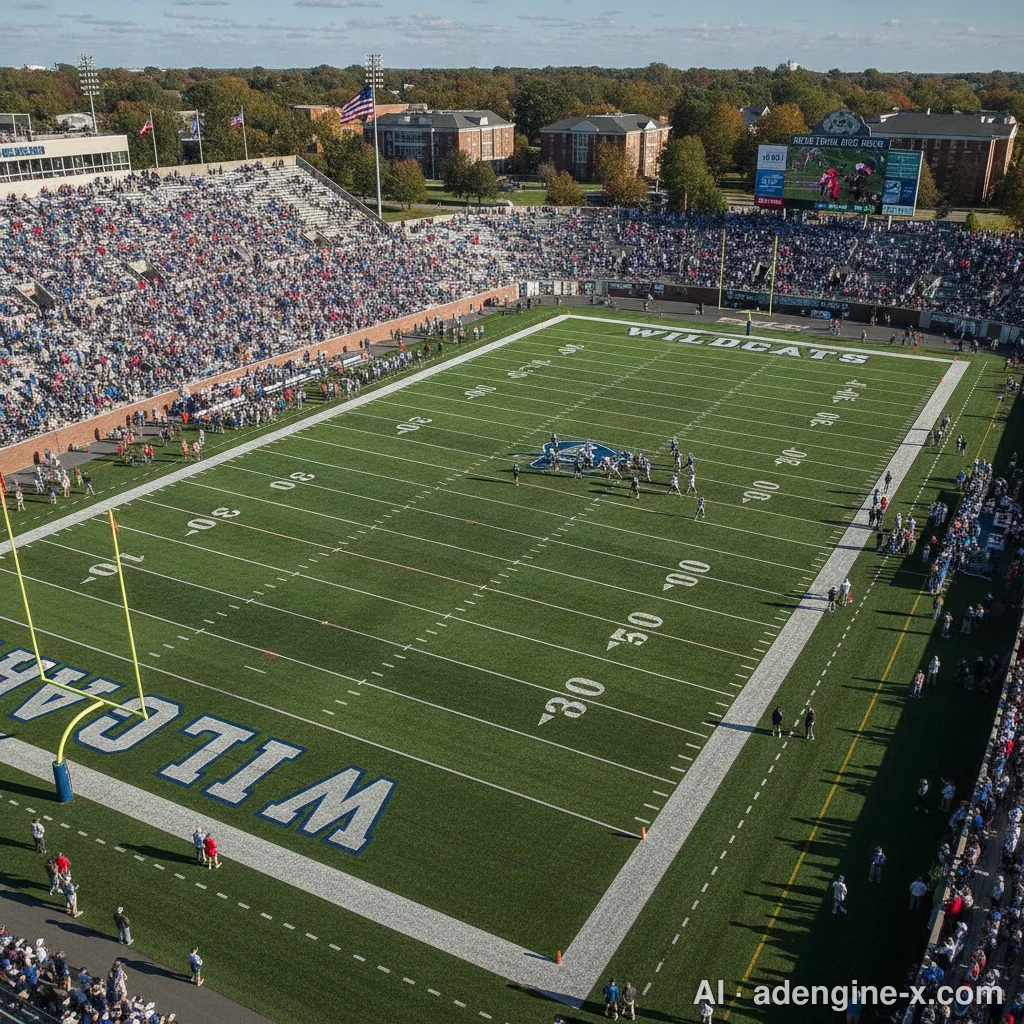
Bobcat Stadium is situated at an elevation of 4,940 feet (1,505 meters). The barometric pressure drops relative to sea level, which diminishes the effective oxygen intake per breath by roughly 15 to 17 percent. For visitors traveling from coastal or low-elevation environments, this transition manifests as rapid dehydration, increased heart rate, and heightened vulnerability to alcohol intoxication during pre-game festivities. The physiological protocol for visiting spectators requires aggressive water and electrolyte consumption beginning 48 hours prior to arrival, alongside continuous application of broad-spectrum SPF lip balm and sunscreen, as the thinner mountain atmosphere yields significantly higher ultraviolet index exposure despite sub-freezing ambient air temperatures.
Ticketing Procurement and Primary vs. Resale Arbitrage
Securing authorized entry requires rapid maneuverability through the official MSU Athletics ticketing portal (MSUBobcats.com). Single-game allocations for standard non-conference and Big Sky fixtures are priced between $35 and $85 depending on sideline proximity and bench elevation. However, with the Bobcats sustaining unprecedented winning percentages, home sellouts are standard. For premier matchups—such as the annual 'Gold Rush' home opener, Family Weekend, or the climactic regular-season Brawl of the Wild—primary box office inventory frequently exhausts within hours of public release. Observers must budget for verified secondary markets (SeatGeek, StubHub), where market clearing rates routinely settle between $150 and $350 per ticket. Seasoned attendees bypass individual lot ticket fees by utilizing the complimentary Streamline Bus transit network, which runs dedicated game day routes from Downtown Bozeman directly to the university campus hub.
Extreme Weather Layering Framework
The climatic window spanning September through mid-December in southwest Montana is defined by rapid atmospheric volatility. A sunny 65°F (18°C) September Gold Rush kickoff can collapse into a blinding 15°F (-9°C) snowstorm by the fourth quarter of a November playoff contest. Spectators must adopt a three-tier technical layering system:
- Base Layer: Heavyweight Merino wool or synthetic polyester thermal tops and bottoms designed to wick metabolic moisture without conductive heat loss. Cotton layers must be strictly avoided.
- Insulating Mid-Layer: 800-fill down or high-pile fleece vests and jackets engineered to trap body heat while permitting ventilation inside high-density concourses.
- Protective Shell: Windproof and waterproof Gore-Tex or DWR-rated outer coats with sealed hoods capable of repelling snow flurries and cutting the relentless Gallatin Valley wind shears.
- Footwear Architecture: Insulated, waterproof winter boots paired with heavy wool socks and elevated insoles. Standing on frozen stadium concrete bleachers for three and a half hours acts as a primary heat sink if footwear is inadequate.
4. Step 1: Foundational Execution — A Complete 3-Night / 4-Day Analytical Field Itinerary
To fully grasp Montana State football, one cannot simply arrive for kickoff. The institutional culture, local gastronomy, training facilities, and tailgating ecosystem require a structured, multi-day deep dive. The following optimized 3-night, 4-day itinerary provides complete coverage of Bozeman and Bobcat Stadium.
Day 1 (Thursday): Infiltration, Elevation Calibration & Architectural Orientation
Arrival occurs via Bozeman Yellowstone International Airport (BZN) in Belgrade, located approximately 11 miles northwest of MSU. After securing all-wheel-drive ground transit, proceed to lodging accommodations centrally situated along North 7th Avenue or historic Downtown Bozeman (Main Street). Dedicate the afternoon to adjusting to the 4,940-foot altitude through low-intensity walking along Main Street, observing the omnipresent blue-and-gold business window displays.
By 3:30 PM, transition to the south edge of the MSU campus for an architectural reconnaissance of the Bobcat Athletic Complex. Positioned directly adjacent to the north end zone of Bobcat Stadium, this facility showcases the recent $70M+ infrastructure renaissance financed through private philanthropic channels. Observe the external structural lines of the Indoor Practice Facility (IPF), which enables late-season tactical continuity regardless of external blizzards. For dinner, secure an analytical seat at a long-standing local staple—such as the Bozeman Taproom or Montana Ale Works—engaging local alumni to gauge game-week sentiment, injury reports, and conference standings.
 🔍
🔍Day 2 (Friday): Tactical Walkthroughs, Historical Exploration & Gold Rush Prep
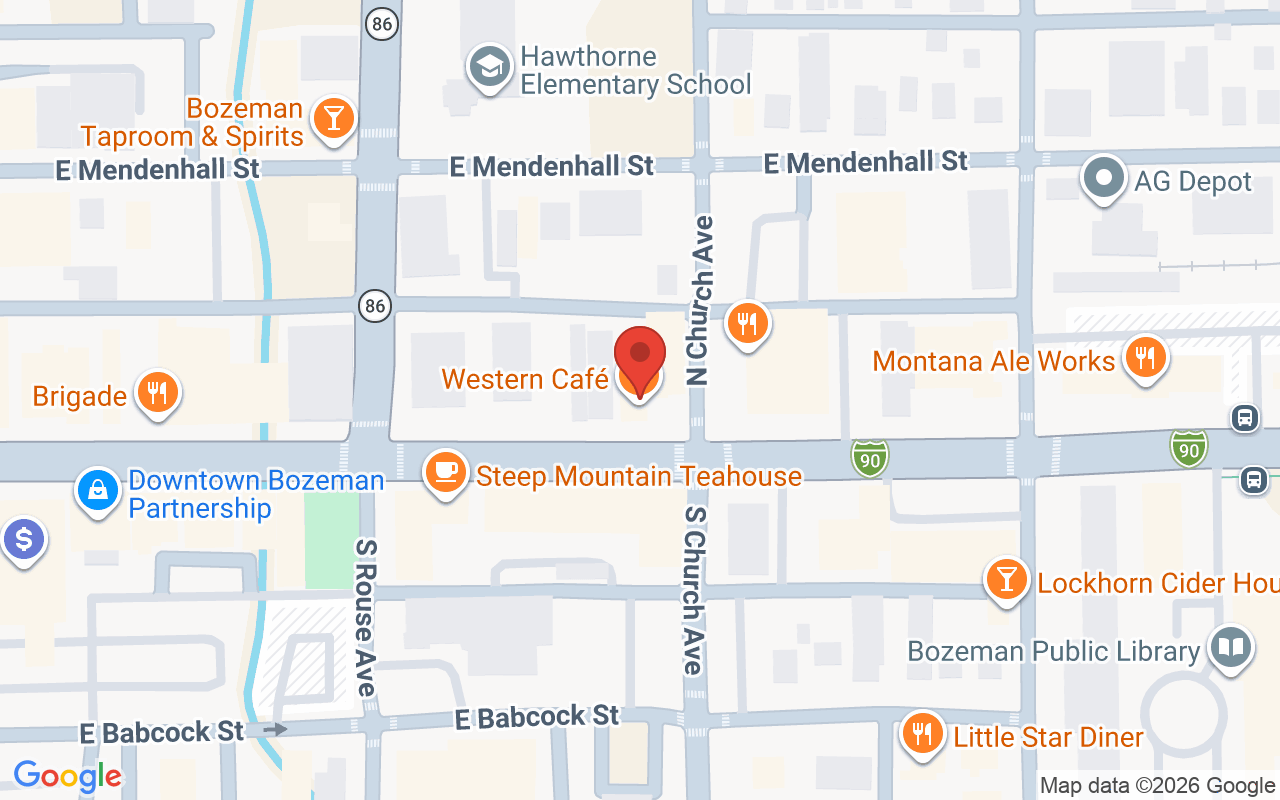
Commence the morning with a protein-heavy breakfast at the Western Café on East Main Street, a decades-old hub where local ranchers and boosters gather. At 10:00 AM, head to the Strand Union Building (SUB) and the MSU Bookstore to acquire authorized game-day colors. If attending the home opener, purchasing the exclusive, annual, single-run Gold Rush t-shirt is mandatory. This community-wide promotional tradition began in 2007 and transforms the stadium into a single unified gold expanse.
 🔍
🔍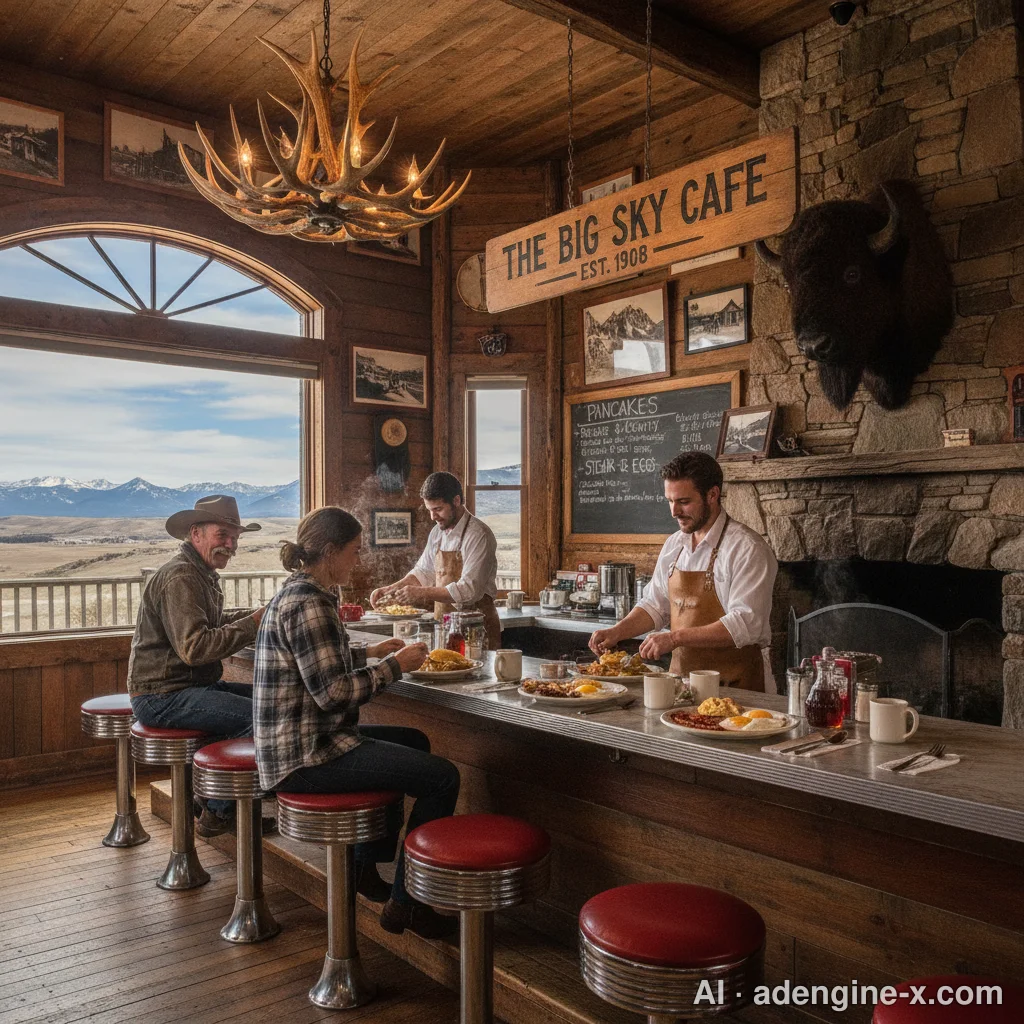
Spend early afternoon touring the academic mall toward Romney Hall and Montana Hall, absorbing the 1893 collegiate Gothic architecture. At 3:00 PM, observe the public team walk and spirit gatherings outside Brick Breeden Fieldhouse, noting the discipline instituted under Head Coach Brent Vigen. As the sun sets behind the Bridger Mountain Range, dine on localized Montana bison or prime beef at Ted's Montana Grill, tracking weather forecasts, wind vectors, and freezing levels projected for Saturday's 1:00 PM kickoff.
Day 3 (Saturday): Full Game Day Operation — Kegs, Eggs, and High-Altitude Collision
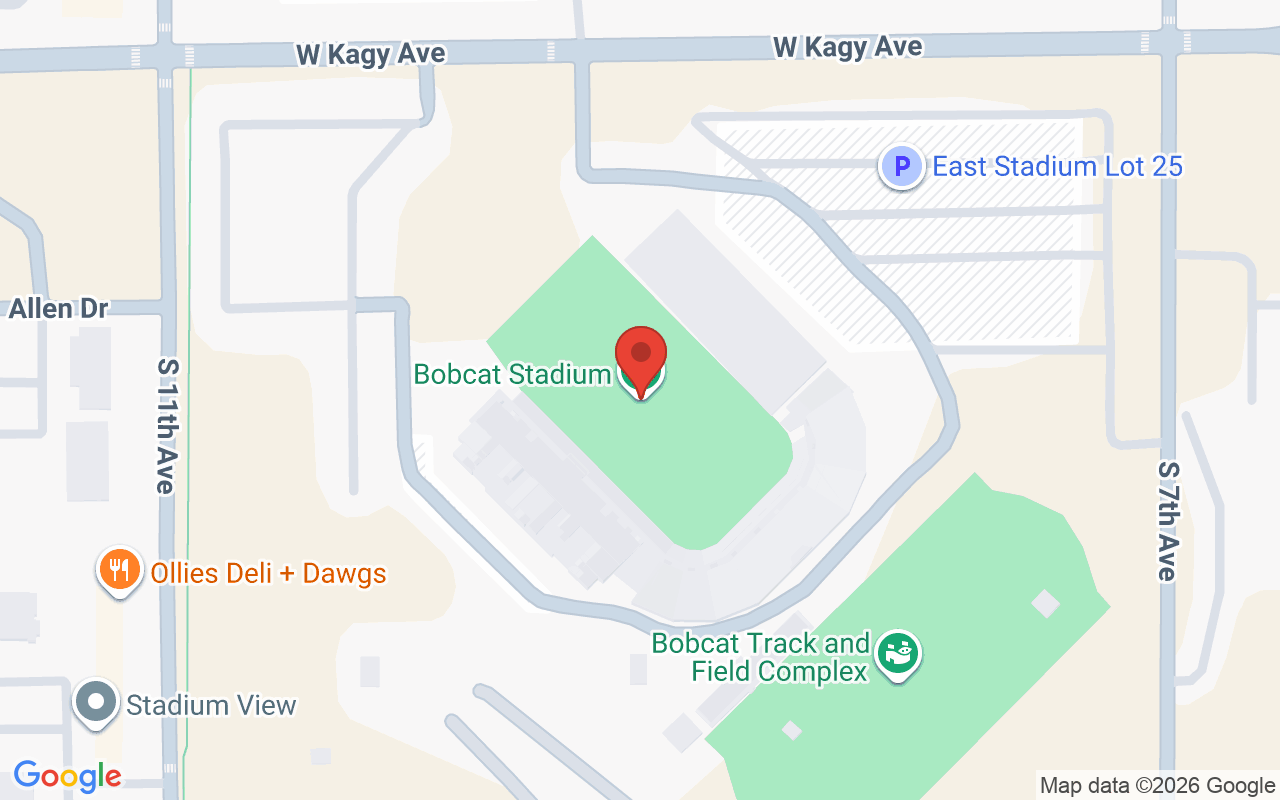
Execute an early departure at 7:30 AM to immerse in the legendary 'Kegs and Eggs' tailgating ritual across the stadium parking lots (Kagy Boulevard corridor). Tailgate compounds emerge hours before daylight, complete with smoker trailers, outdoor heaters, and RV encampments. Engage with season ticket holders in the Sonny Holland Zone tailgate area, observing their deep knowledge of line-of-scrimmage assignments and special teams metrics.
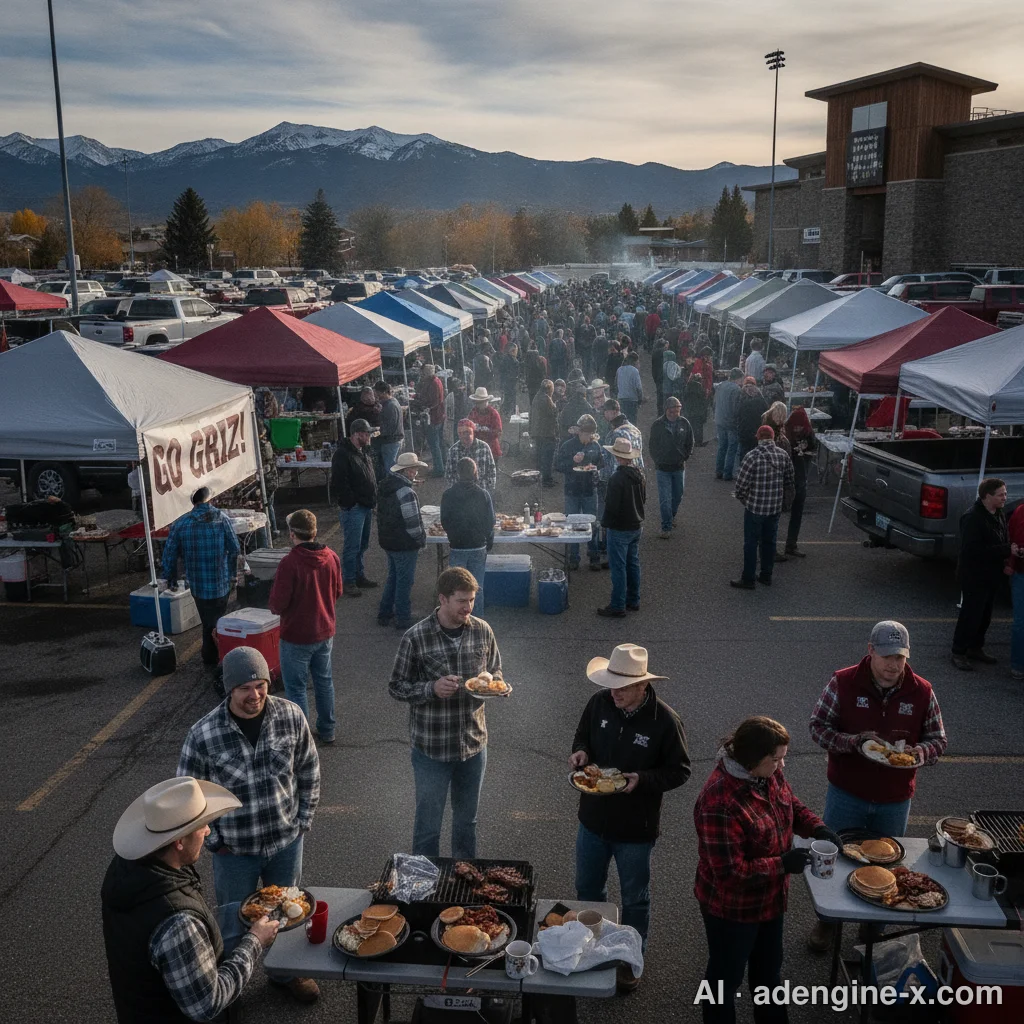
Pass through the Bobcat Stadium security gates at 11:45 AM (75 minutes prior to kickoff) to clear NCAA clear-bag checkpoints and monitor pre-game warmups. Pay specific attention to the field turf conditions, kicking trajectory under high altitude, and the offensive line alignments. From kickoff to the final gun, absorb the deafening acoustic roar of 22,000+ partisans, noting how the concrete bowl channels crowd decibels directly onto the opposing sideline. Post-game, navigate through the victorious post-game concourse exit and celebrate alongside the student section at the Cannery District or Rocking R Bar in downtown Bozeman.
Day 4 (Sunday): Post-Game Synthesis, Mountain Recovery & Departure
Conclude the operational assignment with recovery breakfast along West Main Street at the Nova Cafe. Dedicate the late morning to a short drive up Bridger Canyon to the base of Bridger Bowl Ski Area for panoramic visual perspectives of the Gallatin Valley floor, reviewing game statistics, box scores, and conference tiebreaker permutations. Return to Bozeman Yellowstone International Airport by 2:00 PM for departing flights, having recorded full qualitative and quantitative evaluations of the Northern Rockies' premier football environment.
5. Step 2: Advanced Field Insights — Inside the Tactical Engine and Football Culture
To analyze Montana State football beyond casual spectator observations, one must evaluate the tactical philosophies, athletic administration strategies, and regional recruitment realities that separate the Bobcats from other FCS programs.
The Brent Vigen Football Identity: Trench Dominance and Run-Pass Option (RPO) Fluidity
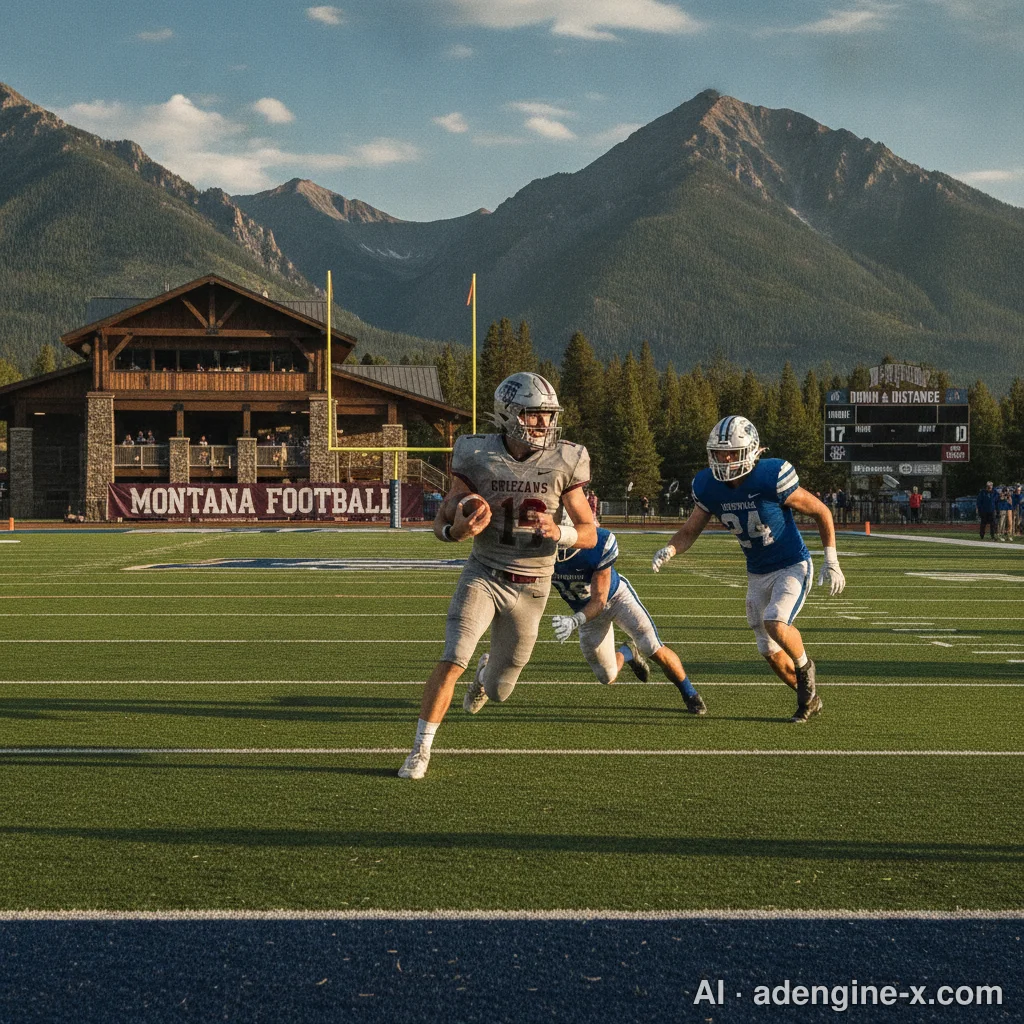
Since his arrival in Bozeman following a decorated developmental tenure as offensive coordinator at North Dakota State and Wyoming, Brent Vigen has instilled an offensive model rooted in physical dominance and offensive line execution. MSU does not rely on finesse passing schemes; they utilize a downhill, zone-blocking rushing attack married to a dynamic dual-threat quarterback operational scheme. The program's pinnacle achievement in this system was demonstrated by 2024 Walter Payton Award-winning quarterback Tommy Mellott—affectionately dubbed 'Touchdown Tommy' by the faithful across Montana.
Hailing from the historic copper-mining city of Butte, Montana, Mellott epitomizes the blue-collar, high-athleticism profile coveted by Vigen's staff. The Bobcat offense forces opposing defensive coordinators into impossible conflicts: commit eight defenders to the box to halt the interior gap runs, or deploy nickel coverages and surrender devastating intermediate perimeter RPO keepers and perimeter bootlegs. Vigen's tenure is distinguished by total clock control, minimal turnover margins, and brutal fourth-quarter line-of-scrimmage physical conditioning.
The Bobcat Collective and the Grassroots NIL Framework
In the high-stakes era of NCAA Name, Image, and Likeness (NIL) collectives and transfer portal dynamics, Montana State operates one of the most cohesive mid-major collective frameworks in the nation: 'The Bobcat Collective'. Spearheaded by former players including Brandon Vancleeve, the collective rejects top-heavy compensation packages allocated to singular individual stars. Instead, it utilizes a grassroots model funded by thousands of regional small businesses, agricultural ranches, and individual alumni.
This capital distribution ensures baseline retainers for offensive linemen, defensive backs, and special teams contributors across the entire depth chart. This programmatic equity limits roster poaching by wealthier FBS programs and maintains roster stability, locker room chemistry, and player retention across three- and four-year developmental cycles.
Historical Pillars: The Legacy of Jan Stenerud and Sonny Holland
Montana State's locker room traditions are grounded in historic milestones that redefined the sport of football at large. The preeminent example is Pro Football Hall of Famer Jan Stenerud. Arriving at MSU from Norway on an athletic ski jumping scholarship in the 1960s, Stenerud had never played competitive American football. While conditioning on the concrete stadium bleachers in the autumn of 1964, he began casually kicking footballs across the turf using an association football (soccer) instep technique. MSU basketball coaches witnessed the display and immediately alerted legendary head football coach Jim Sweeney.
Sweeney tested Stenerud on the spot, immediately offering him a roster position. In an era when kickers drove their straight toes directly into the leather ball, Stenerud’s soccer-style approach revolutionized the placekicking position across collegiate and professional football. He went on to star for the Kansas City Chiefs, kicking three pivotal field goals in their Super Bowl IV triumph, ultimately becoming the first pure placekicker enshrined in Canton, Ohio.
Similarly, the late Sonny Holland remains the spiritual compass of the university. Holland accomplished what no other figure has ever matched: winning the 1956 NAIA National Championship as an All-American center, and later returning to coach the Bobcats to the 1976 NCAA Division II National Championship. The southern end zone terrace—the 'Sonny Holland Zone'—stands as an enduring monument to his half-century of organizational excellence.
6. Rivalry Dynamics & The FBS Transition Dilemma: Comparative Tactical Analysis
The strategic position of Montana State cannot be adequately contextualized without examining its bitter regional rivalry and the continuous national debate regarding a potential leap to the NCAA Division I Football Bowl Subdivision (FBS).
The Brawl of the Wild: Anatomy of the 'Cat-Griz' Showdown
Initiated in 1897, the annual regular-season finale between the Montana State University Bobcats and the University of Montana Grizzlies (located in Missoula) is designated as 'The Brawl of the Wild' or simply 'Cat-Griz'. It ranks as the 31st oldest rivalry in all of NCAA Division I football, and the 11th oldest contested west of the Mississippi River. More than a sporting event, it functions as an all-encompassing statewide referendum, polarizing families, workplaces, and local governance across Montana.
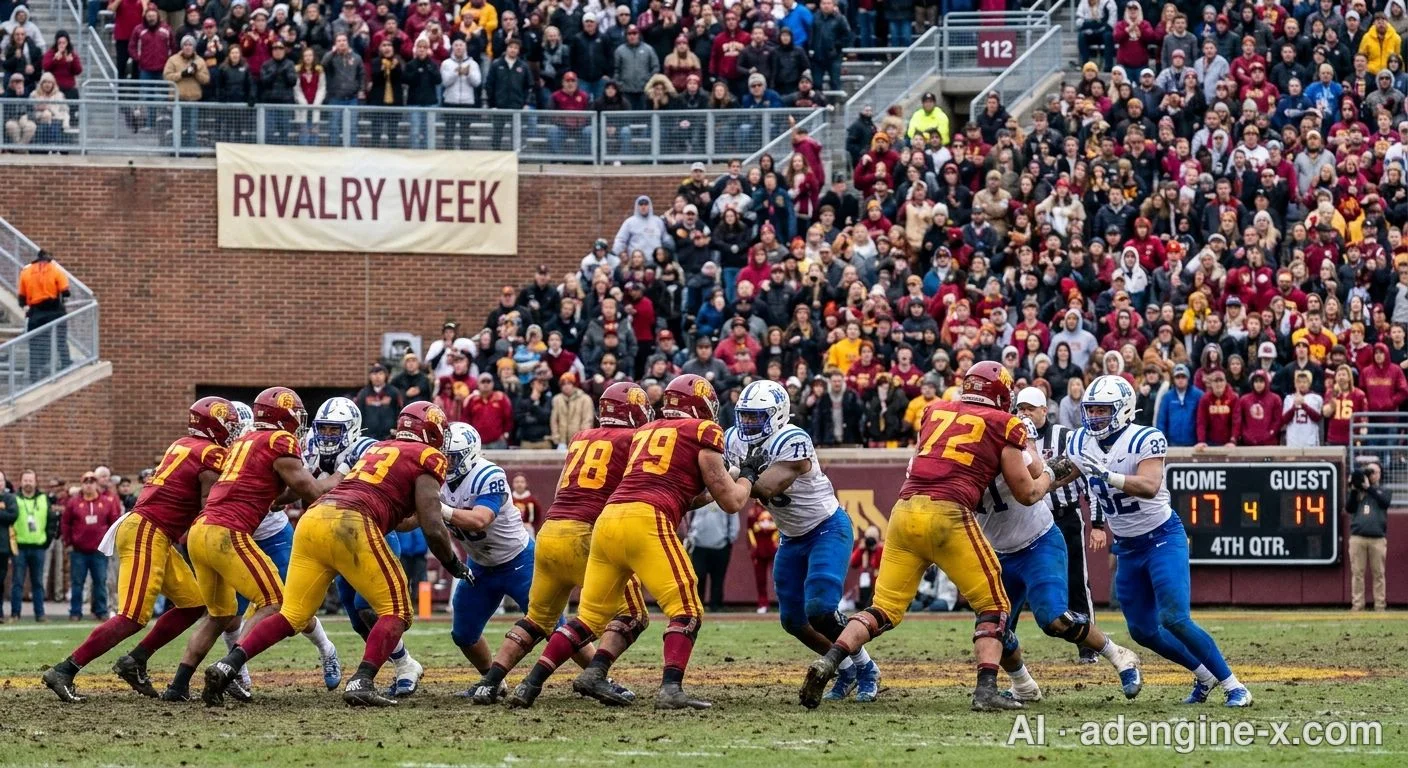
While the University of Montana holds the historical series lead at 74 wins, 45 losses, and 5 ties, modern history presents parity. Since the introduction of the Great Divide Trophy in 2001—a massive traveling bronze sculpture honoring the Continental Divide separating the two universities—the series is fiercely contested, with Montana State holding a narrow 12-11 edge. Victory grants year-long bragging rights, profound recruiting advantages throughout the Pacific Northwest, and regular top seeds in the FCS national playoff bracket.
The FCS Elite vs. FBS Reclassification Conundrum
With seismic conference realignment disrupting the Pac-12 and Mountain West conferences, Montana State frequently finds itself at the center of FBS expansion discussions. Industry analysts, media networks, and institutional stakeholders actively evaluate the merits of remaining a perennial FCS national title contender versus pursuing promotion to the FBS Group of Five tier.
| Evaluation Vector | Remain in Big Sky Conference (FCS Elite) | Reclassify to FBS (Pac-12 / Mountain West) |
|---|---|---|
| Championship Ceiling | Legitimate annual contender to hoist the NCAA National Championship trophy in Frisco, Texas. | Cap placed at minor Group of Five bowl games; access to expanded 12/14-team CFP statistically remote. |
| Financial Investment | Sustainable operational overhead; 63 football scholarship limit maintains fiscal balance. | Mandatory expansion to 85 full scholarships; substantial NCAA transition fees ($5M application) and travel overhead. |
| Media Rights Revenue | Subordinated distribution model via Big Sky ESPN+ streaming agreements ($500k range). | Estimated $4M to $10M annual distributions via tier-one linear network media partnerships. |
| Rivalry Integrity | Guaranteed late-November Brawl of the Wild matching equal roster limitations and playoff stakes. | Rivalry compromised unless the University of Montana executes a synchronized dual FBS transition. |
7. Common Tactical Pitfalls & Logistical Traps to Avoid
Navigating Montana State football as an out-of-market visitor or field researcher entails nuanced obstacles. Avoiding these common missteps preserves operational efficiency, comfort, and safety.
1. Underestimating Fourth-Quarter Ambient Wind Chill: Bobcat Stadium is oriented on a north-south axis, positioning it directly within the wind path sweeping out of the Gallatin Canyon and surrounding mountain passes. Many visiting spectators mistake an afternoon high of 40°F (4°C) for manageable conditions, neglecting windproof face coverings, thermal gloves, and insulated seat cushions. By the time the stadium shadow crosses the East Sideline in the second half, the effective wind chill drops into single digits, causing severe physical discomfort and premature exit.
2. Attempting Unscheduled Vehicle Parking on Campus: Arriving at Bobcat Stadium within two hours of kickoff expecting cash parking adjacent to the gates is an exercise in failure. The stadium surface lots (Lot 20, Kagy Blvd reserves) are strictly allocated to Bobcat Club donors holding assigned physical hangtags. Unregistered vehicles attempting to park along residential side streets face rapid municipal towing or heavy ticketing. The correct strategic maneuver is parking in remote MSU North Campus commuter lots or staging downtown and riding the dedicated Streamline public transit system.
3. Disregarding the NCAA Clear Bag Policy: Security personnel at Bobcat Stadium strictly enforce bag dimensions. Backpacks, camera cases, tinted utility packs, and large purses are entirely prohibited. Bags must consist of clear plastic, vinyl, or PVC not exceeding 12 inches by 6 inches by 12 inches, or a one-gallon clear freezer bag. Arriving with a non-compliant bag results in being turned away to walk back to your vehicle, missing player introductions and the team's iconic entrance.
4. Casual Attitude Toward High-Altitude Alcohol Metabolism: At 4,940 feet, the human metabolic rate accelerates, while reduced barometric pressure amplifies dehydration. Participating in heavy pre-game consumption during 'Kegs and Eggs' without drinking equivalent volumes of pure water frequently triggers altitude sickness, throbbing headaches, and early fatigue by halftime. Pacing consumption and prioritizing oral hydration solutions is imperative.
5. Purchasing Unverified Third-Party Paper Tickets: Physical paper tickets have been virtually phased out across MSU Athletics in favor of dynamic mobile digital ticketing. Purchasing unauthorized hard-copy tickets or screenshots from roadside scalpers along 11th Avenue frequently results in counterfeit rejections at the electronic barcode turnstiles. Secure all game access strictly through the official MSUBobcats.com portal or authenticated online secondary partners.
8. Frequently Asked Questions (FAQ)
Q1: What is the official seating capacity of Bobcat Stadium, and how loud does it get during games?
A: The permanent fixed seating capacity is 17,777. However, with the addition of standing-room platforms, end-zone grass berm allocations, and seasonal temporary bleachers, the official capacity reaches 20,767. Postseason records stand at 25,437 spectators. Due to the proximity of the stands to the sidelines and the low-profile concrete architecture, crowd noise consistently registers above 105 decibels during high-leverage defensive possessions, making it one of the most hostile venues in the entire FCS.
Q2: Why is the annual rivalry game called 'The Brawl of the Wild'?
A: The term reflects both the remote, rugged character of the state of Montana and the fierce ferocity of the on-field battle between the Montana State University Bobcats and the University of Montana Grizzlies. Initiated in 1897, it stands as one of the oldest running rivalries in American college football. The winner is awarded the Great Divide Trophy, named after the Continental Divide that splits the home cities of Bozeman and Missoula.
Q3: How has Brent Vigen achieved such an exceptional winning percentage at Montana State?
A: Head Coach Brent Vigen established an athletic culture built around physical line-of-scrimmage control, dominant rushing concepts, and mistake-free operational discipline. Combining an elite ground game with versatile, mobile quarterbacks (such as Walter Payton Award winner Tommy Mellott) and an aggressive, ball-hawking defense, Vigen's squads systematically wear down opponents, especially in sub-freezing temperatures where visiting teams struggle with altitude and physical contact.
Q4: What is the 'Gold Rush' tradition, and when does it take place?
A: The Gold Rush is Montana State's signature annual football home opener event, established in 2007. Every spectator is encouraged to purchase and wear the uniquely designed official gold t-shirt produced exclusively for that season's inaugural game. The resulting visual presentation transforms the entire stadium bowl into a sea of gold, creating an intimidating psychological atmosphere for visiting non-conference opponents.
Q5: Can Montana State realistic transition to the FBS level in the near future?
A: While the athletic infrastructure, donor wealth, facility quality, and attendance metrics easily meet FBS criteria, the university administration remains cautious. Elevating to FBS requires an institutional leap to 85 full scholarships, paying multi-million-dollar NCAA entry fees, and facing the potential loss of deep playoff contention to instead compete in minor bowl games. Most critically, leaving the Big Sky Conference without their chief rival, the University of Montana, could compromise the tradition of the Brawl of the Wild. As such, Montana State prioritizes being an elite national championship contender at the FCS tier until realignment conditions make a transition undeniably lucrative.
9. The Future Horizon: Infrastructure Expansions and Program Longevity
Looking toward the next decade, Montana State University Athletics is positioning its football infrastructure for enduring national prominence. With season ticket waitlists expanding annually and three consecutive seasons of regular-season sellouts, the university administration and Athletic Director Leon Costello have initiated architectural studies to explore permanently enclosing the north end zone. Such additions would expand official permanent capacity toward the 25,000 threshold, solidifying Bobcat Stadium among the largest on-campus facilities in the FCS.
Simultaneously, the program’s sustained commitment to Head Coach Brent Vigen through long-term contract extensions, combined with the continuous growth of The Bobcat Collective, ensures that Montana State can compete against mid-major FBS programs for recruits while securing top seeds in the 24-team FCS playoff bracket. Whether competing for Big Sky titles beneath the peaks of the Bridger Mountains or locking horns in Frisco, Texas for the NCAA National Championship, the Montana State Bobcats embody a rare convergence of raw frontier tradition, meticulous technical execution, and community-wide athletic passion.
ℹ️ This article was drafted with the help of an AI tool and reviewed/edited by a human before publishing. · Original: AdEngine-X
📚 References
This list may include both live search sources the AI referenced while writing and public-data sources checked during fact verification. Please verify the original sources before citing or reusing.
0 Comments
Loading comments...